
UPPCS Syllabus 2026: Prelims, Mains Pattern
Complete UPPCS syllabus 2026 for Prelims & Mains with the latest UPPSC exam pattern, paper-wise topics, marks, PYQ weightage, UPPCS vs UPSC.
 Competer
The UPPCS syllabus for 2026 is prescribed by the Uttar Pradesh Public Service Commission (UPPSC) and runs across a three-stage selection process: Prelims (screening), Mains (written), and Interview (personality test). Prelims has two objective papers — General Studies Paper I (150 questions, 200 marks) and CSAT Paper II (100 questions, 200 marks, qualifying at 33%). Mains now has 8 descriptive papers totalling 1500 marks, with the optional subject removed and replaced by two UP-specific General Studies papers (GS V & VI), followed by a 100-mark interview for a 1600-mark final scheme.
This guide gives you the complete, clearly-dated UPPCS syllabus 2026 — paper-wise topics, the latest UPPSC exam pattern, marks, PYQ weightage, a UPPCS vs UPSC comparison, a month-wise study plan, and a printable syllabus checklist you can download in both English and Hindi.
UPPCS Syllabus 2026: Key Facts at a Glance
- Conducting body: UPPSC (Combined State / Upper Subordinate Services exam).
- Stages: Prelims → Mains → Interview.
- Prelims: 2 papers, 400 marks; GS I is merit-ranking, CSAT is qualifying at 33%.
- Mains: 8 descriptive papers, 1500 marks; no optional subject.
- Interview: 100 marks.
- Final merit: Mains + Interview = 1600 marks (Prelims does not count).
- Negative marking: 1/3 penalty in both Prelims papers.
- Medium: English & Hindi.
UPPCS Syllabus 2026: The Complete Overview
UPPSC conducts the Combined State / Upper Subordinate Services examination — popularly called UPPCS or UP PCS — to recruit officers for posts such as Deputy Collector (SDM), Deputy Superintendent of Police (DySP), Block Development Officer (BDO), Assistant Regional Transport Officer (ARTO), Treasury Officer, District Commandant Homeguard, and various UP state civil service cadres. The exam is held once a year and is open to graduates, with age relaxation for reserved categories and UP domicile candidates.
The selection funnel has three stages. Only Mains marks and Interview marks count towards the final merit list — Prelims is purely a screening filter.
| Stage | Type | Papers | Total Marks | Counts in Merit? |
|---|---|---|---|---|
| Prelims | Objective (MCQ) | 2 (GS I + CSAT II) | 400 | No (screening only) |
| Mains | Descriptive (written) | 8 | 1500 | Yes |
| Interview | Personality Test | — | 100 | Yes |
| Final Merit | Mains + Interview | — | 1600 | — |
The key takeaway for planning: because Prelims does not add to your final score, you must clear it comfortably but invest the bulk of your energy in the Mains answer-writing papers, where the real competition is decided.
Eligibility Snapshot (Who Can Apply)
Before mapping the syllabus, confirm you are eligible. In broad terms, a candidate needs a bachelor’s degree from a recognised university (final-year students can often apply provisionally), and must fall within the prescribed age band — generally 21 to 40 years as on the cut-off date, with statutory relaxation for SC/ST/OBC, PwD, ex-servicemen and other UP-notified categories. Some technical posts within the combined exam carry their own qualification and age rules. Always confirm the exact numbers in the year’s official UPPSC notification, as the Commission revises upper age limits and post lists periodically.
Print or Save the UPPCS Syllabus as PDF (English & Hindi)
A major reason aspirants search for the syllabus is to keep a printable copy on their study desk. We have compiled the entire UPPCS syllabus 2026 — Prelims plus all eight Mains papers — into a one-page syllabus PDF + progress tracker so you can tick off each topic as you finish it. The uppcs syllabus pdf download is available in two versions:
- UPPCS Syllabus PDF (English) — full topic list with a checklist column against every paper.
- UPPCS Syllabus in Hindi (हिंदी माध्यम) — the same syllabus translated for Hindi-medium aspirants, who form the majority of UPPCS candidates.
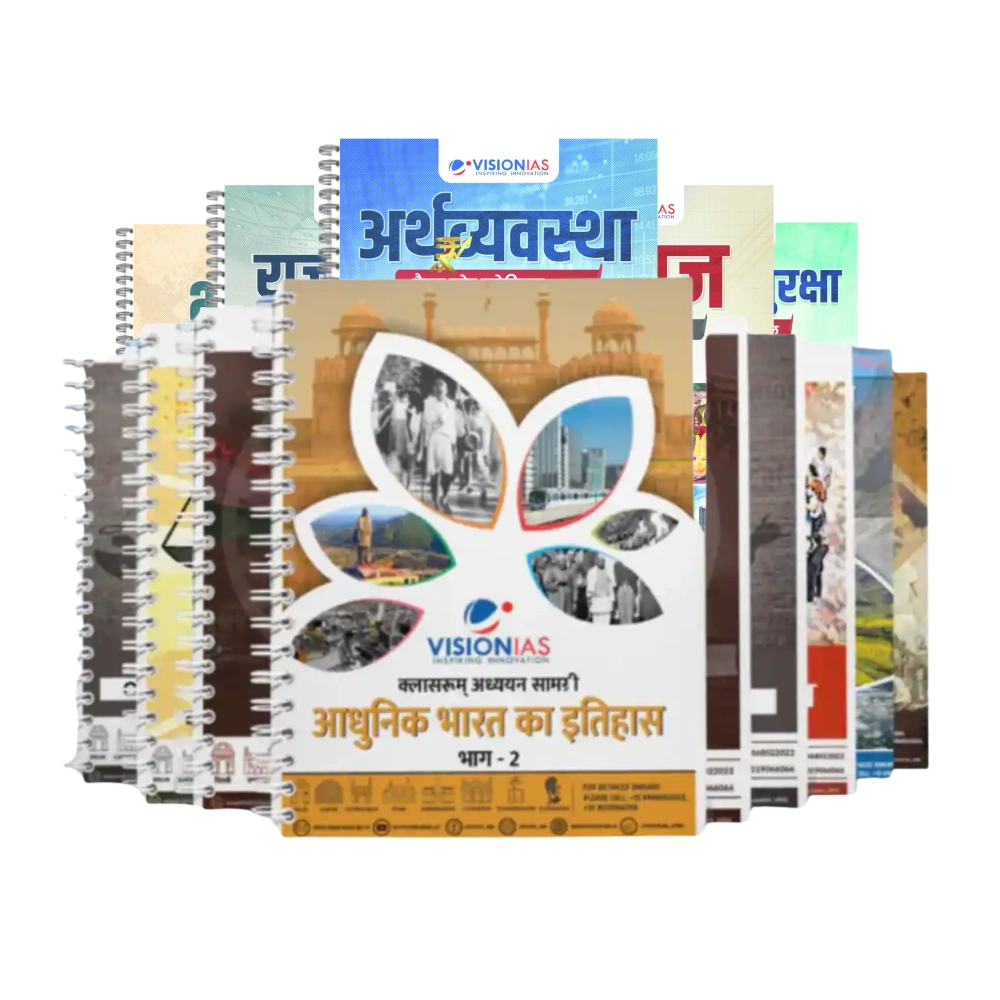
To turn the syllabus into a revision plan, pair the tracker with a compact syllabus booklet like the GS Score Latest Syllabus Booklet 2026-27, which lays out the General Studies framework that overlaps heavily with UPPCS GS papers. Hindi-medium candidates can build their core notes around the Vision IAS GS Notes in Hindi (54 Booklets), which map cleanly onto the UPPCS GS I–IV topics.
UPPSC Exam Pattern 2026: Prelims Structure
The UPPSC Prelims is objective and consists of two papers held on the same day. Both papers are 200 marks and 2 hours each. GS Paper I is a merit-ranking paper (its marks decide who qualifies for Mains), while CSAT Paper II is only qualifying — you need 33% (66 out of 200) to pass it, and beyond that its score is not counted.
| Paper | Subject | Questions | Marks | Duration | Nature |
|---|---|---|---|---|---|
| Paper I | General Studies I | 150 | 200 | 2 hours | Merit-ranking |
| Paper II | General Studies II (CSAT) | 100 | 200 | 2 hours | Qualifying (33%) |
Negative marking: There is a penalty of one-third (1/3) of the marks assigned to a question for every wrong answer in both Prelims papers. Unattempted questions carry no penalty. So on GS Paper I, each question is worth roughly 1.33 marks, and a wrong answer costs about 0.44 marks — which means blind guessing is expensive, and educated elimination is the smarter play.
Prelims GS Paper I Syllabus (Topic-Wise)
The uppsc prelims syllabus for General Studies Paper I closely mirrors the UPSC Prelims GS pattern, with added UP-state emphasis in history, geography, and current affairs.
| Topic | What It Covers |
|---|---|
| Current Events | National and international events of importance, plus UP state-level current affairs. |
| History of India | Ancient, medieval, modern India and the Indian National Movement; UP-centric freedom struggle. |
| Indian & World Geography | Physical, social, economic geography of India and the world; UP geography. |
| Indian Polity & Governance | Constitution, political system, Panchayati Raj, Public Policy, Rights Issues. |
| Economic & Social Development | Sustainable development, poverty, inclusion, demographics, social sector initiatives. |
| Environment & Ecology | General issues on environmental ecology, biodiversity and climate change. |
| General Science | Everyday science; current developments in science and technology. |
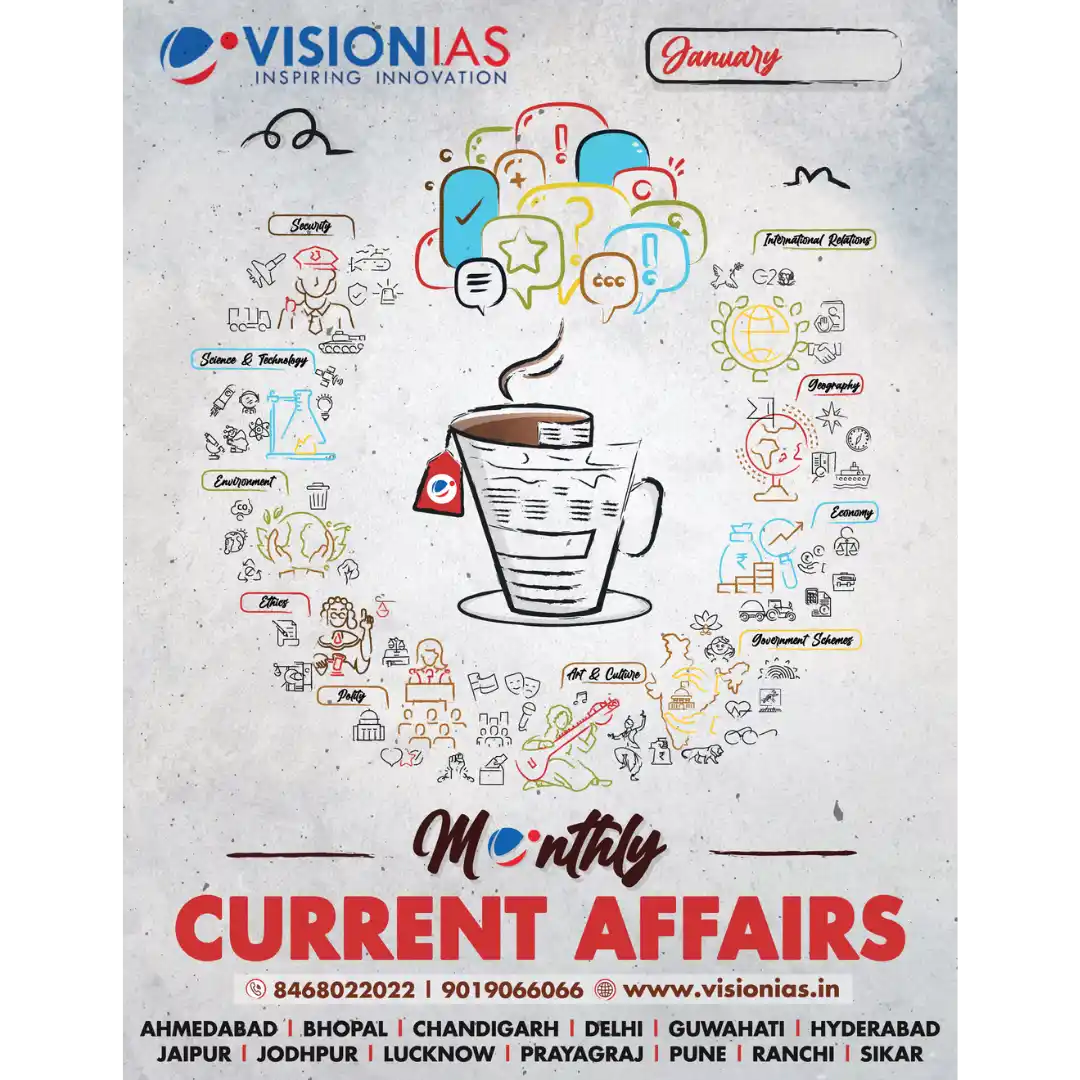
Current affairs and static polity/economy carry the heaviest weight here. A monthly current-affairs habit is non-negotiable — many aspirants build it around the Vision IAS Current Affairs Magazine (January 2026), which condenses national events into revision-ready notes.
CSAT Paper II Syllabus (Qualifying)
CSAT is qualifying, but every year thousands miss the 33% cutoff, so it deserves respect — especially for Hindi-medium and non-mathematics backgrounds. The syllabus covers:
| Section | Details |
|---|---|
| Comprehension | Reading passages and answering inference-based questions. |
| Interpersonal & Communication Skills | Including communication skills. |
| Logical Reasoning & Analytical Ability | Series, syllogisms, coding-decoding, arrangements. |
| Decision Making & Problem Solving | Situation-based questions (typically no negative marking on these). |
| General Mental Ability | Aptitude and reasoning. |
| Elementary Mathematics | Up to Class 10 level — numbers, algebra, geometry, mensuration, statistics. |
| General English & Hindi | Up to Class 10 level comprehension and grammar. |
If maths feels shaky, drilling timed sets through a structured CSAT programme like the Vision IAS CSAT Test Series is the fastest way to guarantee you clear the 66-mark threshold without eating into your GS time. Treat comprehension and reasoning as your reliable scoring blocks and keep two full CSAT mocks in the final month.
UPPSC Mains Syllabus & Exam Pattern 2026
The uppsc mains syllabus is where UPPCS differs most from the old pattern. UPPSC has removed the optional subject from Mains and replaced it with two additional General Studies papers. The current Mains structure has 8 papers worth 1500 marks, all descriptive.
| Paper | Subject | Marks | Duration |
|---|---|---|---|
| Paper 1 | General Hindi | 150 | 3 hours |
| Paper 2 | Essay | 150 | 3 hours |
| Paper 3 | General Studies I | 200 | 3 hours |
| Paper 4 | General Studies II | 200 | 3 hours |
| Paper 5 | General Studies III | 200 | 3 hours |
| Paper 6 | General Studies IV | 200 | 3 hours |
| Paper 7 | General Studies V (UP Special) | 200 | 3 hours |
| Paper 8 | General Studies VI (UP Special) | 200 | 3 hours |
| Total (Written) | 1500 | — | |
| Interview / Personality Test | 100 | — | |
| Grand Total | 1600 | — | |
General Hindi and Essay are qualifying-cum-scoring foundation papers, while the six GS papers carry the bulk of merit-deciding weight. Crucially, GS V and GS VI are entirely UP-focused — together they account for 400 of 1500 marks, roughly 27% of the Mains written total. This is the single biggest strategic difference from UPSC, and the reason a UPSC-only preparation base leaves marks on the table.
Paper-Wise Mains GS Syllabus (GS I–IV)
The first four GS papers broadly follow the UPSC General Studies template, so UPSC-oriented notes transfer well. Here is the paper-wise breakdown:
| Paper | Core Themes |
|---|---|
| GS I | History of India & Indian National Movement; World History; Indian Society; Art & Culture; General Geography (India & World). |
| GS II | Indian Constitution & Polity; Governance; Social Justice; International Relations; Indian & International institutions. |
| GS III | Indian Economy; Agriculture; Science & Technology; Environment & Biodiversity; Disaster Management; Internal Security. |
| GS IV | Ethics, Integrity & Aptitude; emotional intelligence; moral thinkers; probity in governance; case studies. |
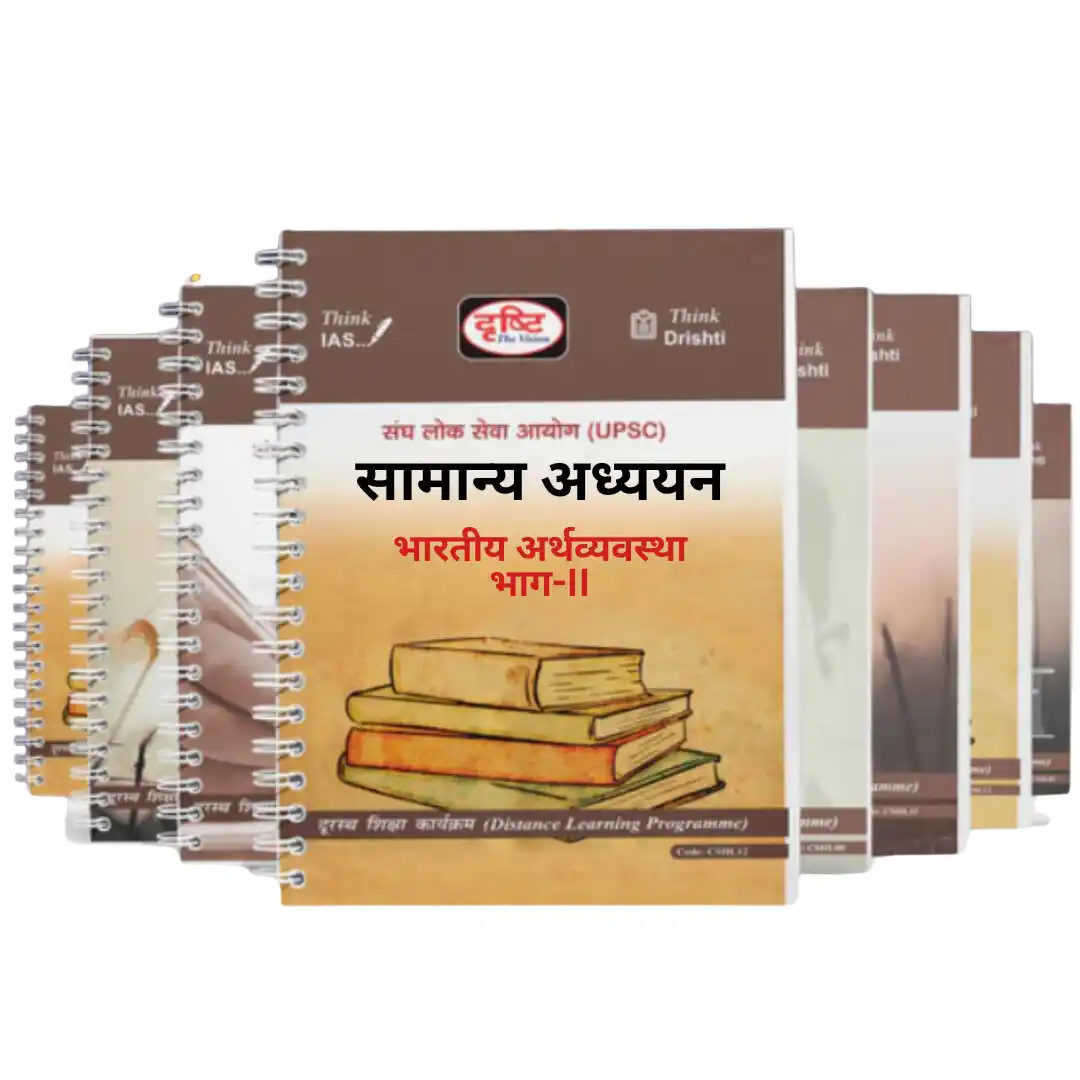
Because GS I–IV overlap so closely with the UPSC GS syllabus, a single strong GS foundation serves both exams. Hindi-medium aspirants can anchor these four papers with the Drishti IAS Hindi Study Material (18 Booklets), which covers polity, history, geography, economy, environment and ethics in exam-ready Hindi.
UPPCS GS Paper V & VI Syllabus (UP-Specific)
This is the hardest part of the UPPCS syllabus to source material for, and where dedicated preparation wins marks. GS V and GS VI are exclusively about Uttar Pradesh — its history, geography, economy, administration, culture and current developments.
| Paper | UP-Specific Coverage |
|---|---|
| GS V | History and culture of UP; UP geography and natural resources; UP economy & planning; agriculture, industry and infrastructure in UP; UP demography. |
| GS VI | UP administration & governance; state government schemes and welfare programmes; UP polity; social sector development; UP current affairs and recent state policies. |
Since no single UPSC book covers this, build a UP-current-affairs file from state newspapers, the UP Economic Survey, and government scheme documents. A running monthly current-affairs magazine helps you frame national policy in a UP context; the Vision IAS Current Affairs Magazine is a practical base you then supplement with UP-specific clippings. Keep a one-page tracker of major UP schemes, their launch year and target beneficiaries — these recur in both Prelims and Mains.
Essay Paper Structure (150 Marks)
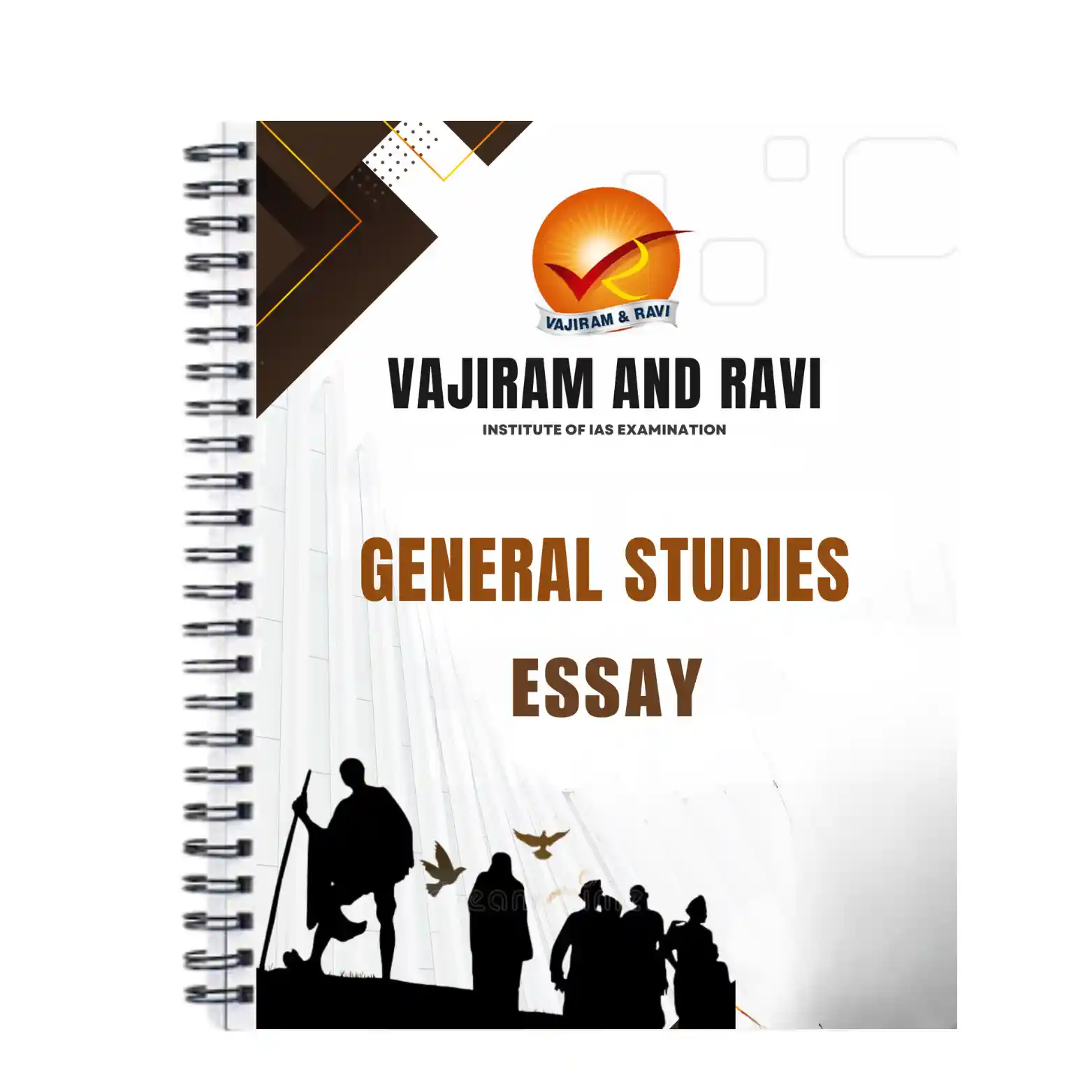
The Essay paper is divided into three sections, and you must write one essay from each section — typically around 700 words per essay. Themes span philosophy, socio-economic issues, polity, science and technology, and current national/UP concerns. Marks reward structure, balanced argument, and relevant data over flowery language. Practising the introduction-body-conclusion framework with model essays — such as the Vajiram Essay Notes — sharply improves scoring, because the same argumentation style also lifts your GS answers.
Interview / Personality Test (100 Marks)
The final stage is a 100-mark personality test conducted by a UPPSC board. It assesses clarity of thought, awareness of UP and national affairs, your detailed application form (DAF), graduation subject, home district, and current events. There is no fixed syllabus — but candidates who have internalised GS V & VI have a natural advantage, since UP-specific questions dominate. Prepare a two-minute self-introduction and be ready to defend opinions on state issues with facts rather than slogans.
UPPCS PYQ Weightage: Where the Marks Actually Are
Most syllabus pages list topics but never tell you which sections repeat. Based on trends across recent Prelims and Mains papers, here is an indicative weightage to help you prioritise:
| Area | Stage | Approx. Weightage | Priority |
|---|---|---|---|
| Current Affairs (National + UP) | Prelims GS I | 25–30% | Very High |
| History & Art/Culture | Prelims + Mains GS I | 18–22% | High |
| Polity & Governance | Prelims + Mains GS II | 15–18% | High |
| Geography (India + UP) | Prelims + Mains | 12–15% | High |
| Economy & Social Development | Prelims + Mains GS III | 12–15% | High |
| UP-Specific (GS V & VI) | Mains | 27% of Mains written | Very High |
| General Science & Environment | Prelims | 8–10% | Medium |
The clear message: current affairs and UP-specific content are the two highest-return investments in the entire UPPCS syllabus. Neglecting either is the most common reason strong GS candidates fall short in the final merit list. These figures are indicative trends, not official quotas — use them to sequence effort, not as guarantees.
UPPCS vs UPSC vs BPSC: How Much Syllabus Overlaps?
A frequent question is whether the UPPCS syllabus is the same as UPSC. The GS core overlaps around 70–80%, which means one preparation base can serve multiple exams — but the differences matter.
| Feature | UPPCS (UPPSC) | UPSC CSE | BPSC (Bihar) |
|---|---|---|---|
| Prelims Papers | GS I + CSAT (qualifying) | GS I + CSAT (qualifying) | Single GS paper |
| Optional in Mains | Removed (replaced by GS V & VI) | Yes (1 optional, 2 papers) | Removed |
| Mains GS Papers | 6 GS + Hindi + Essay (8 total) | 4 GS + Essay + 2 Optional + 2 Language | GS + Hindi + Essay |
| State-Specific Content | Heavy (GS V & VI, ~27%) | Minimal | Heavy (Bihar-specific) |
| Total Marks | 1600 | 2025 | Varies |
| Medium | English & Hindi | English & Hindi (+ regional) | English & Hindi |
If you are already preparing for UPSC, you can reuse almost all of your GS I–IV and current-affairs material for UPPCS and simply add the UP-specific GS V & VI layer. Candidates targeting neighbouring state services can similarly reuse the GS core; for Bihar, for instance, the Drishti BPSC Books (Hindi, 24 booklets) follow the same reuse logic with state-specific additions.
What Changed This Year: UPPCS 2026 Pattern Changelog
Because several older articles still show outdated patterns, here is a clearly-dated summary of the latest structure you should plan around for 2026:
- Optional subject removed from Mains — no more choosing a specialised optional; everyone writes the same papers.
- Two extra GS papers added — GS V and GS VI, both entirely UP-focused.
- Mains totals 8 papers / 1500 marks, with Interview at 100, for a 1600-mark final scheme.
- CSAT remains qualifying at 33% (66/200) — only GS Paper I marks decide Prelims cut-off.
- Negative marking of one-third continues in both Prelims papers.
Always cross-check these against the official UPPSC notification for the specific vacancy year, as the Commission periodically fine-tunes marks and paper names.
UPPCS Syllabus in Hindi: What Hindi-Medium Aspirants Should Know
Because a majority of UPPCS candidates and selections come from the Hindi medium, planning around the uppcs syllabus in hindi is a genuine advantage, not a fallback. The entire exam — question papers and answer scripts — is available in Hindi, and General Hindi is itself a 150-mark Mains paper covering grammar, precis, letter/report writing and comprehension. Practically, this means Hindi-medium aspirants should: keep a Hindi copy of the syllabus tracker on the desk; build GS I–IV notes in Hindi so terminology stays consistent into the exam hall; and read at least one quality Hindi daily for UP current affairs feeding GS V & VI. The topic list itself is identical to the English syllabus — only the language of study changes.
How to Cover the UPPCS Syllabus: A Study Plan
A syllabus is only useful when translated into a timeline. Here is an indicative 10–12 month plan that maps months to papers:
| Phase | Duration | Focus |
|---|---|---|
| Foundation | Months 1–3 | NCERTs + standard GS (Polity, History, Geography, Economy) for GS I–III. |
| Core Building | Months 4–6 | Advanced GS, Ethics (GS IV), start GS V & VI UP-specific notes. |
| UP Special + Answer Writing | Months 7–8 | Deep dive into UP history/geography/economy; daily answer practice; Essay + General Hindi. |
| Prelims Sprint | Months 9–10 | Full-length mocks, CSAT practice, current affairs revision. |
| Mains Consolidation | Post-Prelims | GS I–VI answer writing, revision, previous-year answers. |
Two habits carry the plan: a daily current-affairs routine and weekly answer writing. Fold UP news into your national current-affairs notes from day one so GS V & VI never feel like a separate mountain at the end.
Common Mistakes to Avoid
- Treating GS V & VI as an afterthought — they are 27% of Mains marks.
- Ignoring CSAT until the last month and then missing the 33% cutoff.
- Studying only from UPSC material without adding UP-specific current affairs.
- Skipping answer-writing practice for General Hindi and Essay, which are easy scoring papers.
- Relying on outdated blogs that still show the optional-subject pattern.
Best Study Material to Cover the UPPCS Syllabus
Map each part of the syllabus to a resource so nothing is left to chance. For the GS I–IV core, a comprehensive GS set works for both English and Hindi mediums; for current affairs, a monthly magazine keeps you exam-current; for Essay and General Hindi, model-answer notes fast-track your scoring. UP-specific GS V & VI is best built from state sources plus your own running notes. Hindi-medium aspirants in particular should not compromise on core notes, given that the majority of UPPCS candidates and selections come from the Hindi medium.
Frequently Asked Questions
What is the syllabus of UPPCS?
The UPPCS syllabus covers three stages. Prelims has GS Paper I (Current Affairs, History, Geography, Polity, Economy, Environment, Science) and a qualifying CSAT Paper II. Mains has 8 descriptive papers — General Hindi, Essay, and General Studies I to VI — where GS V and VI focus entirely on Uttar Pradesh. It concludes with a 100-mark interview.
Is UPPCS syllabus same as UPSC?
The General Studies core overlaps about 70–80%, so UPSC material covers most of UPPCS GS I–IV. The main differences are that UPPCS has removed the optional subject, added two UP-specific papers (GS V & VI), and carries strong Uttar Pradesh-centric content that UPSC does not.
How many papers are there in UPPCS Mains?
UPPCS Mains has 8 papers: General Hindi (150), Essay (150), and General Studies I to VI (200 marks each). Together they total 1500 marks, and with the 100-mark interview the final scheme is 1600 marks.
Is there negative marking in UPPCS Prelims?
Yes. Both Prelims papers carry a penalty of one-third (1/3) of the marks assigned to a question for each wrong answer. Unattempted questions are not penalised, so intelligent guessing should be limited.
How many marks are required to qualify CSAT in UPPCS?
CSAT (Paper II) is qualifying and requires 33%, which is 66 out of 200 marks. Scoring above this threshold does not add to your merit — only GS Paper I marks are used to decide the Prelims cut-off.
Has UPPSC removed the optional subject from PCS Mains?
Yes. UPPSC has removed the optional subject from the PCS Mains and replaced it with two additional General Studies papers — GS V and GS VI — both dedicated to Uttar Pradesh. Every candidate now writes the same set of papers, so there is no optional to choose. Confirm the current scheme in the official notification for your vacancy year.
Which subjects are included in UPPCS GS Paper V and VI?
GS Paper V and VI are entirely about Uttar Pradesh — its history and culture, geography and resources, economy and agriculture, administration and governance, state welfare schemes, and UP current affairs. Together they carry 400 marks, roughly 27% of the Mains written total.
How can I download the UPPCS syllabus PDF in Hindi?
You can download the UPPCS syllabus PDF in Hindi (हिंदी माध्यम) with the Print or save as PDF button on this page, which offers the full Prelims and all eight Mains papers as a one-page checklist you can print. The Hindi version carries the identical topic list to the English one — only the language changes. Save it on your desk and tick off each topic as you complete it, and cross-check against the official UPPSC notification when a new cycle is announced.
Recommended Study Material

Competer
The Competer team: we pack the orders, so we know which editions aspirants keep coming back for.
Get it printed
State PCS study material aspirants order most on Competer, delivered across India
 Drishti UPPCS Notes 2025-26 | GS UPPSC Hindi Medium | 30 Printed Booklets₹6,199View on Competer →
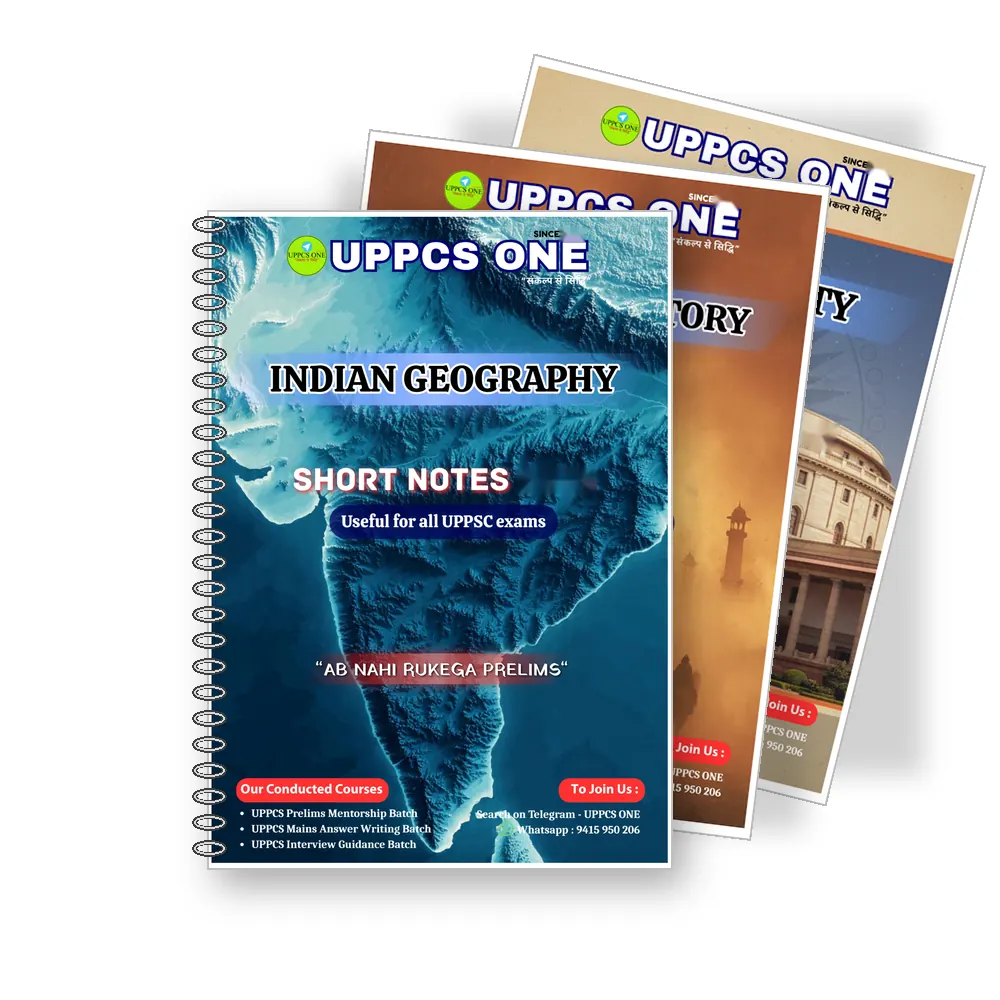 UPPCS ONE General Studies Printed Notes 2026 | UPPCS One GS Notes for UPPSC Prelims and Mains in English | 11 Booklets Set | Indian Polity, Economy, Modern History, Biology, Environment Ecology, Uttar Pradesh Special₹999View on Competer →Drishti UPPSC Books 2025-26 | GS UPPCS Hindi Medium Booklets Set of 30₹6,199View on Competer →
 Make IAS UPPSC Prelims Test Series 2026-27 | Complete UPPSC Bilingual Hindi + English Medium Test Series with Solutions₹799View on Competer →
Continue reading
More in Buying Guides



Need help choosing?
Tell us your exam and stage on WhatsApp, we suggest the right set.