

RPSC RAS Syllabus 2026: Prelims, Mains Pattern
Complete RPSC RAS syllabus 2026 for Prelims & Mains with exam pattern, unit-wise topics, weightage.
 Competer
The rpsc ras syllabus for 2026 is divided across three stages conducted by the Rajasthan Public Service Commission (RPSC): a qualifying objective Preliminary exam (one paper, 200 marks), a descriptive Main exam (four papers, 800 marks), and a Personality Test / Interview (100 marks). The Prelims tests General Knowledge and General Science with a heavy Rajasthan-specific focus, while the Mains demands analytical answer-writing across History, Economy, Polity, Science & Technology, Ethics, and language papers. The final merit list is prepared only from the Mains (800) plus Interview (100) — a total of 900 marks.
This guide gives you the complete, current 2026 syllabus for both stages, the full exam pattern, a unit-by-unit breakdown with weightage, a side-by-side look at what changed in 2026, a subject-wise booklist, a realistic study plan, and downloadable PDF links in English and Hindi. Whether you are a Hindi-medium or English-medium aspirant, you can use this as your single reference to structure your entire RAS preparation.
RPSC RAS 2026 Exam Overview
The Rajasthan Administrative Service (RAS) and Rajasthan Subordinate Service (RTS) Combined Competitive Examination is one of the most sought-after state civil services exams in India. Before diving into the detailed rpsc ras syllabus, here is a quick snapshot of the exam at a glance.
| Particular | Detail |
|---|---|
| Conducting Body | Rajasthan Public Service Commission (RPSC), Ajmer |
| Exam Name | RAS & RTS Combined Competitive Examination 2026 |
| Stages | Preliminary → Mains → Interview/Personality Test |
| Prelims Marks | 200 marks (qualifying only) |
| Mains Marks | 800 marks (4 papers × 200) |
| Interview Marks | 100 marks |
| Final Merit Total | 900 marks (Mains + Interview) |
| Medium | English & Hindi (Paper IV tests both languages) |
| Negative Marking | 1/3rd (0.33) in Prelims only |
RPSC RAS Selection Process: Three Stages
The RAS selection process follows the classic civil-services model. Understanding how each stage feeds into the next is essential before planning your syllabus coverage.
| Stage | Type | Marks | Nature |
|---|---|---|---|
| Preliminary Examination | Objective (1 paper) | 200 | Screening/Qualifying — marks not counted in final merit |
| Main Examination | Descriptive (4 papers) | 800 | Merit-deciding |
| Personality Test (Interview) | Viva-voce | 100 | Merit-deciding |
Only candidates who clear the Prelims cut-off are called for the Mains, typically up to 15 times the number of vacancies. Likewise, candidates qualifying the Mains are shortlisted for the Interview — usually up to three times the vacancies. This funnel structure means your Prelims strategy should be about qualifying efficiently, while your deepest effort belongs in the Mains, which carries 800 of the 900 final marks.
Is the RAS Prelims exam qualifying in nature?
Yes. The RAS Preliminary examination is purely a screening test. The marks you score in Prelims are used only to decide who advances to the Mains — they are not added to your final merit. This is why aspirants are advised not to over-invest time in Prelims-only facts and instead build a foundation that serves both stages.
RPSC RAS Prelims Syllabus and Exam Pattern 2026
The RAS Prelims consists of a single objective paper titled General Knowledge & General Science. It is designed to test your broad awareness of Rajasthan, India, and the world, along with aptitude and current events.
| Component | Detail |
|---|---|
| Paper Name | General Knowledge & General Science |
| Number of Questions | 150 |
| Total Marks | 200 |
| Duration | 3 hours |
| Question Type | Multiple Choice (Objective) |
| Negative Marking | 1/3rd of the marks assigned to each question |
| Medium | Bilingual (English & Hindi) |
Prelims Syllabus — Topic Blocks with Weightage
The rpsc ras prelims syllabus is organised into clearly identifiable topic blocks. The table below maps each block to its indicative weightage based on recent question-paper trends, so you know where to concentrate your revision.
| Topic Block | Key Areas | Indicative Weightage |
|---|---|---|
| History, Art, Culture & Heritage of Rajasthan | Dynasties, freedom movement, folk deities, fairs, festivals, paintings, architecture, dialects, literature | High (20-25%) |
| Indian History | Ancient, Medieval, Modern India, national movement | Moderate (8-10%) |
| Geography (World, India & Rajasthan) | Physical features, climate, rivers, minerals, agriculture, demography of Rajasthan | High (18-20%) |
| Indian Constitution, Polity & Governance | Constitutional framework, Panchayati Raj, Rajasthan administration | Moderate (10-12%) |
| Economy (India & Rajasthan) | Economic concepts, budgeting, schemes, Rajasthan economy | Moderate (10-12%) |
| Science & Technology | Everyday science, biotechnology, space, IT, health | Moderate (10%) |
| Reasoning & Mental Ability | Logical reasoning, analytical ability, basic numeracy, data interpretation | Moderate (8-10%) |
| Current Affairs | State, national & international events, sports, awards, schemes | High (12-15%) |
The single biggest takeaway: Rajasthan-specific GK dominates. History, Art & Culture, Geography, and current affairs of Rajasthan together can account for nearly half the paper. An aspirant who masters Rajasthan GK while maintaining a steady current-affairs habit is already in a strong position. For the India-level polity and economy portions, UPSC-grade material transfers very well — many toppers use standard civil-services notes such as Vajiram Polity Notes and Vision IAS Economics Notes to build conceptual depth that pays off in both Prelims and Mains.
Is there negative marking in the RAS Prelims exam?
Yes. For every wrong answer, one-third (0.33) of the marks allotted to that question is deducted. With 150 questions for 200 marks, each question carries roughly 1.33 marks, so a wrong answer costs about 0.44 marks. Smart, calculated guessing is acceptable when you can eliminate two options, but blind guessing across the paper will erode your score.
RPSC RAS Mains Syllabus and Exam Pattern 2026
The RAS Mains is where the exam is truly won. It comprises four descriptive papers, each worth 200 marks and three hours long, for a total of 800 marks. All four papers are compulsory and of the same standard.
| Paper | Subject | Marks | Duration |
|---|---|---|---|
| Paper I | General Studies I | 200 | 3 hours |
| Paper II | General Studies II | 200 | 3 hours |
| Paper III | General Studies III | 200 | 3 hours |
| Paper IV | General Hindi & General English | 200 | 3 hours |
| Total | 800 | — | |
The Mains question paper includes a mix of very short, short, medium, and long descriptive answers. Answer-writing speed and structure matter enormously here, which is why regular practice on a fixed template is non-negotiable.
How many papers are there in the RAS Mains exam?
There are four papers in the RAS Mains examination — three General Studies papers (GS I, GS II, GS III) and one combined language paper (General Hindi & General English). Each is worth 200 marks, taking the Mains total to 800 marks.
Paper-wise Mains Syllabus Breakdown
The table below maps the complete rpsc ras mains syllabus paper by paper, so you can allocate preparation time to each section proportionally.
| Paper | Core Subjects Covered |
|---|---|
| Paper I (GS-I) | History & Culture (India & Rajasthan), Economics (Indian economy & Rajasthan economy), Sociology, Management, Accounting & Auditing |
| Paper II (GS-II) | Administrative Ethics, General Science & Technology, Earth Science (Geography & Geology of India & Rajasthan) |
| Paper III (GS-III) | Indian Polity & Political System, Public Administration & Management, Law, Behaviour (psychology), Rajasthan governance |
| Paper IV | General Hindi (grammar, comprehension, translation, official drafting) & General English (grammar, comprehension, composition) + Essay |
Paper I is content-heavy and rewards aspirants who build strong History and Economy foundations early. Sociology, Management, and Accounting are compact, high-return areas that many candidates neglect. Paper II blends factual science with the analytical demands of Administrative Ethics — a section where structured, example-driven answers score well. For Ethics, the frameworks and case-study approach in Drishti IAS Ethics Notes are directly transferable to the Rajasthan context. Paper III has become increasingly Law-oriented in 2026, and Paper IV now places heavier weight on the Essay component, making Vajiram Essay Notes a practical addition to your language-paper toolkit.
What Changed in the 2026 RPSC RAS Syllabus
RPSC periodically revises the RAS syllabus to keep it contemporary. The 2026 cycle brings several structural changes that aspirants using older material must note. Most competing guides list these changes as loose bullets; the consolidated comparison table below shows exactly what is in and what is out.
| Area | Earlier Syllabus | 2026 Syllabus |
|---|---|---|
| Sports & Yoga (Paper III) | Included as a dedicated topic | Removed / de-emphasised |
| Law component (Paper III) | Limited coverage | Expanded with greater weightage |
| Essay (Paper IV) | Short essay | Revised and strengthened essay section |
| Very short (2-mark) questions | Present in some papers | Dropped in favour of analytical questions |
| Current & contemporary focus | Static-heavy | Greater emphasis on contemporary Rajasthan & India |
The practical implication: do not over-prepare removed topics like Sports/Yoga, invest more in Law and in writing a strong, well-argued essay, and shift your answer practice toward analytical, medium-and-long responses rather than one-line factual recall.
How the RAS Final Merit List Is Prepared
A frequent point of confusion among aspirants is how the final rank is decided. The answer is straightforward once the role of each stage is clear.
| Stage | Counted in Final Merit? | Marks |
|---|---|---|
| Prelims | No (qualifying only) | 200 |
| Mains | Yes | 800 |
| Interview | Yes | 100 |
| Final Merit Total | — | 900 |
So your final rank depends entirely on your combined Mains + Interview score out of 900. This single fact should reshape how you budget your time — the Mains is roughly eight times more valuable than the Interview and infinitely more valuable than Prelims in merit terms, even though you must first clear Prelims to reach it.
Subject-Wise Booklist Mapped to the Syllabus
A common gap in competing pages is that they list the syllabus but not the resources that actually cover it. Below is a booklist mapped to the rpsc ras syllabus units, combining Rajasthan-specific standard references with UPSC-grade General Studies material that overlaps heavily with RAS.
| Syllabus Unit | Recommended Resource Type | Notes |
|---|---|---|
| Rajasthan History, Art & Culture | State-board books + standard Rajasthan GK compendium | Highest-weightage area; build a dedicated Rajasthan notebook |
| Indian Polity & Governance | Standard Polity notes (e.g., GS Polity booklets) | Transfers directly to Mains Paper III |
| Economy (India & Rajasthan) | GS Economy notes + Rajasthan Economic Review | Pair national concepts with state data |
| Administrative Ethics | GS Ethics notes with case studies | Framework-based answer-writing scores well |
| Essay & Language (Paper IV) | Essay notes + grammar handbook | Revised essay carries higher weight in 2026 |
| Hindi-medium full GS | Complete Hindi GS booklet set | For aspirants writing the exam in Hindi |
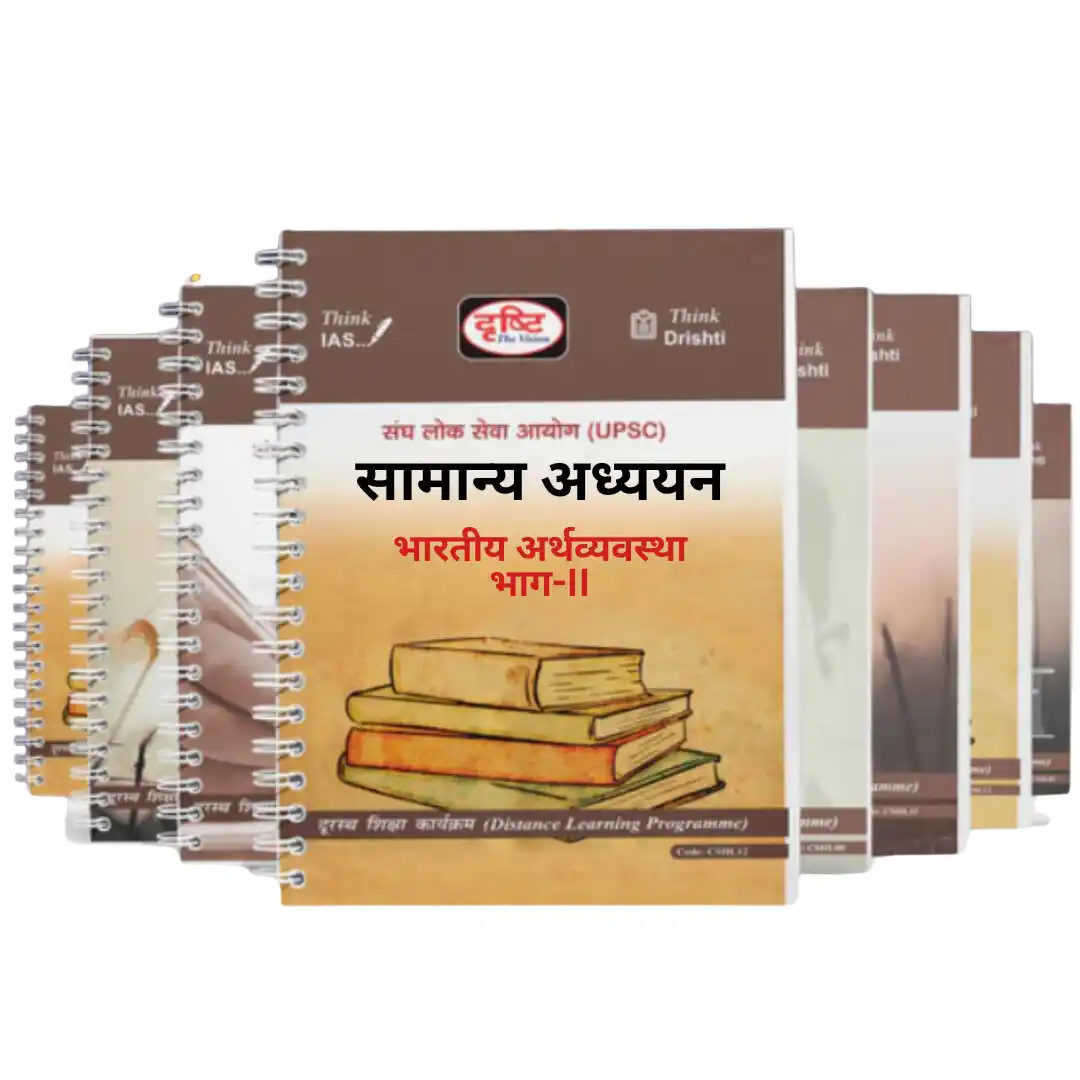
Hindi-medium aspirants are often underserved — most guides offer only an English walkthrough with a token PDF. If you are preparing in Hindi, a complete Hindi GS set such as the Drishti IAS Hindi Study Material gives you polity, economy, geography, and science coverage in your medium of choice, which you can then supplement with Rajasthan-specific sources. English-medium candidates can anchor their core GS with a comprehensive set and layer Rajasthan content on top.
What are the best books to cover the RPSC RAS syllabus?
The strongest combination is: a dedicated Rajasthan GK reference (for history, art, culture, and geography — the highest-scoring block), standard civil-services GS notes for polity, economy, and science that double up for Mains, a focused Ethics resource for Paper II, and an essay-and-grammar set for Paper IV. Supplement all of these with monthly current-affairs magazines and a daily newspaper focused on Rajasthan and national events.
RPSC RAS Study Plan and Timeline
A syllabus is only useful with a plan to cover it. The stage-wise timeline below assumes roughly 10-11 months of preparation and can be compressed or expanded to fit your schedule.
| Phase | Duration | Focus |
|---|---|---|
| Foundation | Months 1-3 | Rajasthan History/Art/Culture, Indian Polity, basic Economy, NCERT-level science |
| Core Building | Months 4-6 | Geography (India & Rajasthan), Economy depth, Science & Technology, start Mains answer-writing |
| Integration | Months 7-8 | Ethics, Law, Public Administration, Sociology/Management, daily current affairs |
| Prelims Sprint | Months 9 | Full-length Prelims mock tests, reasoning practice, Rajasthan revision |
| Mains Intensive | Post-Prelims (2-3 months) | Paper-wise answer writing, essay practice, revision of all four papers |
Keep current affairs running in parallel throughout — it feeds both Prelims GK and Mains answer enrichment. A monthly magazine habit such as the Vision IAS Current Affairs Magazine keeps your national and international awareness sharp, which you pair with a dedicated Rajasthan current-affairs source for the state-specific questions.
Previous-Year Paper to Topic Mapping
Analysing past papers reveals which topics repeat most often. This mapping helps you prioritise when time is short.
| Most-Asked Area | Typical Question Frequency |
|---|---|
| Rajasthan Art, Culture & Heritage | Very High — every year, multiple questions |
| Rajasthan Geography & Economy | High |
| Current Affairs (State + National) | High |
| Indian Polity & Constitution | Moderate-High |
| Science & Technology (everyday science) | Moderate |
| Reasoning & Mental Ability | Moderate (scoring, low-prep) |
Where to Download the Official RPSC RAS Syllabus PDF (English & Hindi)
You can download the official rpsc ras syllabus PDF for both Prelims and Mains directly from the RPSC official website (rpsc.rajasthan.gov.in) under the “Syllabus” section. Both English and Hindi versions are published there, matching the bilingual nature of the exam. For your convenience, note the following when downloading:
- Prelims PDF: Single paper — General Knowledge & General Science, available in English and Hindi.
- Mains PDF: Four-paper descriptive syllabus (GS I, GS II, GS III, Language), available in English and Hindi.
- Always cross-check the PDF date against the latest official notification to ensure you have the 2026-revised version that reflects the removed Sports/Yoga topic and expanded Law section.
Is the RPSC RAS syllabus available in Hindi?
Yes. RPSC publishes the complete RAS syllabus in both Hindi and English, and the question papers themselves are bilingual (except the language-specific sections of Paper IV). Hindi-medium aspirants can prepare entirely in Hindi, including the Mains answer-writing, and should download the official Hindi syllabus PDF to align their notes with the exact official wording.
Common Mistakes RAS Aspirants Make
Even well-prepared candidates lose marks to avoidable errors. Watch out for these:
- Neglecting Rajasthan GK: It is the highest-weightage block in both Prelims and Mains — never treat it as secondary.
- Over-preparing Prelims: Since Prelims is only qualifying, excessive fact-memorisation at the cost of Mains answer-writing hurts your final merit.
- Ignoring the Essay: The 2026 revision strengthened the essay — practise structured essays weekly, not just before the exam.
- Skipping mock tests: Without timed Prelims mocks and Mains answer practice, even strong knowledge fails under the clock.
- Using outdated material: Make sure your resources reflect the 2026 syllabus changes, especially the expanded Law and dropped 2-mark questions.
Frequently Asked Questions
What is the syllabus of RPSC RAS 2026?
The RPSC RAS 2026 syllabus covers a qualifying objective Prelims paper (General Knowledge & General Science, 200 marks) and four descriptive Mains papers (GS I, GS II, GS III, and a combined General Hindi & General English paper) worth 800 marks, followed by a 100-mark Interview. It spans Rajasthan and Indian History, Art & Culture, Geography, Polity, Economy, Science & Technology, Ethics, Law, and language skills.
How many papers are there in the RAS Mains exam?
There are four papers in the RAS Mains exam — three General Studies papers (GS I, GS II, GS III) and one combined language paper (General Hindi & General English). Each paper is worth 200 marks and three hours long, totalling 800 marks.
Is the RAS Prelims exam qualifying in nature?
Yes. The RAS Preliminary exam is a screening test whose marks are used only to shortlist candidates for the Mains. These marks are not added to the final merit list, which is based solely on the Mains (800) and Interview (100).
Is there negative marking in the RAS Prelims exam?
Yes. One-third (0.33) of the marks assigned to a question is deducted for each wrong answer in the Prelims. There is no negative marking in the descriptive Mains papers.
How is the RAS final merit list prepared?
The final merit list is prepared by adding your Mains score (out of 800) and your Interview/Personality Test score (out of 100), for a total of 900 marks. Prelims marks are not counted in the final merit.
Is the RPSC RAS syllabus available in Hindi?
Yes. RPSC publishes the full RAS syllabus in both Hindi and English, and the exam papers are bilingual (apart from the language-specific sections of Paper IV). Hindi-medium aspirants can prepare and write the entire exam in Hindi.
Recommended Study Material

Competer
The Competer team: we pack the orders, so we know which editions aspirants keep coming back for.
Get it printed
State PCS study material aspirants order most on Competer, delivered across India
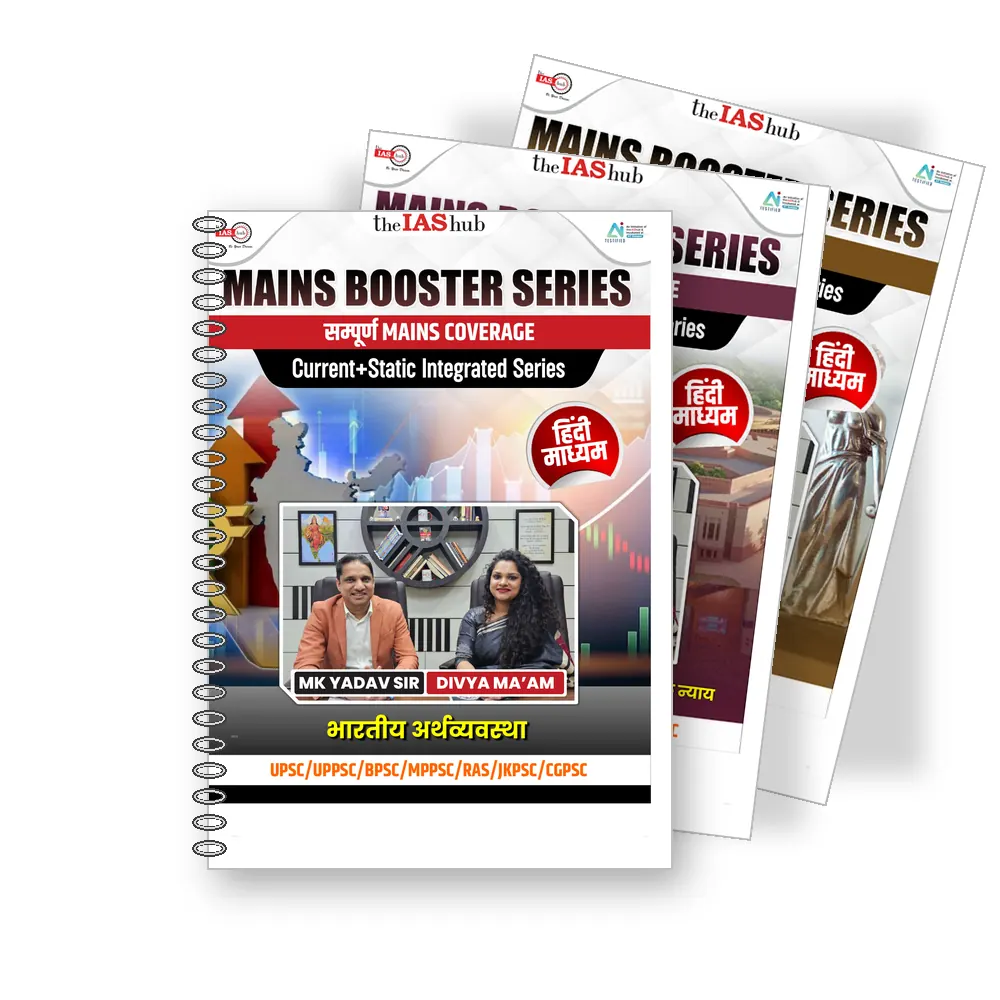 The IAS Hub Mains Booster Series 2026 Hindi General Studies Notes for UPSC, UPPSC, BPSC, MPPSC | Printed Notes Set of 8 Booklets by MK Yadav Sir and Divya Mam | Hindi Medium GS Mains Study Material | Indian Economy, Ethics, Polity, Geography, Art & Culture, Society, Internal Security, Science & Tech | For UPSC CSE Mains 2026, State PCS Exams₹1,985View on Competer →
 Booster Academy RPSC RAS General Studies Notes 2025-26 Hindi Medium Printed Notes | RPSC Prelims & Mains GS Booklets Set of 11 | Rajasthan GK, Art & Culture, Economy, Polity, Indian History, Science & Tech | 1917 Pages Study Material₹2,317View on Competer →
Continue reading
More in Buying Guides


Need help choosing?
Tell us your exam and stage on WhatsApp, we suggest the right set.