

SSC MTS Syllabus 2026: Exam Pattern, Subject-Wise Topics + GK Notes
Master the SSC MTS syllabus 2026 with full exam pattern, subject-wise topics, marks distribution, best books, weightage and a proven preparation strategy.
 Competer

The SSC MTS syllabus is the single most important document any aspirant should master before starting preparation for the Staff Selection Commission Multi Tasking (Non-Technical) Staff and Havaldar examination. Every year lakhs of candidates apply for these Group C posts in central government ministries and departments, yet a large number falter simply because they study the wrong topics or misjudge the weightage. This in-depth guide breaks down the complete SSC MTS syllabus for 2026, the latest exam pattern, marks distribution, subject-wise topics, the best books, a realistic preparation timeline, and the mistakes you must avoid. Whether you are a fresh graduate or a 10th-pass candidate aiming for a stable government job, this article gives you everything you need in one place.
SSC MTS Exam Overview 2026
SSC MTS is a national-level recruitment conducted by the Staff Selection Commission to fill Multi Tasking Staff (MTS) and Havaldar (in CBIC and CBN) vacancies. MTS is a non-gazetted, non-ministerial Group C post, while Havaldar posts involve duties in the customs and narcotics departments. Both are filled through the same computer-based examination, so understanding the full SSC MTS syllabus is equally vital for either preference.
| Particular | Details |
|---|---|
| Conducting Body | Staff Selection Commission (SSC) |
| Post Name | Multi Tasking Staff (MTS) & Havaldar |
| Category | Group C, Non-Gazetted |
| Minimum Qualification | 10th Pass (Matriculation) |
| Age Limit | 18-25 years (Havaldar 18-27 for some posts) |
| Selection Stages | Computer Based Examination (Paper-I) + PET/PST (Havaldar) + Document Verification |
| Exam Mode | Online (Computer Based Test) |
| Question Language | English, Hindi & 13 regional languages |
A key point candidates often miss: SSC MTS is now conducted as a single-paper objective examination. The earlier descriptive Paper-II has been removed in recent cycles, which makes mastering the objective SSC MTS syllabus even more decisive for selection.

SSC MTS Exam Pattern 2026
The SSC MTS exam pattern is unique compared to other SSC exams because the question paper is divided into two separate, independently-timed sessions within a single Computer Based Test. Understanding this structure is the first step before diving into the detailed SSC MTS syllabus.
| Session | Subject | No. of Questions | Marks | Duration |
|---|---|---|---|---|
| Session I | Numerical and Mathematical Ability | 20 | 60 | 45 minutes |
| Session I | Reasoning Ability and Problem Solving | 20 | 60 | (combined) |
| Session II | General Awareness | 25 | 75 | 45 minutes |
| Session II | English Language and Comprehension | 25 | 75 | (combined) |
| Total | 90 | 270 | 90 minutes | |
Key Features of the Two-Session Pattern
Session I (Numerical Ability and Reasoning) carries no negative marking, which means you should attempt every single question. Session II (General Awareness and English), however, carries a penalty of 1 mark for each wrong answer. Each question is worth 3 marks. You must qualify Session I to have Session II evaluated, so do not neglect maths and reasoning thinking they are “easy”. This marks-distribution nuance is why a clear grasp of the SSC MTS syllabus, session by session, beats blind cramming.
| Aspect | Session I | Session II |
|---|---|---|
| Negative Marking | No | Yes (-1 per wrong) |
| Marks per Question | 3 | 3 |
| Qualifying Requirement | Must qualify to evaluate Session II | Final merit basis |
| Strategy | Attempt all questions | Attempt only when confident |
SSC MTS Syllabus: Numerical and Mathematical Ability
The Numerical and Mathematical Ability section of the SSC MTS syllabus tests basic arithmetic up to the 10th-standard level. With no negative marking in Session I, this section is a scoring goldmine if you practise calculation speed. Below is the complete chapter list.
| Topic | Sub-topics / Notes |
|---|---|
| Number System | Integers, whole numbers, LCM & HCF, divisibility |
| Fractions & Decimals | Simplification, BODMAS, comparison |
| Percentage | Conversion, increase/decrease, applications |
| Ratio & Proportion | Direct, inverse, partnership basics |
| Averages | Mean, weighted average |
| Profit & Loss | Discount, marked price, successive discounts |
| Simple & Compound Interest | Yearly, half-yearly calculations |
| Time, Work & Wages | Efficiency, pipes & cisterns |
| Time, Speed & Distance | Trains, boats & streams |
| Mensuration | Area, perimeter, volume of basic shapes |
| Data Interpretation | Bar graphs, pie charts, tables |
| Algebra (basic) | Simple equations, identities |
How to Approach the Maths Section
Focus first on number system, percentage, ratio, average, and profit & loss, as these together account for the bulk of questions. Since Session I has no negative marking, even an educated guess can fetch marks. Practise mental calculation and learn tables up to 25, squares up to 30, and cubes up to 15 to save precious seconds.
SSC MTS Syllabus: Reasoning Ability and Problem Solving
The Reasoning Ability section of the SSC MTS syllabus evaluates your logical and analytical thinking through non-verbal and verbal reasoning. Like the maths section, it carries no negative marking, so accuracy plus full attempt is the winning formula.
| Topic | Sub-topics |
|---|---|
| Analogy | Number, word, and figure analogy |
| Classification (Odd One Out) | Letter, number, meaningful words |
| Series | Number series, alphabet series, figure series |
| Coding-Decoding | Letter shifting, symbol coding |
| Blood Relations | Family tree, coded relations |
| Direction & Distance | Path tracing, shortest distance |
| Ranking & Order | Position arrangement |
| Syllogism | Statements and conclusions |
| Venn Diagrams | Logical sets, relationships |
| Non-Verbal Reasoning | Mirror image, water image, paper folding |
| Matrix & Pattern Completion | Embedded figures, missing terms |
Reasoning Preparation Tip
Reasoning is the most predictable section. The same patterns repeat year after year, so solving 10-15 previous-year papers will quickly familiarise you with question types. Allocate roughly one minute per question and flag time-consuming puzzles for the end.
SSC MTS Syllabus: General Awareness
General Awareness is the most extensive and unpredictable part of the SSC MTS syllabus, and it sits in Session II where negative marking applies. This is exactly where most aspirants either make or break their selection. The section covers static GK, current affairs, and basic science. Because static GK is fixed and high-yield, building strong subject-wise notes is the smartest investment.
| Sub-section | Important Topics |
|---|---|
| History | Ancient, Medieval, Modern India, freedom struggle |
| Polity | Constitution, Fundamental Rights, Parliament, governance |
| Geography | Indian & world geography, rivers, climate, resources |
| Economy | Basic concepts, budget, banking, schemes |
| General Science | Physics, Chemistry, Biology (10th level) |
| Current Affairs | National & international events, sports, awards |
| Static GK | Important days, books & authors, dances, monuments |
For static GK, well-structured topic-wise notes save enormous time over fat reference books. Many toppers rely on the curated Parmar SSC GK History, Polity, and Geography notes because they distil exactly the high-frequency facts SSC repeats, rather than burdening you with irrelevant detail. You can browse the full range of SSC study material to cover every GA sub-section systematically.
Weightage Within General Awareness
| Sub-topic | Approx. Questions |
|---|---|
| History | 3-4 |
| Polity | 3-4 |
| Geography | 3-4 |
| General Science | 4-5 |
| Current Affairs | 5-6 |
| Static & Misc GK | 3-4 |
SSC MTS Syllabus: English Language and Comprehension
The English Language section in the SSC MTS syllabus measures grammar, vocabulary, and comprehension at a basic-to-intermediate level. It is part of Session II, so accuracy matters because of negative marking. Many candidates from a Hindi-medium background fear this section, but its topics are limited and highly scoreable with focused practice.
| Topic | What to Study |
|---|---|
| Spotting Errors | Subject-verb agreement, tense, prepositions |
| Sentence Improvement | Replacing incorrect phrases |
| Synonyms & Antonyms | Common SSC vocabulary |
| One-Word Substitution | Frequently repeated lists |
| Idioms & Phrases | Common idiomatic usage |
| Fill in the Blanks | Grammar & vocabulary based |
| Spelling Correction | Commonly misspelt words |
| Reading Comprehension | Short passages with questions |
| Cloze Test | Passage with multiple blanks |
English Preparation Tip
Build a daily habit of learning 10 new words with usage, and revise a fixed list of one-word substitutions and idioms, as these repeat heavily. Reading comprehension can be mastered by practising two passages every day until you can answer within four minutes.
Best Books for the SSC MTS Syllabus
Choosing the right resources can compress months of effort. Below is a curated, subject-wise booklist aligned to the complete SSC MTS syllabus. Avoid hoarding many books per subject; depth and revision beat breadth.
| Subject | Recommended Resource |
|---|---|
| Numerical Ability | Quantitative Aptitude (R.S. Aggarwal) + PYQ practice |
| Reasoning | Verbal & Non-Verbal Reasoning (R.S. Aggarwal) |
| GK – History | Parmar SSC GK History notes |
| GK – Polity | Parmar SSC GK Polity notes |
| GK – Geography | Parmar SSC GK Geography notes |
| General Science | Lucent’s General Knowledge |
| Current Affairs | Monthly capsules + daily updates |
| English | Objective General English (S.P. Bakshi) |
For the General Awareness portion, where SSC tends to repeat factual questions, the topic-wise SSC study material from Competer is built specifically around previous-year patterns, helping you spend revision time only on what is actually asked.
SSC MTS Havaldar: PET and PST Requirements
Candidates who opt for Havaldar posts in CBIC and CBN must clear a Physical Efficiency Test (PET) and Physical Standard Test (PST) after the CBT. This stage is not part of the written SSC MTS syllabus but is essential for Havaldar aspirants to plan for in advance.
| Test | Male | Female |
|---|---|---|
| Walking (PET) | 1600 m in 15 minutes | 1 km in 20 minutes |
| Cycling (PET) | 8 km in 30 minutes | 3 km in 25 minutes |
| Height (PST) | 157.5 cm | 152 cm |
| Chest (PST) | 81 cm (5 cm expansion) | Not applicable |
Note that relaxations in height and chest apply to candidates from hill areas and certain communities as per SSC norms. MTS-only candidates are exempt from PET/PST.
SSC MTS Preparation Strategy and Timeline
Knowing the SSC MTS syllabus is only half the battle; executing a disciplined plan is what converts knowledge into selection. A focused 3 to 4 month plan is sufficient for most candidates who study 4-5 hours daily.
| Phase | Duration | Focus |
|---|---|---|
| Phase 1: Foundation | Weeks 1-6 | Complete full syllabus subject-wise, build notes |
| Phase 2: Practice | Weeks 7-10 | Topic-wise tests, PYQ solving, weak-area drills |
| Phase 3: Mock Tests | Weeks 11-14 | Full-length mocks, time management, revision |
| Phase 4: Final Revision | Last 10 days | Notes revision, current affairs, formula sheets |
Daily Study Plan Suggestion
Divide your day across all four sections rather than studying one subject exclusively. A balanced split such as Maths (75 min), Reasoning (45 min), GA (75 min), and English (45 min) keeps every section fresh. Reserve weekends for full-length mock tests and analysis. Track which topics consistently cost you marks and target them in the next week.
Section-Wise Smart Strategy
In the exam, begin Session I confidently since there is no negative marking and attempt all 40 questions. In Session II, prioritise General Awareness questions you are sure of, then English, leaving doubtful questions unanswered to avoid the -1 penalty. This disciplined approach to the two-session pattern often separates selected candidates from the rest.
Common Mistakes to Avoid
Even well-prepared candidates lose out due to avoidable errors. Keep these pitfalls in mind as you work through the SSC MTS syllabus:
| Mistake | Why It Hurts |
|---|---|
| Ignoring Session I qualification | Session II is not evaluated if you fail Session I |
| Random guessing in Session II | Negative marking erodes your score |
| Collecting too many books | Leads to incomplete revision and confusion |
| Skipping current affairs | 5-6 sure marks lost in GA |
| No mock test practice | Poor time management on exam day |
| Neglecting revision | Forgetting static GK facts learnt earlier |
The biggest strategic error is treating General Awareness as something to “read casually”. Because it carries 25 questions worth 75 marks and is fact-based, a candidate with organised notes from quality SSC study material consistently outperforms one relying on scattered internet sources.
Marks Distribution Summary and Cut-Off Insight
Pulling together the entire SSC MTS syllabus, here is a consolidated view of where your marks come from. This birds-eye perspective helps you allocate study time proportionally.
| Section | Questions | Marks | Negative Marking |
|---|---|---|---|
| Numerical & Mathematical Ability | 20 | 60 | No |
| Reasoning Ability | 20 | 60 | No |
| General Awareness | 25 | 75 | Yes (-1) |
| English Language | 25 | 75 | Yes (-1) |
| Total | 90 | 270 | – |
Cut-offs vary by state and category, but historically candidates scoring around 130-160 out of 270 in general category have stood a strong chance, depending on vacancies. Since Session I is negative-marking-free, aiming for a near-perfect score there builds a safe buffer before the riskier Session II.
Frequently Asked Questions
What is the latest SSC MTS syllabus for 2026?
The SSC MTS syllabus 2026 covers four subjects across two sessions: Numerical and Mathematical Ability and Reasoning Ability in Session I, and General Awareness and English Language and Comprehension in Session II. The exam is fully objective with 90 questions for 270 marks.
Is there negative marking in the SSC MTS exam?
Session I (Maths and Reasoning) has no negative marking, so you should attempt every question. Session II (General Awareness and English) has a penalty of 1 mark for each wrong answer, so attempt only questions you are reasonably sure about.
Is there a descriptive paper in SSC MTS?
In recent recruitment cycles the descriptive Paper-II has been removed. SSC MTS is now conducted as a single objective Computer Based Test, making the objective syllabus the sole basis for written selection.
Which subject has the highest weightage in the SSC MTS syllabus?
General Awareness and English each carry 25 questions worth 75 marks, the highest in the exam. Numerical Ability and Reasoning carry 20 questions each worth 60 marks. So Session II carries slightly higher total weight, but Session I must be qualified first.
How many months are needed to prepare for SSC MTS?
A focused preparation of 3 to 4 months with 4-5 hours of daily study is generally sufficient to cover the entire SSC MTS syllabus, provided you practise previous-year papers and take regular full-length mock tests in the final weeks.
What are the best notes for the General Awareness section?
Topic-wise notes built around previous-year SSC patterns are most effective. The Parmar SSC GK History, Polity, and Geography notes available in Competer’s SSC study material collection cover the high-frequency static GK that SSC repeats, making revision faster and more targeted.

Competer
The Competer team: we pack the orders, so we know which editions aspirants keep coming back for.
Get it printed
SSC study material aspirants order most on Competer, delivered across India
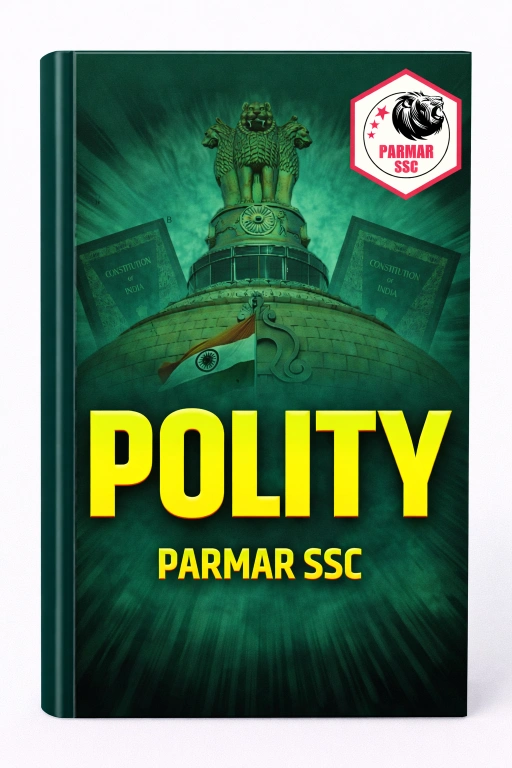 Parmar SSC GK Polity 4.0 Batch Notes 2026-27 | English Medium Edition₹545View on Competer →
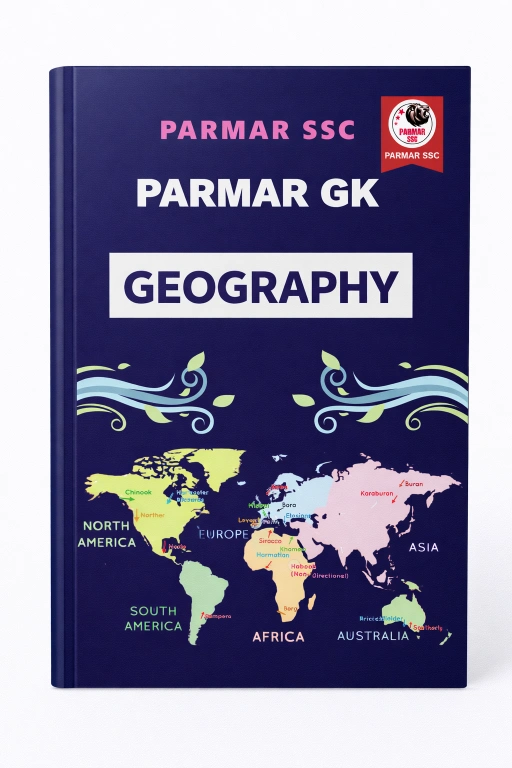 Parmar SSC GK Geography 4.0 Batch Notes 2026-27 | English Medium Edition₹745View on Competer →
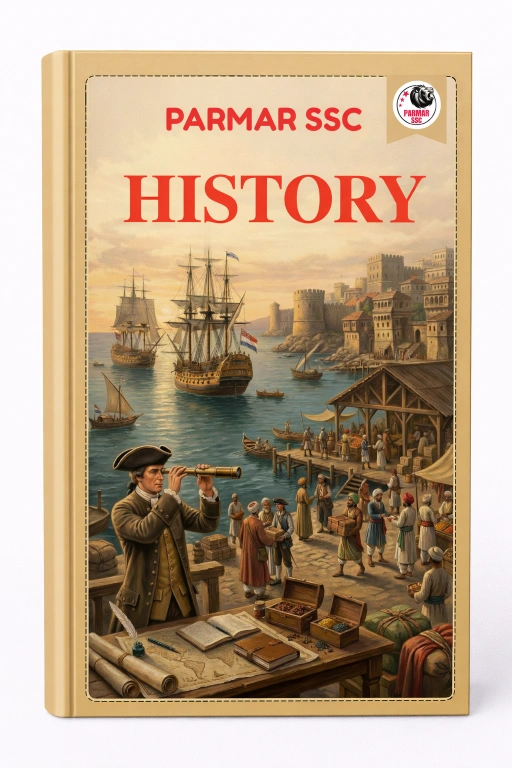 Parmar SSC GK History 4.0 Batch Notes 2026-27 | English Medium Edition₹745View on Competer →
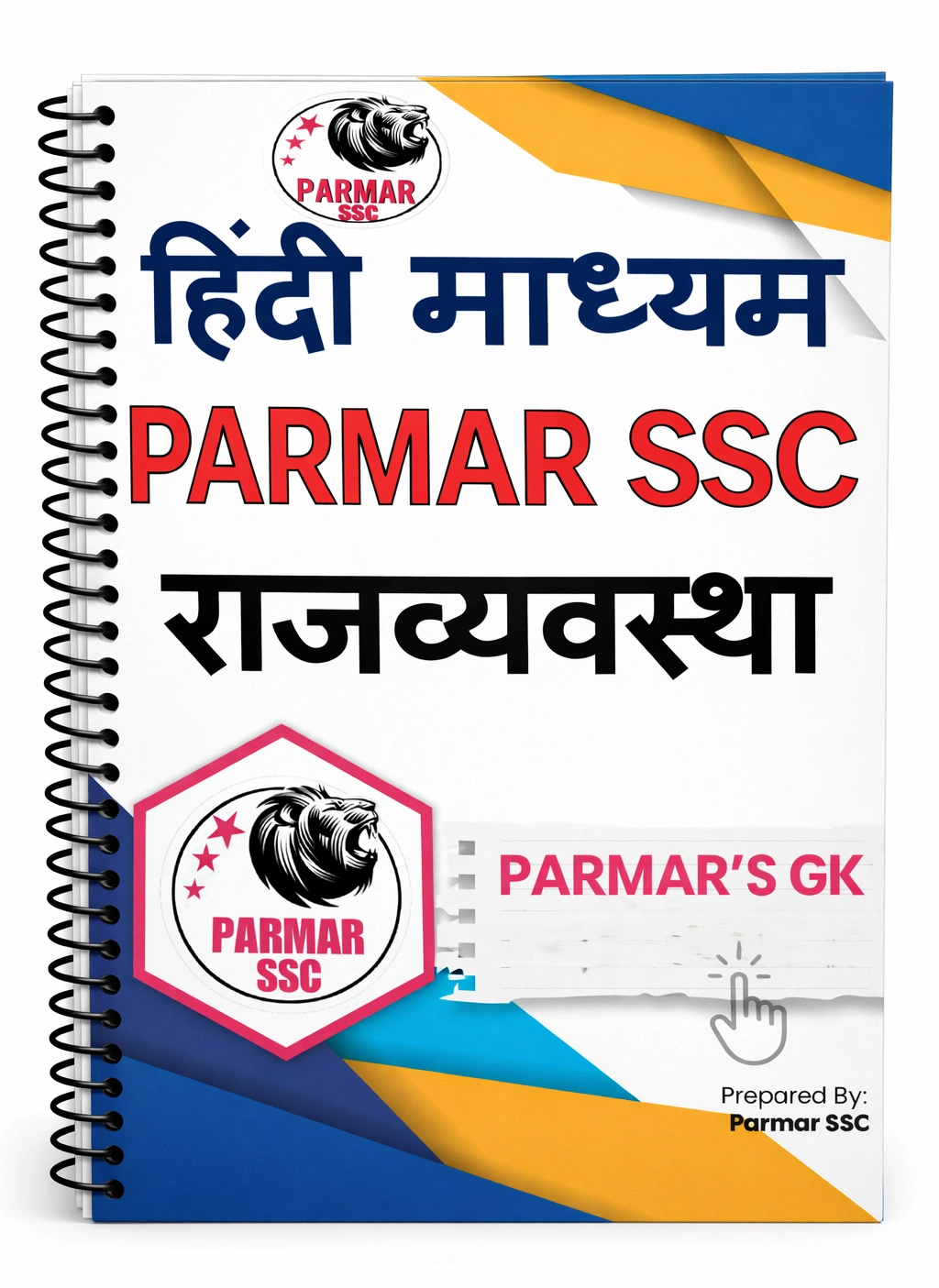 Parmar SSC GK Polity in Hindi - 4.0 Batch Notes 2026-27₹545View on Competer →
Continue reading
More in SSC Preparation


Need help choosing?
Tell us your exam and stage on WhatsApp, we suggest the right set.