

SSC CHSL Syllabus 2026: Tier 1 & Tier 2 Syllabus, Exam Pattern + Best GK Notes
A complete guide to the SSC CHSL syllabus 2026: full Tier 1 & Tier 2 topics, exam pattern, weightage, best books, and a proven preparation strategy.
 Competer

The SSC CHSL syllabus is the single most important document any aspirant must master before starting preparation for the Staff Selection Commission Combined Higher Secondary Level (10+2) examination. Conducted every year by the SSC to recruit candidates for posts such as Lower Division Clerk (LDC), Junior Secretariat Assistant (JSA), Postal Assistant (PA), Sorting Assistant (SA), and Data Entry Operator (DEO), the SSC CHSL exam is one of the most popular gateways into central government service for candidates who have cleared Class 12. A clear understanding of the complete SSC CHSL syllabus, the exam pattern, marks distribution, and topic-wise weightage allows you to plan a focused study schedule and avoid wasting time on irrelevant material. In this in-depth guide, we break down the full Tier 1 and Tier 2 syllabus, the latest exam pattern, subject-wise preparation strategy, recommended books, a realistic study timeline, and answers to the most common questions aspirants ask.
SSC CHSL Exam Pattern 2026: Tier 1 and Tier 2 Overview
Before diving into the detailed SSC CHSL syllabus, you must understand the two-stage selection process. The SSC CHSL is now conducted in two tiers, both computer-based. Tier 1 is an objective screening test, while Tier 2 is a more comprehensive objective test that also includes a skill/typing component. The earlier descriptive Tier 2 (essay/letter writing) has been merged into the new Tier 2 structure, so candidates today face only two computer-based tiers.
| Tier | Mode | Type | Purpose |
|---|---|---|---|
| Tier 1 | Computer Based (Online) | Objective Multiple Choice | Qualifying & Screening |
| Tier 2 | Computer Based (Online) | Objective MCQ + Skill/Typing Test | Merit / Final Selection |
Both stages are bilingual (English and Hindi) except for the English Language section. Negative marking applies in both tiers, so accuracy is as important as speed. Let us now look at the structure of each tier in detail before moving to the topic-wise SSC CHSL syllabus.
SSC CHSL Tier 1 Exam Pattern
Tier 1 is a 60-minute objective test of 100 questions carrying 200 marks. It is divided into four sections of 25 questions each. There is a penalty of 0.50 marks for every wrong answer.
| Section | No. of Questions | Maximum Marks | Duration |
|---|---|---|---|
| General Intelligence & Reasoning | 25 | 50 | 60 Minutes (80 min for PwD candidates) |
| General Awareness | 25 | 50 | |
| Quantitative Aptitude | 25 | 50 | |
| English Language | 25 | 50 | |
| Total | 100 | 200 |
SSC CHSL Tier 2 Exam Pattern
Tier 2 is the decisive stage that determines the final merit. It is divided into three sections, with Section 1 and Section 2 split into two modules each, plus a separate skill/typing module. The total objective test runs for about 2 hours 15 minutes (excluding the skill test), and there is a negative marking of 1 mark for each wrong answer in the objective sections.
| Section | Module | Subject | Questions | Marks |
|---|---|---|---|---|
| Section 1 | Module 1 | Mathematical Abilities | 30 | 90 |
| Module 2 | Reasoning & General Intelligence | 30 | 90 | |
| Section 2 | Module 1 | English Language & Comprehension | 40 | 120 |
| Module 2 | General Awareness | 20 | 60 | |
| Section 3 | Module 1 | Computer Knowledge Test | 15 | 45 |
| Module 2 | Skill Test / Typing Test | Qualifying | ||
The Computer Knowledge Module (Section 3, Module 1) is qualifying in nature for most posts, while the Skill Test (for DEO) and Typing Test (for LDC/JSA/PA/SA) are also qualifying. Only the marks from Section 1 and Section 2 of Tier 2 are counted for the final merit list, which is why a deep command of the full SSC CHSL syllabus for these subjects is non-negotiable.
Complete SSC CHSL Syllabus for Tier 1
The Tier 1 SSC CHSL syllabus tests four core areas. Below is the exhaustive topic-wise breakdown of each section. Because Tier 1 is a screening test, you must aim for both speed and high accuracy across all four sections to comfortably clear the cut-off.
General Intelligence & Reasoning Syllabus
This section evaluates your logical and analytical ability through both verbal and non-verbal reasoning. The topics are largely the same in Tier 1 and Tier 2, so mastering them once pays off twice.
| Verbal Reasoning | Non-Verbal Reasoning |
|---|---|
| Analogy | Figural Pattern Folding |
| Classification | Embedded Figures |
| Coding-Decoding | Figural Series |
| Series (Number, Alphabet) | Paper Cutting & Folding |
| Blood Relations | Mirror & Water Images |
| Direction & Distance | Cube & Dice |
| Syllogism, Statement-Conclusion | Counting of Figures |
| Order & Ranking, Seating Arrangement | Completion of Figures |
| Venn Diagrams, Word Formation | Dot Situation |
General Awareness Syllabus
General Awareness is the most scoring and least time-consuming section if prepared well, since questions are direct and knowledge-based. The SSC CHSL syllabus for this section covers History, Polity, Geography, Economics, General Science, Static GK, and Current Affairs. This is precisely where most aspirants lose marks because of weak conceptual notes. Structured, exam-oriented notes such as Parmar SSC GK History, Polity, and Geography notes are extremely useful for covering the static portion efficiently.
| Sub-Subject | Important Topics |
|---|---|
| History | Ancient, Medieval & Modern India, Indus Valley, Maurya & Gupta, Mughals, Freedom Struggle |
| Polity | Constitution, Fundamental Rights, Parliament, Judiciary, Amendments, Panchayati Raj |
| Geography | Indian & World Geography, Rivers, Mountains, Climate, Soils, Agriculture |
| Economics | Budget, Banking, National Income, Five-Year Plans, Inflation |
| General Science | Physics, Chemistry, Biology (basic 10+2 level) |
| Static & Current Affairs | Awards, Books, Sports, Days, Schemes, Last 6–8 months news |
Quantitative Aptitude Syllabus
The Quantitative Aptitude portion of the SSC CHSL syllabus tests numerical and arithmetic ability. Questions range from basic arithmetic to algebra, geometry, trigonometry, and data interpretation. Strong fundamentals and regular practice of shortcut methods are essential.
| Category | Topics Covered |
|---|---|
| Arithmetic | Number System, Percentage, Ratio & Proportion, Average, Profit & Loss, SI & CI, Time & Work, Time-Speed-Distance, Mixtures |
| Algebra | Basic Algebraic Identities, Linear Equations, Graphs of Equations |
| Geometry | Triangles, Circles, Polygons, Tangents, Congruence & Similarity |
| Mensuration | 2D & 3D Figures, Area, Volume, Surface Area |
| Trigonometry | Ratios, Identities, Heights & Distances, Complementary Angles |
| Data Interpretation | Bar Graph, Pie Chart, Line Graph, Tables, Frequency Polygon |
English Language Syllabus
The English section assesses grammar, vocabulary, and comprehension. It is highly scoring for candidates with a reading habit and a strong grasp of grammar rules. The same topics appear in Tier 2 in a more detailed form.
| Grammar & Vocabulary | Comprehension & Usage |
|---|---|
| Spotting Errors | Reading Comprehension |
| Fill in the Blanks | Cloze Test |
| Synonyms & Antonyms | Sentence Improvement |
| Spelling Correction | Para Jumbles |
| Idioms & Phrases | Active & Passive Voice |
| One Word Substitution | Direct & Indirect Speech |
Complete SSC CHSL Syllabus for Tier 2
Since Tier 2 marks determine the final merit, this part of the SSC CHSL syllabus deserves the most attention. The subjects overlap with Tier 1 but go deeper and add Computer Knowledge. Below is the module-wise detail.
Mathematical Abilities (Tier 2)
This module mirrors Quantitative Aptitude but with a higher difficulty level. Topics include Number Systems, Fundamental Arithmetical Operations, Algebra, Geometry, Mensuration, Trigonometry, Statistics & Probability (basic), and Data Interpretation. Expect lengthier multi-step problems, so practising previous-year papers under timed conditions is critical.
Reasoning & General Intelligence (Tier 2)
The reasoning module in Tier 2 covers all Tier 1 topics plus advanced puzzles such as Semantic Analogy, Symbolic/Number Analogy, Figural Series, Problem Solving, Word Building, Coding-Decoding, Numerical Operations, Critical Thinking, and Emotional/Social Intelligence. The variety is wider, so revise non-verbal reasoning thoroughly.
English Language & Comprehension (Tier 2)
With 40 questions worth 120 marks, this is the single highest-weightage module. It covers Vocabulary, Grammar, Sentence Structure, Synonyms/Antonyms, Idioms, Active/Passive Voice, Para Jumbles, Comprehension Passages, Cloze Test, and Sentence Improvement. Building a strong word bank and revising grammar rules daily directly boosts your merit position.
General Awareness (Tier 2)
The 20-question General Awareness module tests static GK and current affairs covering India and its neighbouring countries, especially History, Culture, Geography, Economic Scene, General Polity, and Scientific Research. This is again where well-organised notes like the Parmar GK series and the full range of SSC study material help you revise high-yield facts quickly before the exam.
Computer Knowledge Module (Tier 2)
This 15-question qualifying module covers Computer Basics, MS Office (Word, Excel, PowerPoint), Internet & Email, Networking fundamentals, Computer Hardware & Software, and basic Cyber Security awareness. Although qualifying, do not ignore it — a few hours of revision is enough to clear it comfortably.
| Computer Topic | Key Areas |
|---|---|
| Computer Basics | Generations, Input/Output Devices, Memory Units |
| MS Office | Word, Excel, PowerPoint shortcuts & features |
| Internet & WWW | Browsers, Search Engines, Email, URLs |
| Networking | LAN/WAN, Protocols, IP basics |
| Security | Viruses, Antivirus, Firewalls, Safe Browsing |
SSC CHSL Skill Test and Typing Test Requirements
The final qualifying component depends on the post you have applied for. The Typing Test applies to LDC/JSA, PA/SA, while the Data Entry Skill Test applies to DEO posts. Both are qualifying and not counted in the merit, but failing them disqualifies you from final selection.
| Post | Test Type | Requirement |
|---|---|---|
| LDC / JSA | Typing Test | English: 35 wpm / Hindi: 30 wpm |
| PA / SA | Typing Test | English: 35 wpm / Hindi: 30 wpm |
| DEO (most depts.) | Data Entry Skill Test | 8,000 key depressions per hour |
| DEO (C&AG) | Data Entry Skill Test | 15,000 key depressions per hour |
SSC CHSL Subject-Wise Weightage and Marks Distribution
Understanding weightage helps you allocate study hours intelligently across the SSC CHSL syllabus. In Tier 1 all four sections carry equal 50 marks, but in Tier 2 the merit-counting sections are weighted differently. The table below shows the merit-relevant distribution in Tier 2.
| Tier 2 Subject (Merit) | Questions | Marks | Weight % |
|---|---|---|---|
| English Language & Comprehension | 40 | 120 | ~33% |
| Mathematical Abilities | 30 | 90 | ~25% |
| Reasoning & General Intelligence | 30 | 90 | ~25% |
| General Awareness | 20 | 60 | ~17% |
The takeaway is clear: English and Mathematics together account for nearly 58% of merit marks in Tier 2. Aspirants who neglect English in favour of GK often lose their rank despite strong general knowledge.
Best Books to Cover the Full SSC CHSL Syllabus
The right books make covering the SSC CHSL syllabus far more efficient. Below is a curated, subject-wise recommendation list based on what consistently works for toppers.
| Subject | Recommended Resource |
|---|---|
| Quantitative Aptitude | Rakesh Yadav / Kiran SSC Maths Chapterwise PYQs |
| Reasoning | R.S. Aggarwal / Kiran Reasoning Chapterwise |
| English | SP Bakshi (Objective General English) / Plinth to Paramount |
| General Awareness (History) | Parmar SSC GK History notes |
| General Awareness (Polity) | Parmar SSC GK Polity notes |
| General Awareness (Geography) | Parmar SSC GK Geography notes |
| Current Affairs | Monthly compilations + daily news app |
| Full SSC prep bundle | SSC study material collection |
For the General Awareness section, concise topic-wise notes outperform bulky reference books because they help you revise the entire static portion multiple times before the exam — repetition is the secret behind high GA scores.
SSC CHSL Preparation Strategy: Subject-Wise Tips
Knowing the SSC CHSL syllabus is only half the battle; converting it into a high score requires a smart strategy. Here is a practical, section-wise approach.
Quantitative Aptitude Strategy
Build conceptual clarity first, then shift to speed. Master arithmetic chapters (percentage, ratio, profit & loss, time & work) because they form the backbone of both tiers. Memorise tables up to 30, squares up to 30, and cubes up to 20. Solve at least 50 questions daily and maintain an error log to track recurring mistakes.
Reasoning Strategy
Reasoning is the fastest-scoring section once topics are familiar. Practise non-verbal reasoning (mirror images, paper folding, figure counting) regularly since these are pure-practice topics. Attempt puzzles and seating arrangements last in the exam, as they consume the most time.
English Strategy
Read editorials daily, note down 10 new words with usage, and revise one grammar rule each day. Vocabulary and grammar together cover the majority of English questions, so a disciplined daily habit compounds quickly. Para jumbles and cloze tests improve dramatically with practice.
General Awareness Strategy
Divide GA into static and current affairs. Finish the static portion using concise notes, then keep current affairs revision rolling with monthly capsules. Cover the last 6–8 months of current affairs before Tier 1. Static GK from History, Polity, Geography, Economics, and Science rarely changes, so notes you prepare once serve you for years.
SSC CHSL Study Timeline: A 4-Month Plan
A structured timeline keeps you on track to cover the entire SSC CHSL syllabus without last-minute panic. Here is a realistic four-month schedule for a serious aspirant studying 5–6 hours daily.
| Phase | Duration | Focus |
|---|---|---|
| Foundation | Month 1 | Build concepts in Maths & Reasoning; start static GK notes; daily English vocab |
| Building | Month 2 | Complete syllabus coverage; topic-wise tests; current affairs begins |
| Practice | Month 3 | Sectional tests; previous-year papers; weak-area revision |
| Revision & Mocks | Month 4 | Full-length mocks 3–4x/week; analysis; final GA & current affairs revision |
Adjust intensity based on your starting level, but never skip the mock-test phase — analysing mocks is where the biggest score jumps happen.
Common Mistakes Aspirants Make with the SSC CHSL Syllabus
Even hardworking candidates fall short due to avoidable errors. Keep these pitfalls in mind while planning your preparation around the SSC CHSL syllabus:
- Ignoring Tier 2 weightage: Many focus only on clearing Tier 1 and underprepare for Tier 2, which actually decides the merit.
- Neglecting English: English carries the highest marks in Tier 2 yet is the most ignored section by Hindi-medium aspirants.
- No revision of GA: Reading GK once is useless; without 4–5 revisions, facts fade before the exam.
- Skipping mock analysis: Taking mocks without analysing errors wastes their entire value.
- Poor time management: Spending too long on tough reasoning puzzles in Tier 1 leaves easy GA marks on the table.
- Overlooking the typing test: Candidates clear the written exam but fail the qualifying typing test due to zero practice.
SSC CHSL Eligibility and Important Highlights
While the focus of this guide is the SSC CHSL syllabus, a quick snapshot of eligibility helps you confirm you are on the right track before investing months of preparation.
| Parameter | Details |
|---|---|
| Educational Qualification | Passed Class 12 (10+2) or equivalent |
| Age Limit | 18–27 years (relaxation as per category rules) |
| Nationality | Indian citizen (or as per SSC notification) |
| Selection Stages | Tier 1, Tier 2, Skill/Typing Test, Document Verification |
| Exam Mode | Online (Computer Based) |
Always verify exact age and qualification cut-off dates from the official SSC notification for the relevant cycle, as small changes can occur year to year.
Frequently Asked Questions
What is the latest SSC CHSL syllabus for Tier 1?
The SSC CHSL syllabus for Tier 1 covers four sections — General Intelligence & Reasoning, General Awareness, Quantitative Aptitude, and English Language — with 25 questions each, totalling 100 questions and 200 marks in 60 minutes, with a 0.50 negative marking per wrong answer.
Is the SSC CHSL Tier 2 syllabus harder than Tier 1?
Yes, the Tier 2 syllabus covers the same core subjects but at a higher difficulty level and adds a Computer Knowledge module. Since only Tier 2 marks count for the final merit, mastering this stage thoroughly is essential for selection.
Which section has the highest weightage in the SSC CHSL syllabus?
In Tier 2, the English Language & Comprehension module carries the highest weightage with 40 questions worth 120 marks (around 33% of merit marks), followed by Mathematical Abilities and Reasoning at 90 marks each.
Is there negative marking in the SSC CHSL exam?
Yes. Tier 1 has a penalty of 0.50 marks for each wrong answer, while Tier 2 objective sections deduct 1 mark per wrong answer. Therefore, accuracy and intelligent guessing are critical to maximising your score.
What are the best books to cover the full SSC CHSL syllabus?
For Maths use Rakesh Yadav or Kiran chapterwise PYQs, for Reasoning use R.S. Aggarwal, for English use SP Bakshi, and for General Awareness use concise notes such as the Parmar SSC GK History, Polity, and Geography notes available in the Competer SSC study material collection.
How much time is needed to complete the SSC CHSL syllabus?
A dedicated aspirant studying 5–6 hours daily can complete the entire SSC CHSL syllabus and reach mock-test readiness in about four months, divided into foundation, syllabus-building, practice, and revision-with-mocks phases.

Competer
The Competer team: we pack the orders, so we know which editions aspirants keep coming back for.
Get it printed
SSC study material aspirants order most on Competer, delivered across India
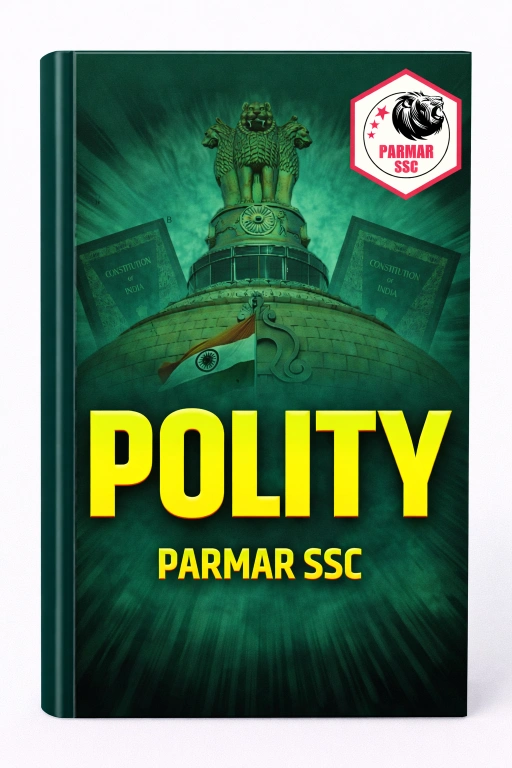 Parmar SSC GK Polity 4.0 Batch Notes 2026-27 | English Medium Edition₹545View on Competer →
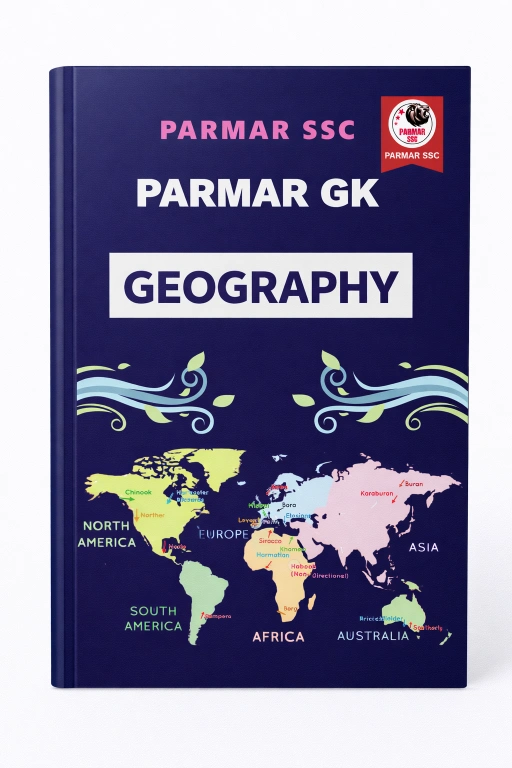 Parmar SSC GK Geography 4.0 Batch Notes 2026-27 | English Medium Edition₹745View on Competer →
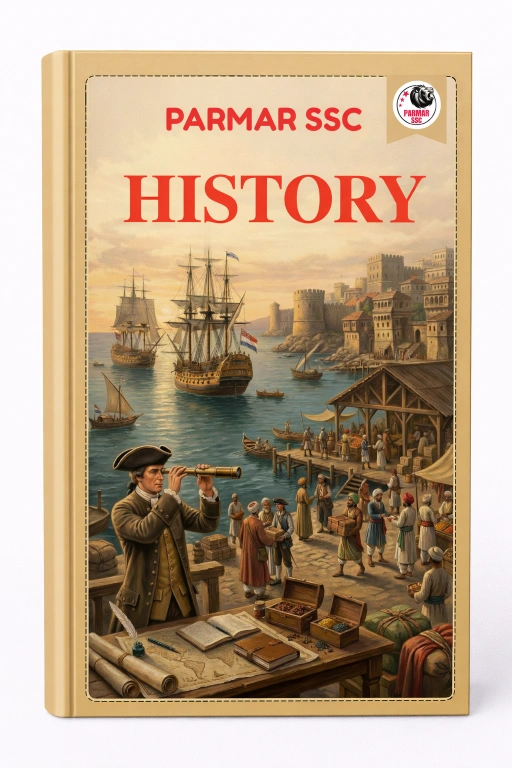 Parmar SSC GK History 4.0 Batch Notes 2026-27 | English Medium Edition₹745View on Competer →
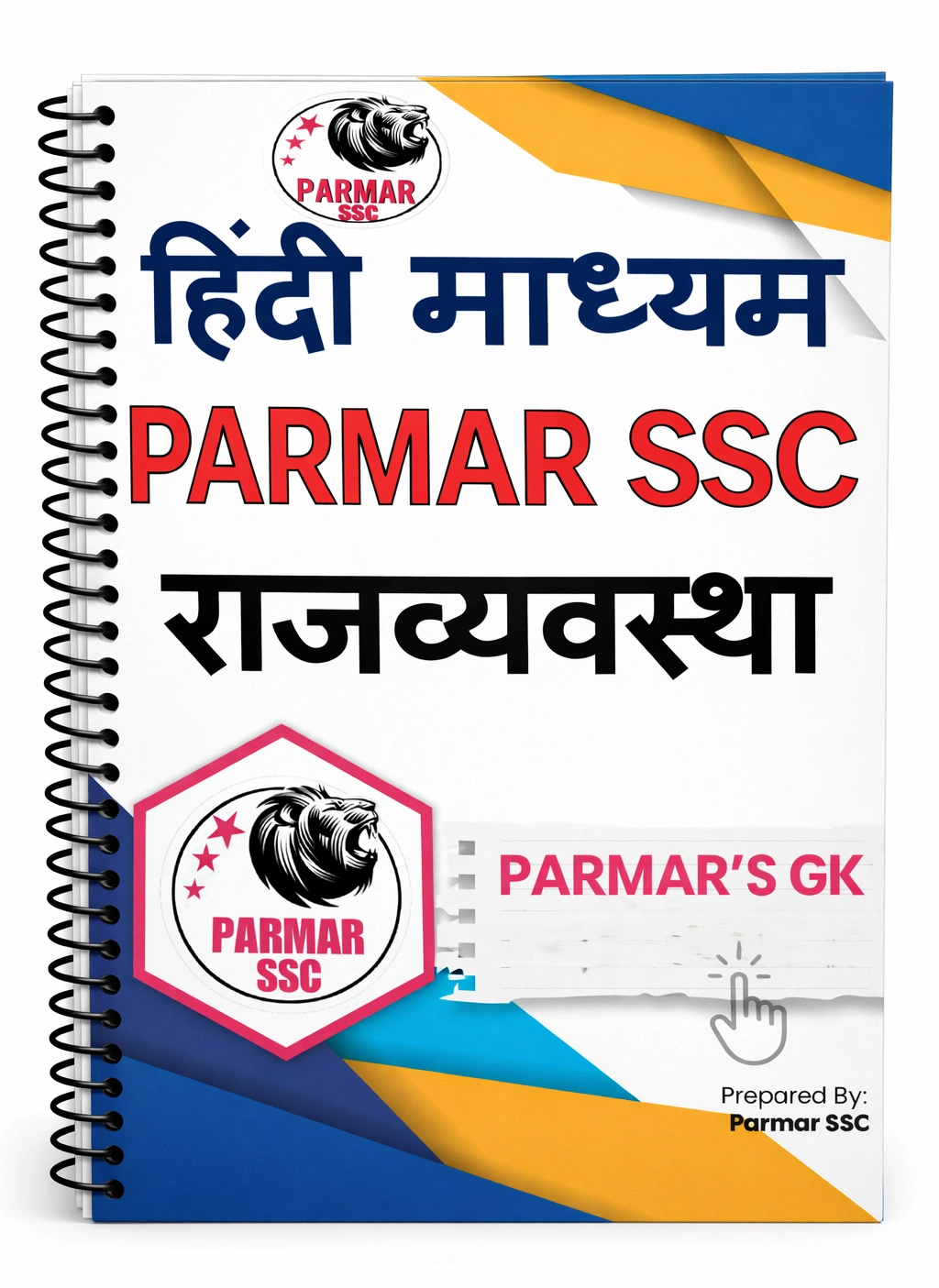 Parmar SSC GK Polity in Hindi - 4.0 Batch Notes 2026-27₹545View on Competer →
Continue reading
More in SSC Preparation


Need help choosing?
Tell us your exam and stage on WhatsApp, we suggest the right set.