

SSC GD Syllabus 2026: Subject-Wise Topics, Pattern
SSC GD syllabus 2026: subject-wise topics, exam pattern, marking scheme, topic weightage, physical standards & free English.
 Competer
The SSC GD syllabus for 2026 covers four subjects in a single Computer-Based Examination (CBE): General Intelligence & Reasoning, General Knowledge & General Awareness, Elementary Mathematics, and English/Hindi. The CBE carries 80 questions for 160 marks in 60 minutes, with every section worth 20 questions (40 marks), +2 for each correct answer and 0.25 negative marking per wrong answer. Clearing the CBE is followed by a Physical Efficiency Test (PET), Physical Standard Test (PST), Detailed Medical Examination and Document Verification.
Quick answer: 4 subjects, 80 questions, 160 marks, 60 minutes, +2/−0.25 marking, no sectional cut-off, available in English, Hindi and 13 regional languages.
This guide gives you the full ssc gd syllabus 2026 subject-wise and topic-wise, the latest exam pattern, previous-year weightage tied to actual papers, eligibility and age limits, category-wise physical standards, qualifying cut-off marks, a 30/60/90-day study plan, and a free ssc gd syllabus pdf download in both English and Hindi. It is written for aspirants targeting Constable (GD) posts in BSF, CISF, CRPF, ITBP, SSB, Assam Rifles (Rifleman), NCB (Sepoy) and SSF.
SSC GD 2026 Overview & Highlights
The Staff Selection Commission conducts the GD Constable recruitment every year on behalf of the Central Armed Police Forces (CAPFs) and allied forces. The notification usually appears in the last quarter of the year, with the CBE held in early-to-mid 2026. Below is a quick highlights table before we open up the detailed syllabus.
| Particular | Details |
|---|---|
| Conducting Body | Staff Selection Commission (SSC) |
| Post | Constable (General Duty) in CAPFs, Rifleman in Assam Rifles, Sepoy in NCB, Constable in SSF |
| Exam Mode | Computer-Based Examination (CBE) — online |
| Total Questions | 80 |
| Total Marks | 160 |
| Duration | 60 minutes (80 minutes for scribe-eligible candidates) |
| Sections | 4 (Reasoning, GK & GA, Maths, English/Hindi) |
| Marking Scheme | +2 per correct answer; −0.25 per wrong answer |
| Language of Paper | English, Hindi + 13 regional languages |
| Selection Stages | CBE → PET → PST → Detailed Medical → Document Verification |
| Negative Marking | Yes (0.25 marks per wrong answer) |

SSC GD Exam Pattern 2026
Understanding the ssc gd exam pattern 2026 is the first step to using the syllabus efficiently. The CBE has objective multiple-choice questions split equally across four sections. There is no sectional cut-off in the CBE — only an overall qualifying mark by category — which changes how you should allocate your 60 minutes (more on that in the strategy section).
| Section | Subject | Questions | Marks |
|---|---|---|---|
| Part A | General Intelligence & Reasoning | 20 | 40 |
| Part B | General Knowledge & General Awareness | 20 | 40 |
| Part C | Elementary Mathematics | 20 | 40 |
| Part D | English / Hindi | 20 | 40 |
| Total | 80 | 160 | |
Key rules to remember: the question paper is bilingual by default (English and Hindi) and is additionally available in 13 regional languages — Assamese, Bengali, Gujarati, Kannada, Konkani, Malayalam, Manipuri, Marathi, Odia, Punjabi, Tamil, Telugu and Urdu. Each correct answer adds 2 marks; each wrong answer deducts 0.25 marks, so blind guessing is risky. Unattempted questions carry no penalty.
What Changed in SSC GD Syllabus 2026 vs 2025
A common confusion among aspirants is which version of the syllabus is current. The good news: the ssc gd syllabus 2026 is structurally the same as 2025 — the Commission has not overhauled the topics. The table below is a clear changelog so you know exactly what to trust while the official SSC notification is awaited/released.
| Element | 2025 | 2026 (Expected / Current) |
|---|---|---|
| Number of questions | 80 | 80 (unchanged) |
| Total marks | 160 | 160 (unchanged) |
| Duration | 60 minutes | 60 minutes (unchanged) |
| Negative marking | 0.25 | 0.25 (unchanged) |
| Regional languages | 13 + English/Hindi | 13 + English/Hindi (unchanged) |
| Syllabus topics | Standard 4-subject structure | Same 4-subject structure |
Always cross-check the final topics against the official notification PDF on ssc.gov.in when it is published. Until then, prepare from the structure below — it has been stable for several recruitment cycles.
SSC GD Constable Syllabus Subject Wise
Here is the complete ssc gd constable syllabus subject wise. Study it topic by topic and tick off each item using the free checklist linked later in this article.
Part A — General Intelligence & Reasoning (~13 topics)
This section tests non-verbal and verbal reasoning. Expect analogy and classification-heavy questions. Core topics:
- Analogies (number, letter, meaningful words)
- Similarities and differences
- Spatial visualisation and spatial orientation
- Coding and decoding
- Visual memory and discrimination
- Relationship concepts (blood relations)
- Arithmetical reasoning and figural classification
- Arithmetic number series
- Non-verbal series
- Observation and distinguishing patterns
- Analytical functions and figure completion
- Problem-solving and syllogism
- Venn diagrams, directions and ranking
Part B — General Knowledge & General Awareness (~8 areas)
This section rewards awareness of the world around you, especially current affairs and static GK. Coverage areas:
- Current events and current affairs (national and international)
- Indian History and the freedom movement
- Indian Polity and the Constitution
- Geography (India and the world)
- Economy / Economic Scene
- General Science (Physics, Chemistry, Biology basics)
- Culture, sports, books and authors, important days
- Awards, honours, schemes and scientific research
Current affairs of the last 6–8 months contribute heavily here. A compact monthly current-affairs resource such as the Vision IAS Current Affairs Magazine (January 2026, English) or the Hindi medium edition is an efficient way to revise national and international events that repeatedly appear in SSC GD papers.
Part C — Elementary Mathematics (~10–16 topics)
Questions are of matriculation (Class 10) level. Speed and accuracy in simplification matter most. Topics include:
- Number systems and problems on whole numbers
- Decimals and fractions
- Relationship between numbers
- Fundamental arithmetical operations
- Percentage
- Ratio and proportion
- Averages and interest (simple & compound)
- Profit and loss, discount
- Mensuration (area, perimeter, volume)
- Time and distance, time and work
- Ratio and time, partnership
- Tables and graphs / data interpretation
Part D — English / Hindi Language
Candidates choose English or Hindi for this section (opted during the exam). Both test basic comprehension and grammar at matriculation level.
English topics: Spot the error, fill in the blanks, synonyms/antonyms, spelling detection, idioms & phrases, one-word substitution, improvement of sentences, active/passive voice, direct/indirect narration, comprehension passage, cloze test, para-jumbles.
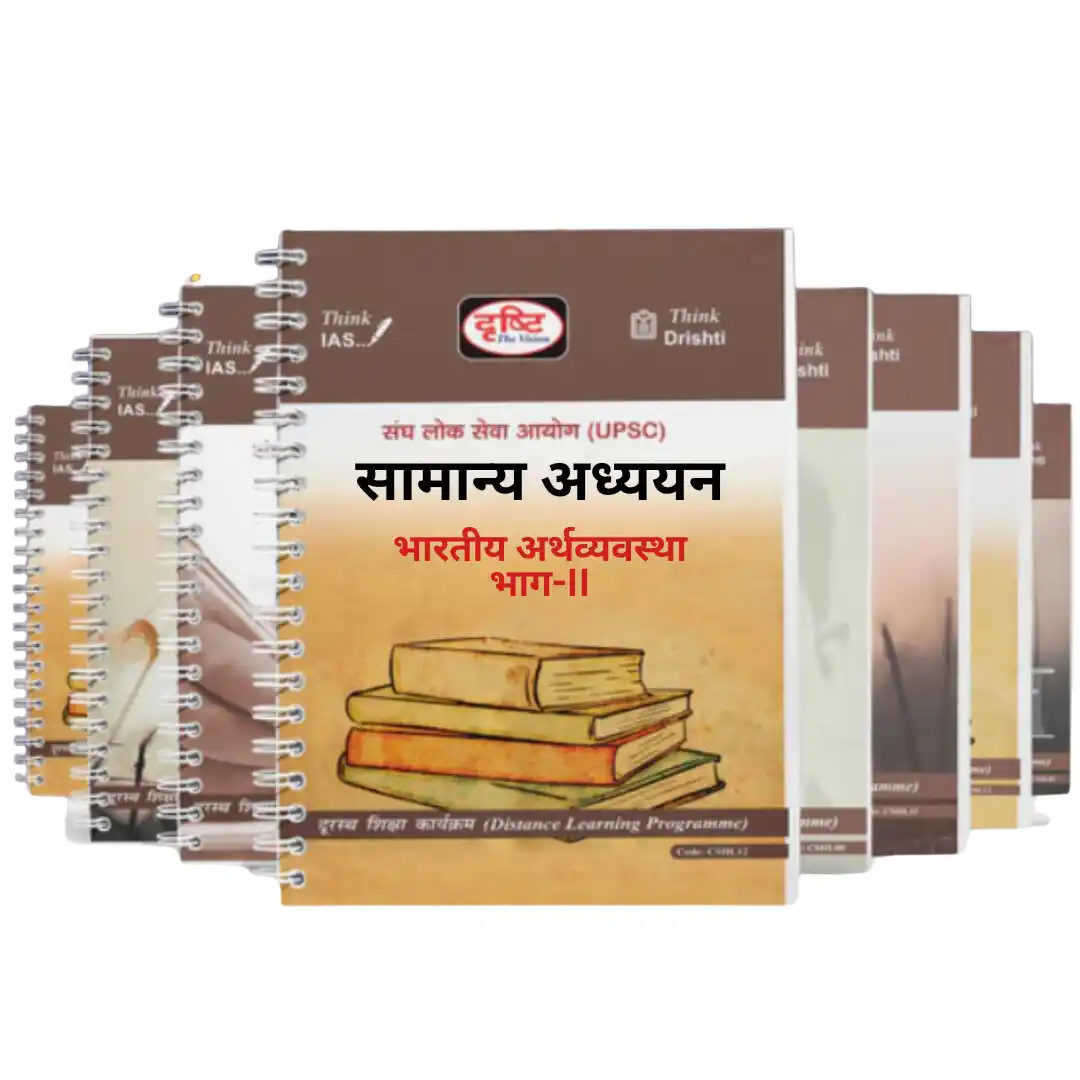
ssc gd syllabus in hindi (हिंदी भाग): संधि और संधि विच्छेद, उपसर्ग, प्रत्यय, पर्यायवाची/विलोम शब्द, मुहावरे और लोकोक्तियाँ, अनेक शब्दों के लिए एक शब्द, वाक्यांश शुद्धि, वर्तनी शुद्धि, वचन/लिंग/कारक, तत्सम-तद्भव, रस-छंद-अलंकार (मूल), गद्यांश आधारित प्रश्न (comprehension). Hindi-medium aspirants can strengthen their conceptual base with structured material such as the Drishti IAS Hindi Study Material, which builds the same grammar and comprehension foundation tested here.
SSC GD Syllabus Topic Wise Weightage
The following ssc gd syllabus topic wise weightage is built from the trend of previous-year CBE papers. Use it to prioritise high-return topics first. Numbers are indicative question counts per section (total 20 each).
| Subject | High-Weightage Topics | Approx. Questions |
|---|---|---|
| Reasoning | Analogy, Classification, Series | 7–9 |
| Coding-Decoding, Blood Relations | 4–5 | |
| Venn Diagram, Direction, Non-verbal | 5–7 | |
| GK & GA | Current Affairs | 6–8 |
| Static GK (History, Polity, Geography) | 7–9 | |
| General Science | 4–5 | |
| Maths | Simplification, Percentage, Average | 6–8 |
| Ratio, Profit-Loss, Interest | 5–6 | |
| Time-Work, Speed-Distance, Mensuration | 5–7 | |
| English/Hindi | Grammar (error, fill-ups, voice) | 9–11 |
| Vocabulary & Comprehension | 7–9 |
Takeaway: in every section, 60–70% of marks come from a handful of repeat topics. Mastering analogy/series, current affairs, simplification/percentage and grammar basics can comfortably take you past the cut-off. Practising with topic-wise previous-year questions — the same philosophy behind the Forum IAS Topic-Wise PYQ Toolkit — trains you to recognise these recurring patterns quickly.
Where to Download the Official SSC GD Syllabus PDF (English & Hindi)
Aspirants want a single printable file they can revise from. To get your ssc gd syllabus pdf download: (1) visit the official site ssc.gov.in and open the latest SSC GD Constable notification, where the Annexure contains the official syllabus; (2) save it in your chosen language, since the notification carries both English and Hindi versions. For a bilingual, topic-by-topic quick-revision sheet, copy the subject-wise lists above into a document and print them as your personal tracker — this doubles as a ssc gd syllabus in hindi checklist for the Hindi section.
A smart approach is to print the weightage table and the subject-wise topic list on one page each, then tick topics as you complete them. This turns a static PDF into an active revision tracker.
SSC GD Eligibility & Age Limit 2026
Before you commit to the syllabus, confirm you meet the basic eligibility, because the physical and medical stages later in the process assume you already qualify on age and education.
| Criterion | Requirement (as per recent cycles) |
|---|---|
| Nationality | Indian citizen (and categories specified in the notification) |
| Educational Qualification | Class 10 (Matriculation) pass from a recognised board |
| Age Limit | 18 to 23 years (upper-age relaxation for reserved categories) |
| Age Relaxation | OBC +3 years, SC/ST +5 years, plus ex-servicemen/other special categories per rules |
Age is normally calculated as on the cut-off date printed in the official notification, so always verify the exact date and relaxation rules for your category on ssc.gov.in before applying. Candidates who pass the CBE but do not meet eligibility are removed at the Document Verification stage, so check this first.
SSC GD Selection Process 2026 (Five Stages)
Clearing the written CBE is only the first step. The complete selection process has five stages, and you must qualify each to be recruited.
| Stage | Test | Nature |
|---|---|---|
| 1 | Computer-Based Examination (CBE) | Merit-deciding, 160 marks |
| 2 | Physical Efficiency Test (PET) | Qualifying (race) |
| 3 | Physical Standard Test (PST) | Qualifying (height/chest) |
| 4 | Detailed Medical Examination (DME) | Qualifying (fitness/vision) |
| 5 | Document Verification (DV) | Qualifying (eligibility check) |
Final merit is prepared on CBE marks (normalised across shifts), but a candidate failing any physical or medical stage is eliminated regardless of CBE score.
SSC GD Physical Standards: Height, Chest & Running
Physical standards are frequently buried in other guides. Here is a consolidated view of the PST (height and chest) and PET (race) requirements.
Physical Standard Test (PST) — Height & Chest
| Category | Male Height (cm) | Male Chest (cm, unexpanded–expanded) | Female Height (cm) |
|---|---|---|---|
| General / OBC / SC | 170 | 80–85 | 157 |
| ST | 162.5 | 76–81 | 150 |
| Hill areas (Garhwal, Kumaon, Gorkhas, Dogras, Marathas, etc.) | 165 | 78–83 | 155 |
| North-Eastern states & Sikkim | 162.5 | 77–82 | 152.5 |
Chest measurement applies to male candidates only; a minimum expansion is mandatory. Height relaxations also apply to candidates from Left-Wing Extremism (LWE) affected districts and certain tribal communities as per the notification.
Physical Efficiency Test (PET) — Running
| Category | Male Race | Female Race |
|---|---|---|
| General (most regions) | 5 km in 24 minutes | 1.6 km in 8½ minutes |
| Ladakh region | 1.6 km in 7 minutes | 800 m in 5 minutes |
The PET is purely qualifying — timing does not add to your merit — but failing it ends your candidature. Start light jogging early in your preparation so fitness is not a last-minute scramble.
Detailed Medical Examination — Visual Standards
The DME checks overall fitness including vision. The broad visual-acuity requirement is a minimum distant vision of 6/6 in the better eye and 6/9 in the worse eye without correction (no colour blindness, squint or surgical correction like Lasik, as specified for the force). Candidates must also meet body-weight-proportionate-to-height norms and be free of knock-knee, flat foot and varicose veins.
SSC GD Qualifying / Cut-Off Marks by Category
To be considered in the merit list, you must score at least the minimum qualifying percentage in the CBE based on your category.
| Category | Minimum Qualifying Marks (%) |
|---|---|
| General / UR | 30% |
| OBC / EWS | 25% |
| SC / ST | 20% |
Remember these are qualifying thresholds, not the actual selection cut-off. The real closing cut-offs are far higher and vary by state/force and category — typically well above these minimums because of intense competition. Aim to maximise your CBE score rather than just clear the qualifying bar.
Previous-Year Analysis & Difficulty Level
Across recent cycles, the SSC GD CBE has been rated easy to moderate. Reasoning and GK are generally the most scoring; Maths is calculation-based but predictable; the language section is straightforward for anyone with matriculation-level fundamentals. The main challenge is not difficulty but time — 80 questions in 60 minutes means roughly 45 seconds per question, so accuracy and speed both decide your score. Current affairs is the single most dynamic area and the one where well-prepared aspirants pull ahead.
30/60/90-Day Study Plan Mapped to the Syllabus
Top-ranking pages rarely give a concrete timetable. Use this section-wise plan depending on how much time you have before the CBE.
| Phase | Focus | Daily Routine |
|---|---|---|
| Days 1–30 (Foundation) | Complete the full syllabus once — concepts in Maths & Reasoning, static GK, grammar rules | 2 topics/day + 1 current-affairs session + 20 practice questions |
| Days 31–60 (Practice) | Topic-wise PYQs, high-weightage topics, sectional tests | 1 sectional test + error log + 1 month of current affairs revision |
| Days 61–90 (Revision & Mock) | Full-length mocks, timed practice, weak-area repair, physical training | 1 full mock + analysis + formula/GK revision + running practice |
If you have only 30 days, compress this: 10 days foundation, 12 days PYQ practice, 8 days full mocks — and prioritise the high-weightage topics from the weightage table.
Sectional Strategy: Allocating 60 Minutes
Because there is no sectional cut-off, you are free to spend time where you score fastest. A proven allocation: attempt GK & GA first (fastest, ~8 minutes), then Reasoning (~15 minutes), then English/Hindi (~12 minutes), and keep Maths last (~22 minutes) since it is the most calculation-heavy. Keep 3 minutes buffer to revisit flagged questions. Skip any question that takes more than 90 seconds — with 0.25 negative marking, two confident attempts are worth more than one wild guess.
Recommended Books & Study Resources
For SSC GD you need four things: a reasoning + maths practice book, a static GK handbook, a monthly current-affairs source, and a bank of previous-year questions. Current affairs is where most aspirants lose marks, so a disciplined monthly habit matters — resources like the monthly current-affairs magazine keep national and international events organised for quick revision. Hindi-medium aspirants should pair their GK reading with structured Hindi study material to sharpen comprehension and grammar for the language section. For disciplined topic-wise revision, a previous-year-question toolkit trains pattern recognition that pays off directly in the CBE.
Common Mistakes to Avoid
- Ignoring current affairs until the last month — it is the most dynamic, high-yield area in GK.
- Guessing blindly despite 0.25 negative marking — eliminate options first.
- Leaving physical training for the end — PET/PST fail candidates who never trained.
- Memorising without timed practice — speed is decided in mocks, not in theory.
- Studying topics in random order instead of following the weightage table.
Frequently Asked Questions
What is the syllabus of SSC GD 2026?
The SSC GD 2026 syllabus covers four subjects in the CBE: General Intelligence & Reasoning, General Knowledge & General Awareness, Elementary Mathematics, and English/Hindi. Each section has 20 questions worth 40 marks, for a total of 80 questions and 160 marks in 60 minutes.
How many subjects are there in SSC GD exam?
There are four subjects in the SSC GD exam — Reasoning, General Knowledge & General Awareness, Elementary Mathematics, and English/Hindi. All four carry equal weightage of 20 questions and 40 marks each.
What is the exam pattern and marking scheme for SSC GD Constable?
The SSC GD Constable CBE has 80 objective questions for 160 marks in 60 minutes, split into four sections of 20 questions each. Every correct answer earns +2 marks and every wrong answer deducts 0.25 marks.
Is there negative marking in SSC GD exam?
Yes. The SSC GD exam has negative marking of 0.25 marks for each incorrect answer. Unattempted questions carry no penalty, so avoid blind guessing and attempt only questions you can reason through.
Is SSC GD exam available in Hindi medium?
Yes. The SSC GD question paper is bilingual (English and Hindi) by default, and is additionally offered in 13 regional languages. The language section lets you choose between English and Hindi, so Hindi-medium aspirants can attempt the entire paper comfortably.
What is the difficulty level of the SSC GD exam?
The SSC GD CBE is generally rated easy to moderate. Reasoning and GK are the most scoring, Maths is calculation-based but predictable, and the language section is matriculation level. The real challenge is time management — about 45 seconds per question — rather than conceptual difficulty.
What are the physical standards (height, chest, running) for SSC GD?
For most male candidates the minimum height is 170 cm with an 80–85 cm chest (unexpanded–expanded), and the male race is 5 km in 24 minutes. For most female candidates the minimum height is 157 cm with no chest requirement, and the race is 1.6 km in 8½ minutes. Relaxed standards apply for ST, hill-area, and North-Eastern candidates as per the notification.
How can I download the SSC GD syllabus PDF?
Download the official SSC GD syllabus PDF from ssc.gov.in by opening the latest SSC GD Constable notification — its Annexure contains the subject-wise syllabus in both English and Hindi. You can also print the subject-wise topic lists and weightage tables from this guide as a personal revision tracker.
Recommended Study Material



Competer
The Competer team: we pack the orders, so we know which editions aspirants keep coming back for.
Get it printed
SSC study material aspirants order most on Competer, delivered across India
 Parmar SSC GK Polity 4.0 Batch Notes 2026-27 | English Medium Edition₹545View on Competer →
 Parmar SSC GK Geography 4.0 Batch Notes 2026-27 | English Medium Edition₹745View on Competer →
 Parmar SSC GK History 4.0 Batch Notes 2026-27 | English Medium Edition₹745View on Competer →
 Parmar SSC GK Polity in Hindi - 4.0 Batch Notes 2026-27₹545View on Competer →
Continue reading
More in Buying Guides



Need help choosing?
Tell us your exam and stage on WhatsApp, we suggest the right set.