

SSC CHSL Syllabus 2026: Tier 1 & 2 Topics, Pattern
Complete SSC CHSL syllabus 2026 with Tier 1 & Tier 2 exam pattern, subject-wise topics, weightage, negative marking, typing-test speeds.
 Competer

The SSC CHSL syllabus covers four subjects in Tier 1 — General Intelligence & Reasoning, Quantitative Aptitude, English Language and General Awareness — with 100 questions for 200 marks in 60 minutes, followed by a harder, three-section Tier 2 (which adds Computer Knowledge) and a qualifying Typing/Skill Test. Tier 1 has 0.50 negative marking; Tier 2 has 1 mark negative marking. This guide gives you the complete 2026 syllabus, the full exam pattern, subject-wise topics and weightage, previous-year question trends, qualifying marks, an ROI-based study plan, and a free topic-wise PDF checklist you can download and tick off.
The Combined Higher Secondary Level (CHSL) examination is conducted by the Staff Selection Commission (SSC) to recruit candidates for Lower Division Clerk (LDC)/Junior Secretariat Assistant (JSA), Data Entry Operator (DEO), and Postal Assistant/Sorting Assistant (PA/SA) posts across central government departments. Because the exam is 10+2 level, lakhs of aspirants apply every cycle — so a clear, prioritised understanding of the syllabus is the single biggest lever for a serious candidate.
Quick answer — what is the SSC CHSL syllabus? Tier 1 tests Reasoning, Quantitative Aptitude, English and General Awareness (25 questions each). Tier 2 retests the same four subjects at greater depth and splits them across Section I (Maths + Reasoning), Section II (English + GA) and Section III (Computer Knowledge + a qualifying Skill/Typing Test). The topics below match the official SSC notification.
SSC CHSL 2026 Exam Overview
Before you memorise topics, lock in the structure. The 2026 cycle retains the three-stage design: a computer-based Tier 1, a computer-based Tier 2 (with a built-in skill module), and a qualifying Typing/Skill Test. Here is the full snapshot.
| Particular | Details |
|---|---|
| Exam name | SSC Combined Higher Secondary Level (10+2) Examination 2026 |
| Conducting body | Staff Selection Commission (SSC) |
| Posts | LDC/JSA, DEO, DEO Grade ‘A’, PA/SA |
| Eligibility | Passed 12th standard (10+2) or equivalent |
| Stages | Tier 1 (CBT) → Tier 2 (CBT + Skill module) → Typing/Skill Test |
| Mode | Online (Computer Based Test) |
| Medium of exam | English & Hindi (except English section) |
| Selection process | Merit via Tier 1 + Tier 2; Typing/Skill Test is qualifying |
| Negative marking | 0.50 (Tier 1), 1.00 (Tier 2) |

SSC CHSL Tier 1 Exam Pattern 2026
Tier 1 is an objective, multiple-choice online test. It has four sections of 25 questions each, every question carrying 2 marks, for a total of 100 questions and 200 marks. The entire paper must be finished in 60 minutes (80 minutes for candidates eligible for a scribe). There is no sectional timing — you can move freely between sections — but there is a uniform negative marking of 0.50 marks for every wrong answer.
| Section | No. of Questions | Maximum Marks | Duration |
|---|---|---|---|
| General Intelligence & Reasoning | 25 | 50 | 60 minutes (combined) |
| General Awareness | 25 | 50 | |
| Quantitative Aptitude | 25 | 50 | |
| English Language | 25 | 50 | |
| Total | 100 | 200 |
How many questions are asked in SSC CHSL Tier 1? Exactly 100 — distributed evenly as 25 questions per subject. Because each question is worth 2 marks, a single section can swing your score by 50 marks, so no subject can be ignored.
Is there negative marking in the SSC CHSL Tier 1 exam?
Yes. Every incorrect answer in Tier 1 deducts 0.50 marks. Unattempted questions carry no penalty. The practical takeaway: blind guessing is costly, but educated elimination down to two options is usually still positive expected value. Avoid wild attempts in the last five minutes.
SSC CHSL Tier 1 Syllabus: Subject-Wise Topics
The Tier 1 ssc chsl syllabus is standard across the four sections. Below is the complete topic list for each subject, exactly matching the official SSC notification.
General Intelligence & Reasoning
This section tests both verbal and non-verbal reasoning. Expect: analogies, similarities and differences, space visualization, spatial orientation, problem-solving, analysis, judgement, decision-making, visual memory, discrimination, observation, relationship concepts, arithmetical reasoning, figural classification, arithmetic number series, non-verbal series, coding-decoding, statement conclusion, and syllogistic reasoning. Other frequently tested areas include semantic/symbolic/number analogy, figural analogy, semantic/number/figural classification, embedded figures, Venn diagrams, and punched hole/pattern folding-unfolding.
Quantitative Aptitude
Covers arithmetic and advanced maths at 10+2 level: number systems (computation of whole numbers, decimals, fractions, relationship between numbers), fundamental arithmetical operations (percentages, ratio and proportion, square roots, averages, interest — simple and compound, profit and loss, discount, partnership business, mixture and alligation, time and distance, time and work), algebra (basic algebraic identities and elementary surds, graphs of linear equations), geometry (triangles and their centres, congruence and similarity, circles and chords, tangents), mensuration (triangle, quadrilaterals, regular polygons, circle, prism, sphere, hemisphere, rectangular parallelepiped, cone), trigonometry (trigonometric ratios, degree and radian measures, standard identities, heights and distances), and statistical charts (histogram, frequency polygon, bar diagram, pie chart).
English Language
Tests vocabulary and grammar: spot the error, fill in the blanks, synonyms/antonyms, spellings/detecting misspelt words, idioms and phrases, one-word substitution, improvement of sentences, active/passive voice of verbs, conversion into direct/indirect narration, shuffling of sentence parts, shuffling of sentences in a passage, cloze passage, and comprehension passage.
General Awareness
Designed to test awareness of the environment around you and its application to society: current events, everyday observation and experience in a scientific aspect, and areas of History, Culture, Geography, Economic Scene, General Polity, Indian Constitution, and Scientific Research. Current affairs and static GK of India dominate this section.
General Awareness is the fastest-to-attempt section (no calculation), which is why serious candidates build a daily current-affairs habit. A monthly current-affairs digest such as the Vision IAS Current Affairs Magazine (January 2026) keeps your national and international events updated, while the economy and polity portions overlap neatly with focused notes like Vision IAS Economics Notes — both transfer directly to SSC GA.
SSC CHSL Tier 2 Exam Pattern 2026
Tier 2 is the decisive stage — it determines the final merit. It is conducted in two sessions on the same day and is far more comprehensive than Tier 1. The paper has three Sections, each split into Modules, totalling 135 questions for 405 marks. Negative marking in Tier 2 is 1 mark per wrong answer (for Section I, Section II and the Computer Knowledge module).
| Session | Section & Module | Questions | Marks | Time |
|---|---|---|---|---|
| Session I | Section I: Mathematical Abilities (30) + Reasoning & General Intelligence (30) | 60 | 180 | 1 hour |
| Section II: English Language & Comprehension (40) + General Awareness (20) | 60 | 180 | 1 hour | |
| Section III, Module I: Computer Knowledge Test | 15 | 45 | 15 min | |
| Session II | Section III, Module II: Skill Test / Typing Test | — | Qualifying | As applicable |
| Total (scored) | 135 | 405 | — | |
Each question in Tier 2 carries 3 marks. The Computer Knowledge Module is mandatory, and the Skill/Typing Test in Session II is purely qualifying.
SSC CHSL Tier 2 Syllabus: Subject-Wise Topics
The Tier 2 ssc chsl syllabus expands on Tier 1 with higher difficulty and adds Computer Knowledge.
Mathematical Abilities
Number Systems, Fundamental Arithmetical Operations, Algebra, Geometry, Mensuration, Trigonometry, Statistics & Probability — the same chapter spine as Tier 1 Quantitative Aptitude, but with tougher, more application-heavy problems and the addition of data interpretation and basic probability.
Reasoning & General Intelligence
Semantic/symbolic/number/figural analogy and classification, semantic/number/figural series, problem solving, word building, coding-decoding, numerical operations, space orientation, Venn diagrams, drawing inferences, punched hole/pattern folding and unfolding, embedded figures, critical thinking, and emotional/social intelligence.
English Language & Comprehension
Vocabulary, grammar, sentence structure, synonyms/antonyms, spot the error, fill in the blanks, spellings, idioms and phrases, one-word substitution, sentence improvement, active/passive voice, direct/indirect speech, shuffling of sentences/parts, cloze passage and comprehension passage — a larger 40-question weightage than Tier 1.
General Awareness
History, Culture, Geography, Economic Scene, General Policy and Scientific Research, plus current affairs — same scope as Tier 1 GA but tested at greater depth.
Computer Knowledge Module
Computer basics (organisation of a computer, CPU, input/output devices, memory), internet and email, networking, MS Office (Word, Excel, PowerPoint), basics of DBMS, and cyber security awareness (virus, hacking, firewalls, digital signatures).
What Is the Difference Between SSC CHSL Tier 1 and Tier 2 Syllabus?
Many aspirants ask how the two stages differ. The topic foundations are shared, but Tier 2 is deeper, longer, and adds a Computer module. Here is the clean comparison.
| Parameter | Tier 1 | Tier 2 |
|---|---|---|
| Total questions | 100 | 135 (scored) |
| Total marks | 200 | 405 |
| Marks per question | 2 | 3 |
| Negative marking | 0.50 | 1.00 |
| Subjects | 4 (Reasoning, Quant, English, GA) | 5 (adds Computer Knowledge) |
| Difficulty | Qualifying/screening level | Higher, merit-deciding |
| Skill/Typing Test | Not included | Session II (qualifying) |
In short: the Tier 2 syllabus is not a new syllabus. It re-tests the same four pillars at a higher level, groups them differently across two sessions, and bolts on a Computer Knowledge module plus the qualifying Skill/Typing Test. If you build strong Tier 1 concepts, 80% of your Tier 2 preparation is already done.
Skill Test, Typing Test & DEST Details
The Session II Skill/Typing Test is qualifying in nature — it does not add to your merit score, but you must clear it to be eligible for final selection.
| Post | Test Type | Required Speed |
|---|---|---|
| LDC/JSA & PA/SA | Typing Test | English: 35 WPM; Hindi: 30 WPM |
| DEO / DEO Grade ‘A’ | Data Entry Speed Test (DEST) | 15,000 key depressions per hour (KDPH) |
Is the SSC CHSL Skill/Typing Test qualifying in nature? Yes. Both the Typing Test and the DEST are pass/fail. You either meet the required speed or you do not — the result is not used for ranking. What typing speed is required for LDC/JSA posts? 35 words per minute in English, equivalent to about 10,500 key depressions per hour, or 30 WPM in Hindi (about 9,000 key depressions per hour). Two months of daily 20-minute typing practice is usually enough to cross these thresholds comfortably.
SSC CHSL 2026 Qualifying Marks & Normalisation
Beyond the topic list, two rules decide who advances. First, SSC sets minimum qualifying marks that you must clear for your answer sheet to be evaluated at each stage: typically 30% for Unreserved (UR) candidates, 25% for OBC/EWS, and 20% for all other categories. Clearing these cut-offs does not guarantee selection — the final merit still comes from your Tier 1 + Tier 2 scores — but falling below them disqualifies you regardless of overall score.
Second, when an exam runs in multiple shifts, SSC applies normalisation to adjust for differences in shift difficulty, so no candidate is advantaged or disadvantaged by the slot they were allotted. The score you see on your result is the normalised score, which is what feeds into the merit list. Knowing this removes a common anxiety — you cannot “lose” marks to a tough shift; the formula compensates for it.
Subject-Wise Weightage & Previous-Year Question Trends
Top pages list every topic but rarely tell you where the marks actually come from. Based on previous-year SSC CHSL Tier 1 trends, here is the approximate chapter-level distribution within each section (out of 25 questions). Use it to prioritise.
| Section | High-Yield Topics | Approx. Questions |
|---|---|---|
| Quantitative Aptitude | Arithmetic (percentage, ratio, profit & loss, time & work, SI/CI) | 10–12 |
| Quantitative Aptitude | Geometry, Mensuration, Trigonometry | 7–9 |
| Quantitative Aptitude | DI & Algebra | 3–5 |
| Reasoning | Coding-decoding, series, analogy, classification | 12–14 |
| Reasoning | Non-verbal (figures, paper folding, mirror image) | 6–8 |
| English | Vocabulary (synonyms, antonyms, idioms, spellings) | 8–10 |
| English | Grammar & error spotting, cloze, comprehension | 10–12 |
| General Awareness | Static GK (History, Polity, Geography, Science) | 14–16 |
| General Awareness | Current affairs (last 6–8 months) | 6–8 |
The ROI message is clear: in Quant and Reasoning, arithmetic and coding-decoding/series give you the most marks per hour of study; in GA, static GK outweighs current affairs by roughly 2:1, so don’t over-invest in the daily news cycle at the cost of NCERT-level static facts. Practising topic-wise previous-year questions is the fastest way to internalise these patterns — the methodology behind a PYQ-driven pack like the Forum IAS Topic-Wise PYQ Toolkit (built for prelims-style objective exams) shows exactly how chapter-wise question mining accelerates revision, a habit that transfers directly to SSC preparation.
What Has Changed in the SSC CHSL 2026 Syllabus?
The core topic list for 2026 remains consistent with recent cycles — the subjects, chapters and difficulty bands are unchanged. The structural points worth noting are: (1) the two-session Tier 2 format with Mathematical Abilities and Reasoning clubbed in Section I and English plus GA in Section II; (2) the Computer Knowledge Module embedded within Tier 2 Section III rather than a separate stage; and (3) the Skill/Typing Test moved into Session II of Tier 2 as a qualifying module. Always cross-check the exact marks and timing against the official notification for your cycle, as SSC occasionally fine-tunes module weightage.
Where Can I Download the Official SSC CHSL 2026 Syllabus PDF?
The authoritative syllabus is published inside the official SSC CHSL notification PDF on ssc.gov.in under the “Notice” or “Candidate Corner” section. For day-to-day study, however, a long legal PDF is hard to revise from. That is why we have distilled the entire ssc chsl syllabus pdf download into a clean, topic-wise checklist you can tick off as you finish each chapter — a free study planner you can save, print, and paste on your wall. Use the official notification for rules and dates, and the Competer checklist for daily tracking. Together they cover everything from exam pattern to subject-wise topics and weightage.
SSC CHSL vs SSC CGL vs MTS: Which Syllabus Should You Target?
If you are deciding between SSC exams, the syllabus overlap is huge, which means you can prepare for more than one simultaneously.
| Exam | Level | Core Subjects | Key Difference |
|---|---|---|---|
| SSC MTS | 10th pass | Reasoning, Numerical, English, GA | No descriptive/advanced maths; easiest |
| SSC CHSL | 12th pass | Reasoning, Quant, English, GA (+Computer in Tier 2) | Adds Typing/DEST; moderate maths |
| SSC CGL | Graduate | Reasoning, Quant, English, GA (+advanced maths & stats) | Hardest; higher posts & pay |
Because CHSL and CGL share the same four pillars, serious aspirants often prepare for both — the quant, reasoning and English base is identical, and only the depth differs. Start with CHSL-level difficulty, then scale up for CGL.
Can I Prepare for SSC CHSL Tier 1 and Tier 2 at the Same Time?
Yes — and you should. The Tier 2 syllabus is essentially Tier 1 with added depth and a Computer module, so studying a topic once serves both stages. The smart approach is to build your concept base for Tier 1, then layer on tougher practice sets and the Computer Knowledge module as Tier 1 approaches. Don’t treat them as two separate campaigns; treat Tier 2 as “Tier 1 plus.”
SSC CHSL Study Plan: 30/60/90-Day Roadmap
Here is a time-bound plan mapped directly to the syllabus and weightage above.
| Phase | Focus | Daily Target |
|---|---|---|
| Days 1–30 (Foundation) | Arithmetic, coding-decoding/series, English grammar & vocab, static GK (Polity + History) | 2 Quant + 2 Reasoning topics, 20 vocab words, 1 GK chapter |
| Days 31–60 (Depth) | Geometry/Mensuration/Trig, non-verbal reasoning, comprehension, Geography + Science GK, start current affairs | Add 1 mock/week, revise Phase 1 weekly |
| Days 61–90 (Test-readiness) | Full-length mocks, error analysis, PYQ practice, Computer Knowledge module, typing practice | 3–4 mocks/week + daily typing drill |
Spend the final two weeks almost entirely on previous-year papers and mock analysis rather than new topics. Your accuracy and time management improve more from reviewing wrong answers than from fresh theory.
Best Books & Study Material Mapped to the Syllabus
Match resources to sections rather than buying everything. For Quantitative Aptitude and Reasoning, use a concept-plus-PYQ book with chapter-wise solved questions. For English, a vocabulary builder plus a grammar-and-comprehension workbook covers the whole section. For General Awareness, pair a static GK compendium with a monthly current-affairs digest. Hindi-medium aspirants should pick bilingual or Hindi editions of the same resources so that terminology stays consistent.
For the current-affairs and economy portions of GA — which carry 6–8 questions in Tier 1 — a structured monthly magazine beats scattered online reading. Hindi-medium candidates can use the Vision IAS Current Affairs Magazine (Hindi edition), while English-medium aspirants can rely on the January 2026 English edition. These keep your national, international, economy and science-tech current affairs organised month by month, which is exactly how SSC frames its GA questions.
Common Mistakes to Avoid
First, over-preparing current affairs while neglecting static GK — the marks ratio favours static. Second, ignoring the Typing Test until the last week; start early and the 35 WPM target becomes routine. Third, attempting every Tier 1 question regardless of confidence — with 0.50 negative marking, disciplined attempts beat reckless ones. Fourth, treating Tier 2 as a separate syllabus; it is not. Fifth, skipping mock analysis — a mock you don’t review is a mock wasted.
Frequently Asked Questions
What is the syllabus of SSC CHSL?
The SSC CHSL syllabus has four Tier 1 subjects — General Intelligence & Reasoning, Quantitative Aptitude, English Language and General Awareness — and five Tier 2 subjects, which add Computer Knowledge to deeper versions of the same four. Tier 1 has 100 questions for 200 marks; Tier 2 has 135 scored questions for 405 marks, plus a qualifying Typing/Skill Test.
Is there negative marking in the SSC CHSL Tier 1 exam?
Yes. In Tier 1, every wrong answer deducts 0.50 marks, while unattempted questions carry no penalty. In Tier 2, the negative marking is higher at 1 mark per wrong answer, so accuracy matters even more at the merit-deciding stage.
What is the difference between SSC CHSL Tier 1 and Tier 2 syllabus?
The topic foundations are the same, but Tier 2 is deeper and broader. Tier 1 has 4 subjects, 100 questions (2 marks each) and 0.50 negative marking at a screening level. Tier 2 retests the same subjects at higher difficulty, adds a Computer Knowledge module, carries 135 scored questions (3 marks each) with 1-mark negative marking, and includes the qualifying Skill/Typing Test — and it decides the final merit.
How many questions are asked in SSC CHSL Tier 1?
Tier 1 has exactly 100 questions — 25 each from Reasoning, Quantitative Aptitude, English and General Awareness. Each question carries 2 marks for a total of 200 marks, to be attempted in 60 minutes.
Is the SSC CHSL Skill Test / Typing Test qualifying in nature?
Yes. The Skill/Typing Test (and the DEST for DEO posts) is purely qualifying — it is pass/fail and does not add to your merit score. You must clear the required speed to be eligible for final selection, but your rank is decided only by your Tier 1 and Tier 2 marks.
What typing speed is required for LDC/JSA posts in SSC CHSL?
For LDC/JSA and PA/SA posts, the required typing speed is 35 words per minute in English or 30 words per minute in Hindi. For DEO posts, a Data Entry Speed Test of 15,000 key depressions per hour is required instead.
Can I prepare for SSC CHSL Tier 1 and Tier 2 at the same time?
Yes. Tier 2 shares the same subject foundation as Tier 1 with added depth and a Computer Knowledge module, so a single concept-building effort serves both stages. Build your base for Tier 1 and layer tougher practice and the Computer module on top for Tier 2.
Where can I download the official SSC CHSL 2026 syllabus PDF?
The official syllabus PDF is inside the SSC CHSL 2026 notification on ssc.gov.in. For daily study, use a distilled topic-wise checklist PDF you can print and tick off chapter by chapter alongside the official notification for exact dates and rules.
Recommended Study Material


Competer
The Competer team: we pack the orders, so we know which editions aspirants keep coming back for.
Get it printed
SSC study material aspirants order most on Competer, delivered across India
 Parmar SSC GK Polity 4.0 Batch Notes 2026-27 | English Medium Edition₹545View on Competer →
 Parmar SSC GK Geography 4.0 Batch Notes 2026-27 | English Medium Edition₹745View on Competer →
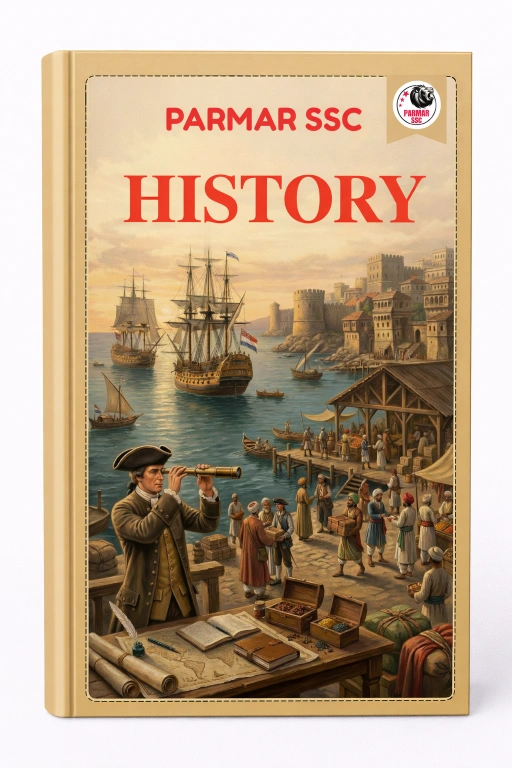 Parmar SSC GK History 4.0 Batch Notes 2026-27 | English Medium Edition₹745View on Competer →
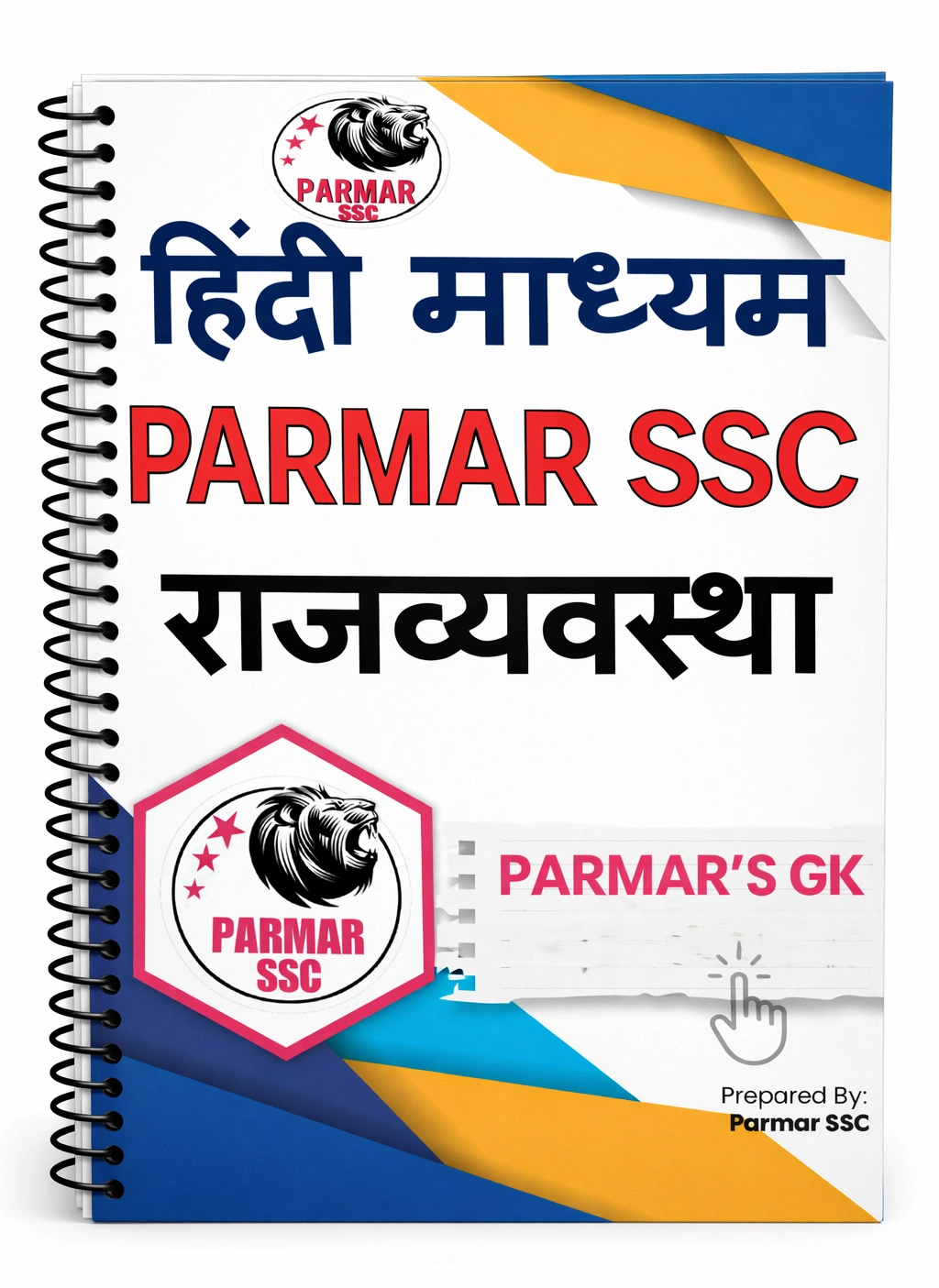 Parmar SSC GK Polity in Hindi - 4.0 Batch Notes 2026-27₹545View on Competer →
Continue reading
More in Buying Guides



Need help choosing?
Tell us your exam and stage on WhatsApp, we suggest the right set.