

SSC CGL Exam Pattern 2026: Tier 1 & Tier 2 Marks, Marking Scheme
SSC CGL exam pattern 2026: two CBT tiers—Tier 1 (100 MCQs, 200 marks, qualifying) and scoring Tier 2. Get marks, timing, syllabus & negative marking.
 Competer

The SSC CGL exam pattern follows a two-stage, fully computer-based structure: Tier 1 and Tier 2. Tier 1 has 100 objective questions worth 200 marks in 60 minutes and is qualifying in nature, while Tier 2 (Paper I compulsory, plus Paper II and Paper III for specific posts) is the scoring stage that decides the final merit list. Both tiers carry negative marking, and marks are normalised across shifts before results are declared.
This guide breaks down the complete ssc cgl exam pattern 2026—tiers, sections, number of questions, marks, duration, sectional timing, marking scheme, normalisation, the linked syllabus, the post-exam selection flow, and how to shape a study plan around it. The structure below reflects the revised format the Staff Selection Commission has used since the 2022–23 cycle; always cross-check the exact figures against the official notification and exam-pattern PDF on ssc.gov.in for your cycle, as module weightage is occasionally fine-tuned.
SSC CGL Exam Pattern 2026 at a Glance
The Staff Selection Commission conducts SSC CGL in two computer-based tiers. There is no descriptive paper and no interview. Tier 1 acts as a screening test, and only candidates who clear the category cut-off advance to Tier 2, which is entirely merit-deciding. This is the biggest structural point that many aspirants miss: your Tier 1 score does not add to your final rank—it only decides whether you qualify for Tier 2.
Here is a clean side-by-side comparison of both tiers—something most top-ranking pages present in separate blocks rather than one glance-able table.
| Feature | Tier 1 | Tier 2 |
|---|---|---|
| Mode | Computer-based (online) | Computer-based (online) |
| Nature | Qualifying (screening) | Scoring (merit-deciding) |
| Papers | Single paper | Paper I (all), Paper II (JSO), Paper III (AAO/Accounts) |
| Total questions | 100 MCQs | Paper I: 150 MCQs (+ DEST) |
| Total marks | 200 | Paper I: 450 |
| Duration | 60 minutes | Paper I: ~2 hr 15 min (Session I) |
| Negative marking | 0.50 per wrong answer | 1 mark (Paper I MCQs); 0.50 (Paper II/III) |
| Question language | English & Hindi (except English section) | English & Hindi (except English section) |

SSC CGL Tier 1 Exam Pattern
The ssc cgl tier 1 exam pattern is a single 60-minute objective test with four sections of 25 questions each. Every question carries 2 marks, so each section is worth 50 marks and the paper totals 200 marks across 100 questions. The four sections are General Intelligence & Reasoning, General Awareness, Quantitative Aptitude and English Comprehension.
| Section | No. of Questions | Maximum Marks |
|---|---|---|
| General Intelligence & Reasoning | 25 | 50 |
| General Awareness | 25 | 50 |
| Quantitative Aptitude | 25 | 50 |
| English Comprehension | 25 | 50 |
| Total | 100 | 200 |
What is the duration and sectional timing of the SSC CGL Tier 1 exam?
Tier 1 is 60 minutes for general candidates. There is no separate lock for each section—you get a composite 60 minutes to attempt all 100 questions and can move freely between the four sections. Candidates who are eligible for a scribe (PwD candidates) are given a compensatory time of 20 minutes, taking their total to 80 minutes. The commonly cited “15 minutes per section” figure is simply the average pacing you should aim for (four sections × 15 minutes = 60 minutes), not a hard sectional timer in Tier 1.
Is there negative marking in SSC CGL Tier 1?
Yes. Tier 1 has a negative marking of 0.50 marks for every wrong answer. Un-attempted questions carry no penalty. Because each correct answer is worth 2 marks, two wrong guesses effectively wipe out one correct answer—so blind guessing hurts more than it helps in the screening stage.
Is SSC CGL Tier 1 qualifying or scoring in nature?
Tier 1 is qualifying (screening) in nature. Its marks are used only to shortlist candidates for Tier 2 and are not carried forward to the final merit list. This means every serious aspirant must still clear Tier 1 comfortably above the category cut-off, but the actual rank battle is fought entirely in Tier 2.
SSC CGL Tier 2 Exam Pattern
The ssc cgl tier 2 exam pattern is where the merit list is built. Tier 2 consists of three papers, but not every candidate sits for all three:
- Paper I — compulsory for all posts.
- Paper II — only for candidates who applied for Junior Statistical Officer (JSO).
- Paper III — only for candidates who applied for Assistant Audit Officer / Assistant Accounts Officer (AAO / Accounts).
Paper I is conducted in two sessions on the same day and is organised into three sections with sub-modules.
| Section | Module | Questions | Marks | Time |
|---|---|---|---|---|
| Section I | Mathematical Abilities | 30 | 90 | 1 hour |
| Section I | Reasoning & General Intelligence | 30 | 90 | |
| Section II | English Language & Comprehension | 45 | 135 | 1 hour |
| Section II | General Awareness | 25 | 75 | |
| Section III | Computer Knowledge Module | 20 | 60 | 15 min |
| Section III | Data Entry Speed Test (DEST) | 1 task | Qualifying | 15 min |
| Paper I MCQ total | 150 | 450 | — | |
What subjects are included in SSC CGL Tier 2 Paper 1, 2 and 3?
Paper I covers Mathematical Abilities, Reasoning & General Intelligence, English Language & Comprehension, General Awareness, a Computer Knowledge module and the Data Entry Speed Test. Each MCQ in Paper I carries 3 marks. The Computer Knowledge module and DEST are qualifying in nature—you must clear them, but they do not add to your merit score.
Paper II (JSO) is a Statistics paper of 100 questions and 200 marks in 2 hours, testing topics such as collection and representation of data, measures of central tendency and dispersion, correlation and regression, probability, sampling and time series analysis. Paper III (AAO/Accounts) is General Studies – Finance and Economics, also 100 questions and 200 marks in 2 hours, covering financial accounting, fundamental principles of economics, and Indian economy and public finance.
| Paper | For Posts | Questions | Marks | Duration | Marks/Q |
|---|---|---|---|---|---|
| Paper II | Junior Statistical Officer (JSO) | 100 | 200 | 2 hours | 2 |
| Paper III | AAO / Assistant Accounts Officer | 100 | 200 | 2 hours | 2 |
How the DEST and Computer Proficiency work
The Data Entry Speed Test replaces the older standalone Tier 4 skill test for most posts. Candidates must type a given English passage at a speed of 2,000 key depressions in 15 minutes. It is purely qualifying—your rank is unaffected—but failing it can cost you the post. The Computer Knowledge module (20 questions, 60 marks) similarly must be passed at the qualifying threshold set by the Commission.
SSC CGL Marking Scheme and Negative Marking
The ssc cgl marking scheme differs between the two tiers, and this directly shapes attempt strategy. Tier 1 uses 2 marks per question with a 0.50 penalty. Tier 2 Paper I uses 3 marks per question but a heavier 1-mark penalty for wrong answers in the MCQ sections, while Paper II and Paper III carry a 0.50 penalty. Knowing where the penalty is steepest tells you exactly where to avoid loose guessing.
| Stage / Paper | Marks per Correct Answer | Negative Marking |
|---|---|---|
| Tier 1 (all sections) | 2 | 0.50 |
| Tier 2 Paper I (Maths, Reasoning, English, GA) | 3 | 1.00 |
| Tier 2 Paper I – Computer Knowledge module | 3 | 1.00 (qualifying) |
| Tier 2 Paper II (JSO) | 2 | 0.50 |
| Tier 2 Paper III (AAO/Accounts) | 2 | 0.50 |
| DEST | — | Qualifying only |
Strategy note: The 1-mark penalty in Tier 2 Paper I is the single most punishing part of the entire ssc cgl exam pattern. Because each correct answer is worth 3 marks, three wrong answers cancel one correct answer. In Paper I, only mark an answer when you can eliminate at least two options confidently.
SSC CGL Total Marks and Duration
Bringing the numbers together clarifies the ssc cgl total marks and duration across the whole process. For a general (non-JSO, non-AAO) candidate, the scoring load is Tier 2 Paper I’s 450 marks; JSO and AAO aspirants add a 200-mark paper on top.
| Stage | Marks | Duration | Counts for Merit? |
|---|---|---|---|
| Tier 1 | 200 | 60 min | No (qualifying) |
| Tier 2 – Paper I | 450 | ~2 hr 15 min (Session I) | Yes |
| Tier 2 – Paper II (JSO only) | 200 | 2 hr | Yes (for JSO) |
| Tier 2 – Paper III (AAO only) | 200 | 2 hr | Yes (for AAO) |
SSC CGL Exam Pattern and Syllabus: How They Connect
The ssc cgl exam pattern and syllabus are two halves of the same map—the pattern tells you how many marks each area carries, and the syllabus tells you what to study to earn them. Reading them together stops you from over-preparing a low-weight topic or ignoring a high-weight one. Here is the stage-wise topic scope that sits behind the marks tables above.
| Section / Area | Where It Appears | Core Topics in the Syllabus |
|---|---|---|
| General Intelligence & Reasoning | Tier 1 & Tier 2 Paper I | Analogies, classification, series, coding-decoding, syllogism, Venn diagrams, non-verbal reasoning |
| Quantitative Aptitude / Mathematical Abilities | Tier 1 & Tier 2 Paper I | Number system, percentage, ratio, time-speed-distance, algebra, geometry, trigonometry, mensuration, data interpretation |
| English Comprehension / Language | Tier 1 & Tier 2 Paper I | Grammar, error spotting, fill in the blanks, synonyms/antonyms, idioms, cloze test, reading comprehension |
| General Awareness | Tier 1 & Tier 2 Paper I | History, geography, polity, economics, general science, static GK and current affairs |
| Computer Knowledge | Tier 2 Paper I (qualifying) | Computer basics, MS Office, internet, networking, cyber security fundamentals |
| Statistics (Paper II) | Tier 2 Paper II (JSO) | Central tendency, dispersion, correlation, regression, probability, sampling, time series |
| Finance & Economics (Paper III) | Tier 2 Paper III (AAO) | Financial accounting, principles of economics, Indian economy, public finance |
Notice the overlap: Reasoning, Maths, English and General Awareness appear in both tiers, so the topics you master for Tier 1 are reused—at higher weight—in Tier 2 Paper I. That continuity is why building depth early pays off twice.
Normalisation of Marks Across Shifts
Because SSC CGL is conducted in multiple shifts over several days with different question sets, raw scores across shifts are not directly comparable—one shift may be tougher than another. To keep the process fair, the Commission applies normalisation of marks using a standard statistical formula that adjusts a candidate’s raw score to a common scale based on the relative difficulty of their shift. The results and final cut-offs are declared on these normalised scores, not raw scores. This is a genuine candidate concern that most pages skip, so keep it in mind: your displayed marks in the scorecard are usually the normalised figures.
Selection Flow After the Exams: DEST, Document Verification and Final Merit
The exam pattern is only half the picture; the selection flow after Tier 2 decides who actually gets appointed. Here is the end-to-end journey.
| Step | What Happens |
|---|---|
| 1. Tier 1 | Screening test; category-wise shortlist for Tier 2. |
| 2. Tier 2 (Paper I / II / III) | Scoring stage; merit calculated on normalised marks. |
| 3. DEST / Computer module | Qualifying skill checks within Tier 2. |
| 4. Document Verification | Verification of eligibility, category and educational certificates. |
| 5. Final Merit & Post Allocation | Posts allotted by rank, category and post preference. |
Tie-breaking rules: When two candidates score identical marks, SSC resolves the tie in this order—(1) total marks in Tier 2, (2) marks in Paper I of Tier 2, (3) date of birth (older candidate ranked higher), and (4) alphabetical order of the candidate’s name. Final post allocation combines your normalised merit score with the preferences you filled in the application.
Expected Cut-offs and Minimum Qualifying Marks
SSC does not publish fixed pass marks; cut-offs are dynamic and depend on vacancies, difficulty and the number of applicants each year. However, the Commission specifies minimum qualifying percentages that a candidate must reach to be considered: 30% for UR, 25% for OBC/EWS and 20% for other reserved categories. As a broad, indicative reference based on recent cycles, Tier 1 normalised cut-offs typically fall in the ranges below (these vary year to year and are not official 2026 figures).
| Category | Minimum Qualifying % | Indicative Tier 1 Cut-off (out of 200) |
|---|---|---|
| UR / General | 30% | ~135–155 |
| OBC | 25% | ~125–145 |
| EWS | 25% | ~120–140 |
| SC | 20% | ~110–125 |
| ST | 20% | ~105–120 |
Treat these as planning targets, not guarantees. Because Tier 1 gates entry to Tier 2, aim to score at least 15–20 marks above your category’s expected cut-off to be safe against a tough shift.
How the SSC CGL Exam Pattern Should Shape Your Preparation
Reading the pattern correctly changes how you allocate study hours. In Tier 1, all four sections carry equal 50-mark weight, but Quantitative Aptitude and Reasoning are the fastest to convert into a high score with practice, while General Awareness is the most volatile. In Tier 2 Paper I, the weightage shifts sharply: English (135 marks) and Mathematical Abilities (90 marks) dominate the scoring section, so these deserve the largest share of your revision time.
| Area | Tier 1 Weight | Tier 2 Paper I Weight | Preparation Priority |
|---|---|---|---|
| Quantitative Aptitude / Maths | 50 | 90 | High—biggest score swing |
| English | 50 | 135 | Very high in Tier 2 |
| Reasoning | 50 | 90 | High—fast to master |
| General Awareness | 50 | 75 | Medium—current affairs heavy |
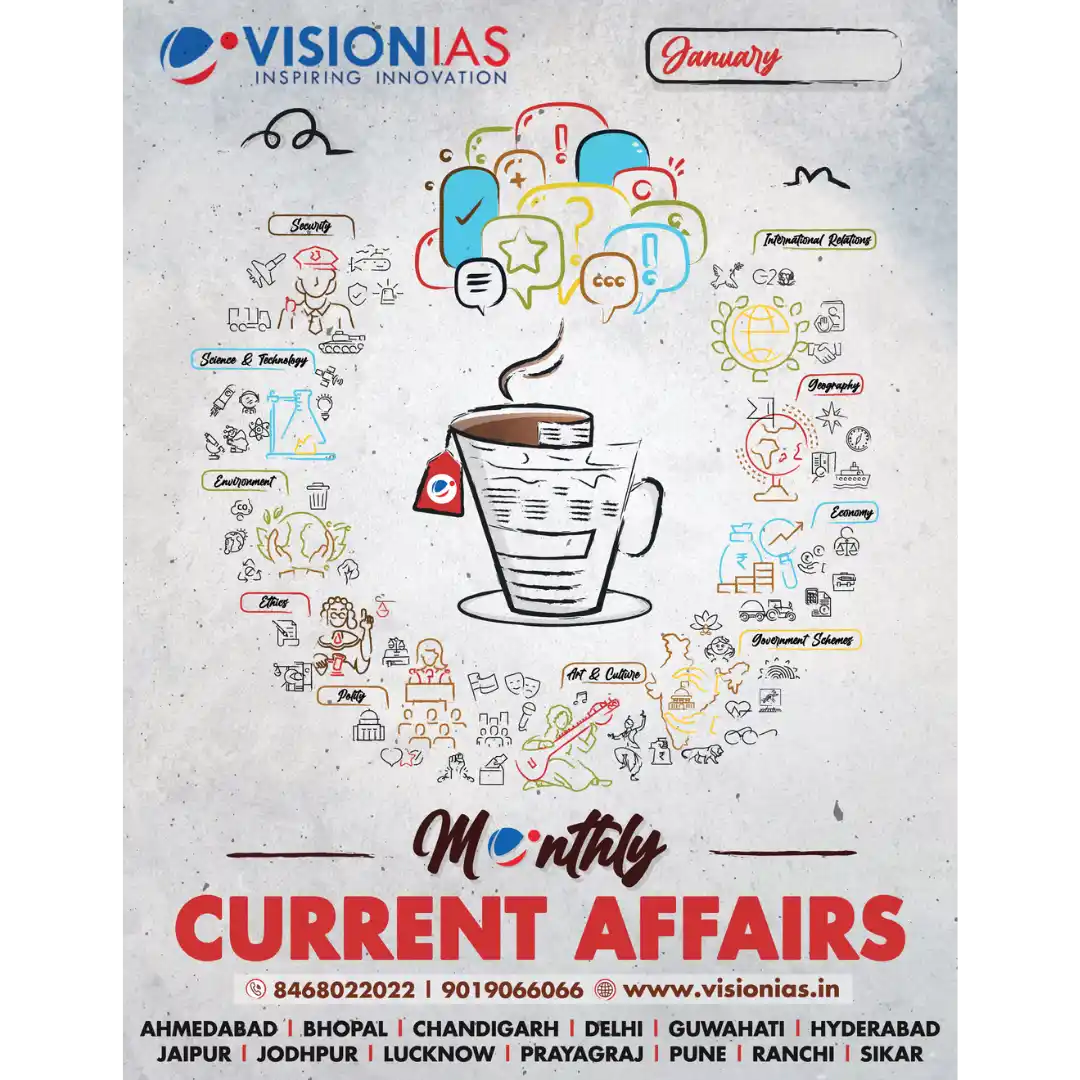
For General Awareness and current affairs—the most unpredictable part of the paper—regular monthly revision beats last-minute cramming. Aspirants who supplement their SSC prep with a structured current-affairs digest such as the Vision IAS Current Affairs Magazine January 2026 and the earlier December 2025 edition find it easier to build the static-plus-dynamic GK base that both tiers reward. For disciplined question practice, working through topic-wise previous-year questions—as compiled in the Forum IAS Topic-Wise PYQ Toolkit—trains the pattern-recognition that reasoning and awareness sections demand.
If you want a full stage-wise topic map to pair with this pattern guide, use a dedicated syllabus resource such as the GS Score latest syllabus booklet and structure your Maths and English drills around the higher Tier 2 weightage.
Common Mistakes and How the CBT Interface Works
The SSC CGL is delivered on a standard computer-based test interface: a question palette on the right shows answered, un-answered and marked-for-review questions in colour codes, a countdown timer runs at the top, and you navigate with “Save & Next”. Common, avoidable mistakes include:
- Spending too long on Quant early and running out of time for easy Reasoning marks.
- Guessing aggressively in Tier 2 Paper I, where the 1-mark penalty is brutal.
- Ignoring the “Marked for Review” flag and forgetting to return to skipped questions.
- Under-practising the DEST typing test, then failing a purely qualifying step.
- Not taking full-length CBT mocks, so the real interface feels unfamiliar on exam day.
PwD candidates should note the accessibility provision: eligible candidates who use a scribe receive 20 minutes of compensatory time per hour of examination, and can request a scribe as per SSC guidelines.
Has the SSC CGL Exam Pattern Changed for 2026?
The core structure remains the revised two-tier, fully computer-based format introduced in the 2022–23 cycle and continued for 2026: Tier 1 is qualifying, Tier 2 Paper I combines all modules into a single day across two sessions, and the earlier separate Tier 3 (descriptive) and standalone Tier 4 (skill test) have been folded away—DEST and the Computer module now sit inside Tier 2. Candidates should always confirm the exact section marks, timing and negative-marking figures against the official notification and the downloadable exam pattern / syllabus PDF released by SSC for the 2026 cycle, as the Commission occasionally fine-tunes module weightage. Download the official pattern PDF from ssc.gov.in when the notification goes live and cross-check it with the tables above.
Frequently Asked Questions
What is the SSC CGL exam pattern 2026?
The SSC CGL exam pattern 2026 has two computer-based stages. Tier 1 is a 60-minute qualifying test of 100 questions and 200 marks across four sections. Tier 2 is the scoring stage—Paper I (150 MCQs, 450 marks) for all candidates, plus Paper II (JSO) or Paper III (AAO) for specific posts.
How many tiers are there in the SSC CGL exam?
There are two tiers—Tier 1 and Tier 2—both conducted online. The older Tier 3 descriptive paper and separate Tier 4 skill test have been removed; the Data Entry Speed Test and Computer Knowledge module are now part of Tier 2 Paper I.
Is there negative marking in SSC CGL Tier 1 and Tier 2?
Yes. Tier 1 deducts 0.50 marks for every wrong answer. In Tier 2, Paper I MCQ sections deduct 1 mark per wrong answer, while Paper II and Paper III deduct 0.50 marks each. Un-attempted questions carry no penalty.
Is SSC CGL Tier 1 qualifying or scoring in nature?
Tier 1 is qualifying only. Its marks decide who advances to Tier 2 but are not added to the final merit list. The final rank is based entirely on your normalised Tier 2 marks.
How many questions are asked in SSC CGL Tier 1 and what are the total marks?
Tier 1 has 100 multiple-choice questions totalling 200 marks—25 questions of 50 marks in each of the four sections: Reasoning, General Awareness, Quantitative Aptitude and English Comprehension. Every question carries 2 marks.
What is the SSC CGL Tier 2 exam pattern?
Tier 2 has three papers. Paper I is compulsory for all posts (150 scoring MCQs worth 450 marks, plus a qualifying Computer module and DEST), conducted in two sessions on one day. Paper II is a 200-mark Statistics paper for JSO applicants, and Paper III is a 200-mark Finance & Economics paper for AAO/Accounts applicants.
Is the DEST qualifying or scoring in SSC CGL?
The Data Entry Speed Test is qualifying only. You must type at roughly 2,000 key depressions in 15 minutes to clear it, but it does not add to your merit score. Failing it, however, can cost you a DEST-linked post.
Has the SSC CGL exam pattern changed for 2026?
No major change is expected for 2026; the revised two-tier online format continues. Always verify exact marks, timing and negative-marking details against the official 2026 notification and exam-pattern PDF on ssc.gov.in, as the Commission may adjust module weightage.
Recommended Study Material



Competer
The Competer team: we pack the orders, so we know which editions aspirants keep coming back for.
Get it printed
SSC study material aspirants order most on Competer, delivered across India
 Parmar SSC GK Polity 4.0 Batch Notes 2026-27 | English Medium Edition₹545View on Competer →
 Parmar SSC GK Geography 4.0 Batch Notes 2026-27 | English Medium Edition₹745View on Competer →
 Parmar SSC GK History 4.0 Batch Notes 2026-27 | English Medium Edition₹745View on Competer →
 Parmar SSC GK Polity in Hindi - 4.0 Batch Notes 2026-27₹545View on Competer →
Continue reading
More in Buying Guides



Need help choosing?
Tell us your exam and stage on WhatsApp, we suggest the right set.