

Public Administration Optional Syllabus 2026: Paper 1 & 2
Complete public administration optional syllabus for UPSC 2026 — Paper 1 & 2 topic-wise, marks, exam pattern, GS overlap, PYQ weightage, best books, strategy.
 Competer
15 min read
The public administration optional syllabus for UPSC is split into two descriptive papers — Paper I (Administrative Theory) and Paper II (Indian Administration) — each carrying 250 marks, for a total of 500 marks in the Civil Services Mains. Each paper is 3 hours long, sets 8 questions across two sections, and requires you to attempt 5 (the first question in each section is compulsory). This guide gives you the complete topic-wise official syllabus for both papers, the exam pattern, a GS-overlap map, PYQ weightage (2017–2025), a mapped booklist, a month-wise completion plan, a difficulty verdict, and a free downloadable syllabus PDF.
Public Administration (PubAd) remains one of UPSC’s most-chosen optionals because the syllabus is short, largely static, logically structured, and overlaps heavily with GS Paper II (Polity & Governance), GS Paper IV (Ethics), and the Essay paper. Use this page as a single reference to decide on the subject and then finish it on schedule.
Public Administration Optional Syllabus at a Glance (Exam Pattern)
Before the topic-wise breakdown, understand how the public administration optional syllabus UPSC is tested. Both optional papers appear in the Mains written examination and together contribute 500 of the 1750 marks that decide your rank.
| Component | Details |
|---|---|
| Paper I | Administrative Theory |
| Paper II | Indian Administration |
| Marks per paper | 250 marks |
| Total optional marks | 500 marks |
| Duration per paper | 3 hours |
| Question type | Descriptive (essay-type answers) |
| Questions set | 8 per paper (Section A & Section B) |
| Questions to attempt | 5 (Q1 in each section compulsory) |
| Medium | English or any Eighth Schedule language |
Because answers are descriptive, scoring depends on conceptual clarity, thinker-linkage, diagrams/flowcharts, and current-affairs examples — not rote recall. That is why mapping the public administration syllabus Paper 1 and Paper 2 correctly is the first step of preparation.
The topic-wise syllabus reproduced below follows the wording of the UPSC Civil Services (Mains) Examination notification, under which Public Administration is one of the optional subjects on offer. The structure has stayed stable for several years, so the UPSC public administration optional syllabus 2026 is effectively the same framework candidates have been tested on recently — always confirm against the latest official notification once it is published.
Public Administration Optional Syllabus Paper 1 (Administrative Theory) — Topic-Wise
Paper I covers the conceptual and theoretical core of the discipline. It has 12 broad units. This is the exact structure of the public administration optional syllabus for mains Paper I.
| # | Unit | Key Sub-Topics (Official Wording) |
|---|---|---|
| 1 | Introduction | Meaning, scope and significance of Public Administration; Wilson’s vision; evolution of the discipline and its present status; New Public Administration; Public Choice approach; challenges of liberalization, privatisation, globalisation; Good Governance — concept and application; New Public Management. |
| 2 | Administrative Thought | Scientific Management (F.W. Taylor); Classical Theory (Fayol, Urwick, Gulick); Weber’s bureaucratic model and its critique; Dynamic Administration (Mary Parker Follett); Human Relations School (Elton Mayo); Functions of the Executive (C.I. Barnard); Simon’s decision-making theory; participative management (R. Likert, C. Argyris, D. McGregor). |
| 3 | Administrative Behaviour | Process and techniques of decision-making; theories of motivation — Maslow, Herzberg, McClelland, Vroom, Porter & Lawler; theories of leadership — traditional and modern; communication theory; theories of organisational behaviour. |
| 4 | Organisations | Theories — systems, contingency; structure and forms — Ministries and Departments, Corporations, Companies, Boards and Commissions; ad hoc and advisory bodies; headquarters and field relationships; regulatory authorities; public-private partnerships. |
| 5 | Accountability and Control | Concepts of accountability and control; legislative, executive and judicial control over administration; citizen and administration; role of media, interest groups, voluntary organisations, civil society, citizens’ charters, Right to Information, social audit. |
| 6 | Administrative Law | Meaning, scope and significance; Dicey on Administrative Law; delegated legislation; administrative tribunals. |
| 7 | Comparative Public Administration | Historical and sociological factors affecting administrative systems; administration and politics in different countries; current status of Comparative Public Administration; ecology and administration; Riggsian models and their critique. |
| 8 | Development Dynamics | Concept of development; changing profile of development administration; anti-development thesis; bureaucracy and development; strong state versus the market debate; impact of liberalisation on administration in developing countries; women and development — the self-help group movement. |
| 9 | Personnel Administration | Importance of human resource development; recruitment, training, career advancement, position classification, discipline, performance appraisal, promotion, pay and service conditions; employer-employee relations, grievance redressal; code of conduct; administrative ethics. |
| 10 | Public Policy | Models of policy-making and their critique; processes of conceptualisation, planning, implementation, monitoring, evaluation and review and their limitations; State theories and public policy formulation. |
| 11 | Techniques of Administrative Improvement | Organisation and methods, Work study and Work management; e-governance and information technology; management-aid tools like Network Analysis, MIS, PERT, CPM. |
| 12 | Financial Administration | Monetary and fiscal policies; public borrowings and public debt; budgets — types and forms; budgetary process; financial accountability; accounts and audit. |
Public Administration Optional Syllabus Paper 2 (Indian Administration) — Topic-Wise
Paper II applies the theory of Paper I to the Indian context — its evolution, institutions, and contemporary challenges. It links naturally to GS Paper II.
| # | Unit | Key Sub-Topics (Official Wording) |
|---|---|---|
| 1 | Evolution of Indian Administration | Kautilya’s Arthashastra; Mughal administration; legacy of British rule in administration — Indianisation of public services, revenue administration, district administration, local self-government. |
| 2 | Philosophical and Constitutional Framework of Government | Salient features and value premises; constitutionalism; political culture; bureaucracy and democracy; bureaucracy and development. |
| 3 | Public Sector Undertakings | Public sector in modern India; forms of public sector undertakings; problems of autonomy, accountability and control; impact of liberalisation and privatisation. |
| 4 | Union Government and Administration | Executive, Parliament, Judiciary — structure, functions, work processes; recent trends; intra-governmental relations; Cabinet Secretariat; PMO; Central Secretariat; Ministries and Departments; boards; commissions; attached offices; field organisations. |
| 5 | Plans and Priorities | Machinery of planning; role, composition and functions of the Planning Commission and the National Development Council; ‘indicative’ planning; process of plan formulation at Union and State levels; constitutional amendments (1992) and decentralised planning for economic development and social justice. |
| 6 | State Government and Administration | Union-State administrative, legislative and financial relations; role of the Finance Commission; Governor; Chief Minister; Council of Ministers; Chief Secretary; State Secretariat; Directorates. |
| 7 | District Administration since Independence | Changing role of the Collector; Union-State-local relations; imperatives of development management and law and order administration; district administration and democratic decentralisation. |
| 8 | Civil Services | Constitutional position; structure, recruitment, training and capacity-building; good governance initiatives; code of conduct and discipline; staff associations; political rights; grievance redressal mechanism; civil service neutrality; civil service activism. |
| 9 | Financial Management | Budget as a political instrument; Parliamentary control of public expenditure; role of finance ministry in monetary and fiscal area; accounting techniques; audit; role of Controller General of Accounts and Comptroller and Auditor General of India. |
| 10 | Administrative Reforms since Independence | Major concerns; important committees and commissions; reforms in financial management and human resource development; problems of implementation. |
| 11 | Rural Development | Institutions and agencies since Independence; rural development programmes — foci and strategies; decentralisation and Panchayati Raj; the 73rd Constitutional Amendment. |
| 12 | Urban Local Government | Municipal governance — main features, structures, finance and problem areas; the 74th Constitutional Amendment; global-local debate; new localism; development dynamics, politics and administration with reference to urban local government. |
| 13 | Law and Order Administration | British legacy; National Police Commission; investigative agencies; role of Central and State agencies including para-military forces in maintenance of law and order and countering insurgency and terrorism; criminalisation of politics and administration; police-public relations; reforms in police. |
| 14 | Significant Issues in Indian Administration | Values in public service; regulatory commissions; National Human Rights Commission; problems of administration in coalition regimes; citizen-administration interface; corruption and administration; disaster management. |
Note: Paper II is officially presented as broad units; the table above expands them into the examinable sub-topics so nothing is missed.
Where to Download the Official Public Administration Optional Syllabus PDF
For offline revision and printing, use the public administration optional syllabus PDF download. A clean, one-page syllabus copy in the official wording, plus a printable completion checklist, is available here: GS Score Latest Syllabus Booklet 2026-27, which carries the full UPSC syllabus (all optionals and GS) in exam-faithful wording. Save the PDF, tick each sub-topic as you finish, and revise from the one-pager before every test. Keeping the official wording in front of you prevents the single biggest mistake aspirants make — preparing topics that are not in the syllabus while skipping ones that are.
Why Choose Public Administration as Your UPSC Optional
Public Administration consistently attracts aspirants for four concrete reasons. Weigh these against your background before committing to the UPSC public administration optional syllabus 2026.
- Short, static syllabus: among the smallest of all optionals, with limited year-to-year change, so revision is fast once the core is built.
- High GS overlap: directly supports GS Paper II (governance, polity, Panchayati Raj, civil services) and GS Paper IV (ethics, accountability), reducing your net study load.
- Scoring and logical: concept-driven rather than memory-heavy; well-structured answers with thinkers and examples score reliably.
- Career relevance: the subject mirrors the actual working of government, making it intuitive for anyone targeting the civil services.
The trade-off: PubAd is popular, so answers must stand out. Current-affairs linkage and real-world examples are what separate top scorers from average ones.
Does Public Administration optional overlap with GS papers?
Yes — significantly. This syllabus-to-GS map is one of the highest-value reasons to pick PubAd, and most competing guides skip it.
| PubAd Syllabus Topic | Overlaps With | Benefit |
|---|---|---|
| Accountability, RTI, Citizens’ Charter, Social Audit | GS Paper II (Governance) | Shared preparation for transparency & accountability questions |
| Civil Services, Administrative Reforms, ARC reports | GS Paper II | Ready material for governance and reform answers |
| Panchayati Raj (73rd), Urban Local Govt (74th) | GS Paper II (Local Governance) | Decentralisation covered once, used twice |
| Administrative Ethics, Code of Conduct, Values in Public Service | GS Paper IV (Ethics) | Direct inputs for ethics theory and case studies |
| Public Policy, Development Administration | GS Paper II & Essay | Policy framework strengthens governance essays |
| Financial Administration, CAG, Budget | GS Paper II & III | Overlap with Parliament, budgeting, audit |
Public Administration vs Other Popular Optionals
Many aspirants compare PubAd with Sociology, Political Science & International Relations (PSIR), Geography, and Anthropology. A quick, honest comparison helps you decide whether the public administration syllabus Paper 1 and Paper 2 fits your profile better than the alternatives.
| Optional | Syllabus Size | GS Overlap | Best Suited For |
|---|---|---|---|
| Public Administration | Short, static | Very high (GS II & IV, Essay) | Those wanting a compact, governance-linked optional |
| PSIR | Moderate-large, dynamic | High (GS II & GS II IR) | Those strong in politics and current affairs |
| Sociology | Short, mostly static | Moderate (GS I society, Essay) | Beginners wanting an accessible, concept-light start |
| Geography | Large | Moderate (GS I & III) | Science/diagram-oriented aspirants |
There is no universally "best" optional — the right choice depends on your interest, academic comfort, and the quality of answers you can produce. PubAd scores highest on syllabus brevity and GS synergy, which is why it stays a dependable default for first-attempt aspirants with limited time.
Best Books for the Public Administration Optional Syllabus
A focused booklist is essential — the subject rewards depth over breadth. Here is the public administration optional books and strategy starting point, mapped to the syllabus units they cover.
| Book / Source | Author / Publisher | Best For (Syllabus Unit) |
|---|---|---|
| Public Administration | M. Laxmikanth | Foundation for Paper I & II (base text) |
| New Horizons of Public Administration | Mohit Bhattacharya | Paper I — administrative thought & theory |
| Administrative Thinkers | Prasad & Prasad | Paper I — thinkers (Taylor, Weber, Simon, etc.) |
| Public Administration in India | D. Ravindra Prasad / Fadia & Fadia | Paper II — Indian administration |
| IGNOU BA/MA PA material | IGNOU | Both papers — conceptual clarity, free |
| 2nd ARC Reports (summaries) | Govt. of India | Paper II — reforms, governance, examples |
| Punchhi Commission / NCRWC reports | Govt. of India | Paper II — Union-State relations, reforms |
Coaching notes compress these into exam-ready modules. If you prefer a printed, structured set aligned to the full syllabus, the Vajiram Public Administration Notes 2025-26 (Set of 3 Booklets) cover both papers’ theory and Indian administration in one place. Keep standard textbooks for depth and notes for revision — not the other way round.
Which books are best for Public Administration optional?
For most aspirants, Laxmikanth plus Mohit Bhattacharya plus Prasad & Prasad (thinkers) plus Fadia & Fadia (Indian administration), supplemented by 2nd ARC report summaries and a good set of notes, covers the entire syllabus. Avoid collecting too many sources; master a core list and revise it repeatedly.
PYQ Weightage: Mapping Questions to the Syllabus (2017–2025)
Previous Year Questions reveal which sub-topics are asked repeatedly. Mapping PYQs against the syllabus — something most pages list but never analyse — lets you prioritise high-return units. The pattern below reflects trends across the 2017–2025 cycles.
| Syllabus Area | Paper | Relative Weightage | Priority |
|---|---|---|---|
| Administrative Thinkers & Theory | I | High (recurs every year) | Must-master |
| Public Policy & Development Dynamics | I | High | Must-master |
| Accountability, Control, RTI | I | Medium-High | High |
| Financial & Personnel Administration | I & II | Medium | High |
| Civil Services & Administrative Reforms | II | High | Must-master |
| Local Government (73rd/74th) | II | Medium-High | High |
| Union & State Government | II | Medium | Medium |
| Law & Order, Significant Issues | II | Medium (current-affairs linked) | Medium |
| Comparative PA (Riggs) | I | Low-Medium | Medium |
Takeaway: thinkers, public policy, civil services, and reforms are perennial. Build model answers for these first, then expand to lower-weightage units. Solving 8–9 years of PYQs and studying topper copies is non-negotiable.
How Long Does the Public Administration Optional Syllabus Take?
A dedicated aspirant can complete the full public administration optional syllabus in about 4–5 months with consistent effort, including one revision. Here is a realistic month-wise plan tied to the syllabus sections.
| Month | Focus | Syllabus Covered |
|---|---|---|
| Month 1 | Paper I foundation | Introduction, Administrative Thought, Administrative Behaviour |
| Month 2 | Paper I institutions | Organisations, Accountability, Administrative Law, Comparative PA |
| Month 3 | Paper I completion | Development Dynamics, Personnel, Public Policy, Techniques, Financial Admin |
| Month 4 | Paper II | Evolution, Constitutional framework, PSUs, Union & State govt, Planning, District admin |
| Month 5 | Paper II + integration | Civil services, Financial mgmt, Reforms, Local govt, Law & order, Significant issues |
| Ongoing | Answer writing & tests | PYQs, current-affairs linkage, test series, revision |
Start answer writing by Month 2 — do not wait to "finish" the syllabus first. A structured Vision IAS Mains Test Series 2026 helps you practise under time pressure and get feedback on structure and content.
Preparation Strategy for Public Administration Optional
A clear public administration optional books and strategy framework beats random reading. Follow this sequence:
- Build concepts first: read Laxmikanth and IGNOU before touching advanced texts; understand each thinker’s core contribution and critique.
- Make linked notes: maintain one notebook per paper with thinker tags, keywords, and diagrams you can reproduce in the exam.
- Link current affairs: connect every Paper II topic (civil services, reforms, local government, disaster management) to recent committees, schemes, and news for value-added answers.
- PYQ analysis: classify 8–9 years of questions by syllabus unit; identify repeated themes.
- Study topper copies: learn introduction styles, flowcharts, and how answers cite thinkers and reports.
- Join a test series: write full-length mocks; answer writing is a skill built only through practice.
Because PubAd feeds the Essay and Ethics papers, pairing it with quality GS material compounds your returns — for example, a strong Vajiram Essay Notes set lets you reuse governance and development arguments across Essay and GS answers.
Is Public Administration optional easy to prepare without coaching?
Yes, self-study is very feasible for PubAd because the syllabus is short and static and standard books cover it well. Self-prepared aspirants succeed every year by relying on a fixed booklist, PYQ analysis, topper copies, and a mains test series for feedback. Coaching helps mainly with structured notes and answer evaluation — both of which can be substituted with good printed material and a test series.
Common Mistakes to Avoid
- Preparing from outdated or paraphrased syllabi — always cross-check the official wording in the latest UPSC notification.
- Neglecting Paper II current-affairs linkage, which is where most aspirants lose marks.
- Collecting too many books instead of revising a core set multiple times.
- Delaying answer writing until the syllabus is "complete."
- Ignoring diagrams, thinker-quotes, and ARC/committee examples that lift answer quality.
Toppers, Success Rate & Difficulty Level
Public Administration has a long record of producing rank-holders, and in several years it has been among the most-chosen optionals by successful candidates. Its success rate fluctuates year to year with the quality of question papers and the size of the candidate pool, so no fixed percentage holds across cycles. The subject is widely rated moderate in difficulty — conceptually easy to grasp, yet demanding in answer presentation precisely because competition is high and many candidates write similar content. The decisive factors are answer-writing quality, current-affairs integration, and disciplined revision, not raw difficulty. If you can write structured, example-rich answers, PubAd is a dependable, high-value optional for UPSC 2026.
Frequently Asked Questions
What is the syllabus of Public Administration optional for UPSC?
The Public Administration optional syllabus has two papers — Paper I (Administrative Theory) covering 12 units like administrative thought, organisations, accountability, public policy and financial administration, and Paper II (Indian Administration) covering the evolution of Indian administration, constitutional framework, civil services, local government and contemporary issues. Each paper is 250 marks, totalling 500.
Is Public Administration a good and scoring optional for UPSC?
Yes. It is considered scoring because the syllabus is short and static, concept-driven rather than memory-heavy, and overlaps strongly with GS Paper II (Governance), GS Paper IV (Ethics) and the Essay. Well-structured answers with thinkers and current-affairs examples consistently fetch good marks.
How many papers are there in Public Administration optional and what are the marks?
There are two papers — Paper I (Administrative Theory) and Paper II (Indian Administration) — each worth 250 marks, for a combined total of 500 marks. Both are 3-hour descriptive papers with 8 questions each, of which you attempt 5.
Which books are best for Public Administration optional?
A compact, proven core is M. Laxmikanth and IGNOU material for the base, Mohit Bhattacharya and Prasad & Prasad for Paper I theory and thinkers, and Fadia & Fadia for Paper II, supplemented by 2nd ARC report summaries and a revision-friendly set of notes. Master this core and revise it repeatedly rather than collecting too many sources.
How much time does it take to complete the Public Administration optional syllabus?
Most dedicated aspirants complete the full syllabus in about 4–5 months with one revision, provided they study consistently and begin answer writing early. Because of its GS overlap, part of the effort also counts towards General Studies preparation.
Does Public Administration optional overlap with GS papers?
Yes, substantially. Topics like accountability, RTI, civil services, administrative reforms, Panchayati Raj, ethics in public service and public policy directly support GS Paper II, GS Paper IV and the Essay paper, reducing your overall study load.
Is Public Administration optional easy to prepare without coaching?
Yes. The short, static syllabus and strong standard textbooks make self-study very feasible. With a fixed booklist, PYQ analysis, topper-copy study and a mains test series for feedback, candidates clear it without coaching every year; coaching mainly adds ready notes and answer evaluation, which can be replaced by good printed material.
What is the difficulty level and success rate of Public Administration optional?
Public Administration is generally rated moderate in difficulty — the concepts are accessible, but high competition means answer presentation decides marks. Its success rate varies year to year with the paper and the candidate pool, so there is no fixed figure; consistently, strong answer writing and current-affairs linkage matter far more than the subject’s inherent difficulty.
Where can I download the Public Administration optional syllabus PDF?
You can download a clean, verbatim Public Administration optional syllabus PDF for both papers, along with a printable completion checklist, from Competer’s syllabus booklet resource. Keeping the official wording handy ensures you prepare exactly what UPSC asks and nothing outside it.
Recommended Study Material

Competer
The Competer team: we pack the orders, so we know which editions aspirants keep coming back for.
Get it printed
UPSC study material aspirants order most on Competer, delivered across India
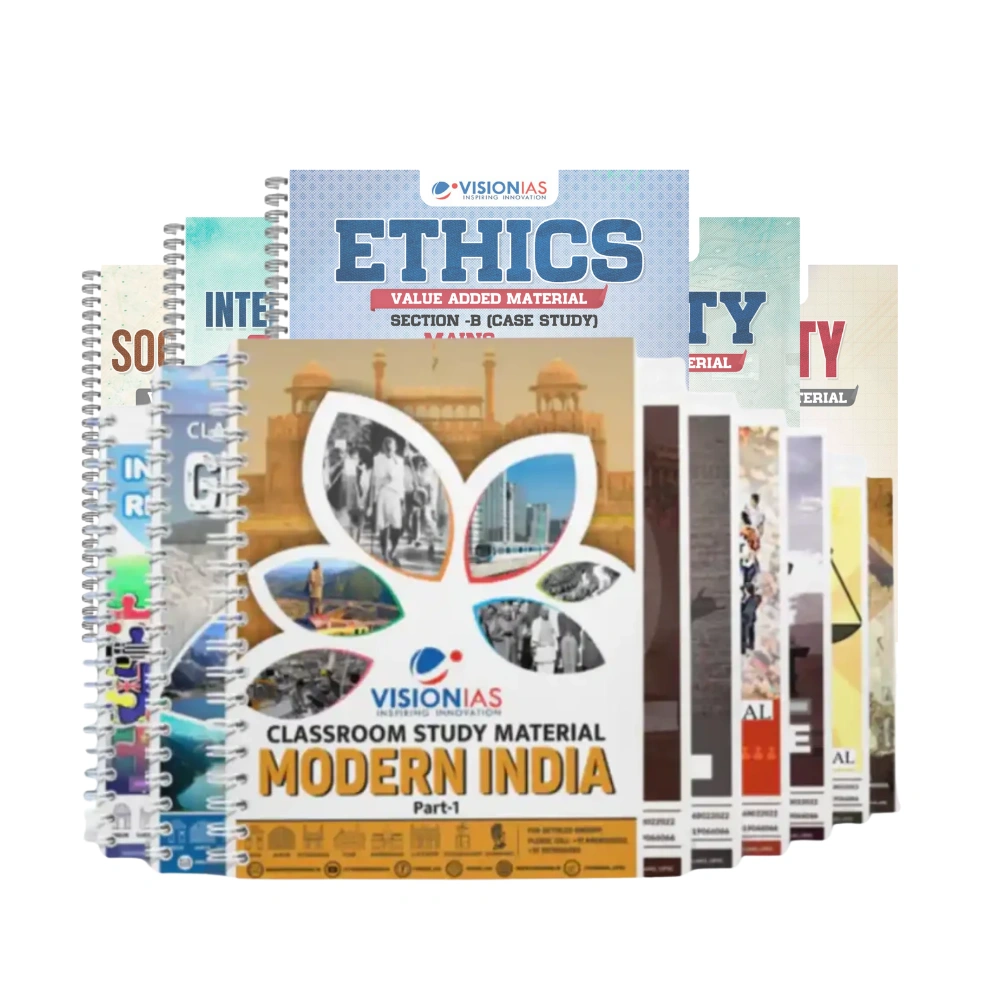 Vision IAS GS 2026-27 Booklets with Value Added Materials - 56 Booklets₹6,599View on Competer →
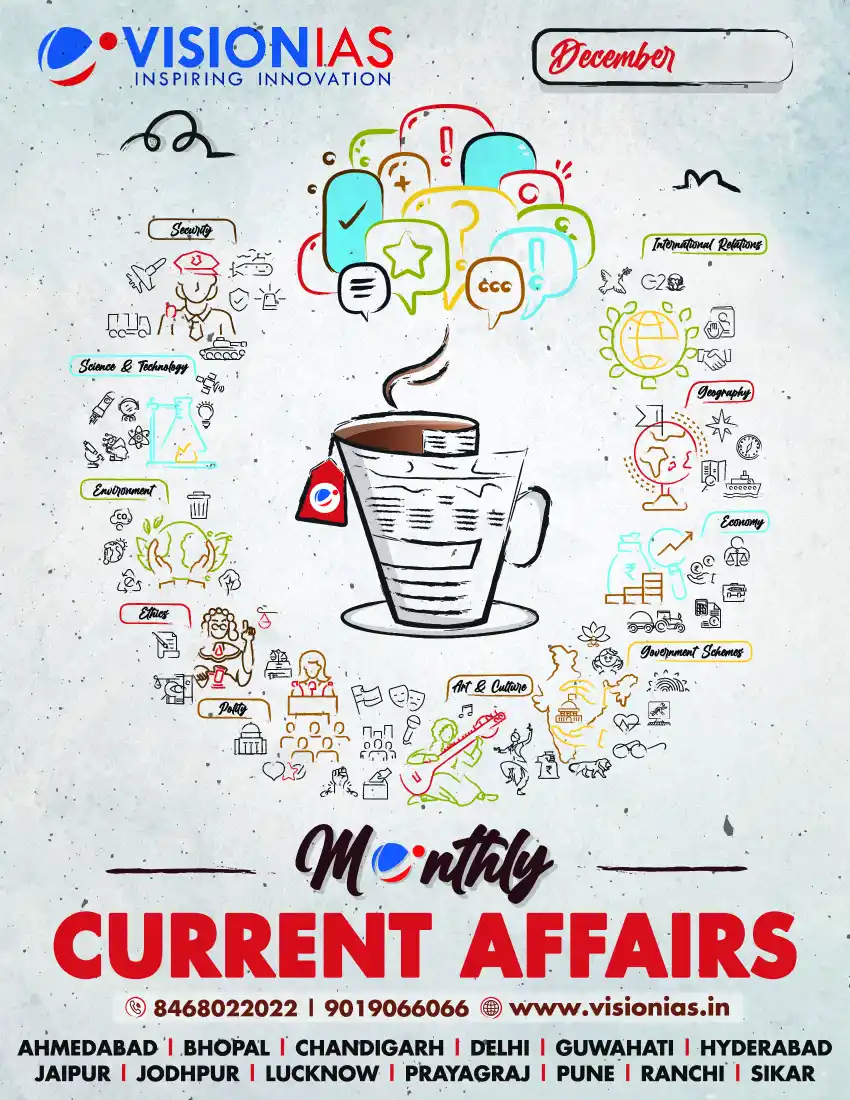 Vision IAS Current Affairs Magazine December 2025 | English Medium Edition₹199
 Vision IAS Prelims Test Series 2026 | UPSC Prelims GS Tests in English Medium₹1,249View on Competer →
 Vajiram Economics Notes 2025-2026 UPSC Economics Optional Booklets Set of 5₹1,285View on Competer →
Continue reading
More in Buying Guides



Need help choosing?
Tell us your exam and stage on WhatsApp, we suggest the right set.