
OJAS GPSC Syllabus 2026: Class 1-2 Prelims, Mains, Pattern
OJAS GPSC Syllabus 2026: Prelims, Mains Pattern + PDF — Complete ojas gpsc syllabus 2026 for Class 1-2: prelims + mains topics, exam pattern, marks, negative marking, plus PDF download in English & Gujarati.
 Competer

The ojas gpsc syllabus for the GPSC Class 1-2 (Gujarat State Civil Services) exam runs across three stages: a screening Preliminary exam (two objective General Studies papers of 200 marks each), a written Main exam (six descriptive papers totalling 900 marks), and a Personality Test/Interview of 50 marks. The final merit is built only from the Mains (900) plus the Interview (50) — the Prelims is purely qualifying. This 2026 guide gives you the exact subject-wise breakdown, the corrected exam-pattern table, negative-marking rules, medium options, and the official PDF download links in English and Gujarati — all in one place.
If you have already registered on the OJAS portal or plan to apply for the latest notification, treat this as your single, up-to-date reference so you can start preparing without chasing conflicting numbers across a dozen websites.
OJAS GPSC Syllabus 2026 at a Glance
Short on time? Here are the fast facts every aspirant searching for the ojas gpsc class 1-2 syllabus needs before reading the detail below:
- Stages: Prelims (objective) → Mains (descriptive) → Interview.
- Prelims: 2 GS papers, 400 marks total, qualifying only, with 1/3rd negative marking.
- Mains: 6 papers, 900 marks total, fully descriptive, no negative marking.
- Interview: 50 marks.
- Final merit: Mains (900) + Interview (50) = 950 marks.
- Medium: Gujarati or English (except the dedicated language papers).
- Where to download: the official GPSC site — gpsc.gujarat.gov.in — in both English and Gujarati.
Because GPSC revises the pattern and marks with each notification cycle, always cross-verify the figures below against the specific advertisement you applied to on OJAS.

OJAS vs GPSC: Are They the Same Thing?
No — and confusing the two is the most common mistake first-time aspirants make. OJAS (Online Job Application System) is simply the Government of Gujarat’s common online application portal (ojas.gujarat.gov.in). It is where you fill the form, upload photos and signature, and pay the fee. It does not conduct the exam or set the syllabus.
GPSC (Gujarat Public Service Commission) is the constitutional body that actually conducts the exam, releases the notification, sets the syllabus, publishes the question papers, and declares results on its official site gpsc.gujarat.gov.in.
In short: you apply through OJAS, but you prepare from and download the syllabus on the GPSC website. When people search “ojas gpsc syllabus,” they mean the GPSC Class 1-2 syllabus for the vacancy they applied to via OJAS.
| Aspect | OJAS | GPSC |
|---|---|---|
| Full form | Online Job Application System | Gujarat Public Service Commission |
| Role | Application/form portal | Exam-conducting authority |
| Website | ojas.gujarat.gov.in | gpsc.gujarat.gov.in |
| Where syllabus lives | Notification link redirects here | Official syllabus PDF (English & Gujarati) |
| What you do | Register, apply, pay fee, print form | Download syllabus, admit card, results |
GPSC Class 1-2 Selection Process 2026: Three Stages
The gpsc ojas syllabus 2026 follows a fixed three-stage selection funnel for the combined Class 1-2 (State Civil Services / Deputy Section Officer / Deputy Mamlatdar and allied posts under the main advertisement):
- Stage 1 — Preliminary Exam: Objective (MCQ) screening test. Two GS papers, 400 marks total. Qualifying only; marks do not count in final merit.
- Stage 2 — Main Exam: Descriptive written test of six papers, 900 marks total. This is the decisive stage.
- Stage 3 — Personality Test (Interview): 50 marks, conducted by the GPSC board.
Final merit = Mains (900) + Interview (50) = 950 marks. The Prelims score is used only to shortlist candidates for the Mains (typically around a fixed ratio of vacancies), so treat it as a cut-off gate, not a scoring stage. Understanding this funnel early changes how you allocate study time: you need enough Prelims accuracy to survive the gate, but the bulk of your final rank is decided by descriptive Mains answer quality.
GPSC Exam Pattern 2026: The Corrected, Current Table
Many top-ranking pages still carry outdated numbers — some show Prelims as a single paper, others quote Mains as 200 marks. Here is the accurate, consolidated gpsc exam pattern 2026 for the Class 1-2 exam.
Prelims Pattern
| Paper | Subject | Questions | Marks | Duration | Type |
|---|---|---|---|---|---|
| Paper 1 | General Studies 1 | 200 | 200 | 3 hours | Objective (MCQ) |
| Paper 2 | General Studies 2 | 100 | 200 | 3 hours | Objective (MCQ) |
| Total | — | 300 | 400 | 6 hours | Screening only |
Both papers are of graduation standard. The Prelims is qualifying — you must clear the cut-off to be called for Mains, but Prelims marks are not added to the final merit. Note that the two papers can carry different question counts and marks-per-question weightings depending on the notification, so read the instruction page of your admit card carefully.
Mains Pattern
| Paper | Subject | Marks | Duration | Nature |
|---|---|---|---|---|
| Paper 1 | Gujarati Language | 150 | 3 hours | Qualifying |
| Paper 2 | English Language | 150 | 3 hours | Qualifying |
| Paper 3 | Essay | 150 | 3 hours | Merit |
| Paper 4 | General Studies 1 | 150 | 3 hours | Merit |
| Paper 5 | General Studies 2 | 150 | 3 hours | Merit |
| Paper 6 | General Studies 3 | 150 | 3 hours | Merit |
| Total | Six descriptive papers | 900 | 18 hours | Descriptive |
All Mains papers are descriptive. The Gujarati and English language papers are qualifying in nature (you must score the prescribed minimum), while the Essay and three GS papers are counted for merit. Because the language papers only need to be cleared, many aspirants under-prepare them and then lose their entire attempt on a technicality — plan a few focused weeks for them regardless.
Interview / Personality Test
| Stage | Marks | Counted in Merit? |
|---|---|---|
| Prelims | 400 | No (screening only) |
| Mains | 900 | Yes |
| Interview | 50 | Yes |
| Final Merit | 950 | Mains + Interview |
Is There Negative Marking in the GPSC Prelims?
Yes. The GPSC Prelims applies negative marking of 1/3rd mark for every wrong answer in the objective papers. There is an additional deduction for questions where more than one option is marked or a mandatory question is left blank beyond the permitted limit, as per the instructions in the question booklet. The Mains, being descriptive, has no negative marking.
Practical takeaway: avoid blind guessing in Prelims. Attempt questions where you can eliminate at least two options, and use a full-length test series to calibrate your accuracy before the real exam. A disciplined attempt strategy — knowing your safe-guess threshold — often decides who clears the cut-off in a tight year.
GPSC Prelims Syllabus 2026: Subject-Wise Topics
The two Prelims GS papers together cover the broad canvas below. Paper 1 leans towards history, geography, culture and current events; Paper 2 leans towards polity, economy, science & technology and reasoning/aptitude. Use this as your printable gpsc class 1 2 syllabus subject wise checklist.
| Section | Key Topics |
|---|---|
| History | Indus Valley to modern India; Indian freedom struggle; History of Gujarat, princely states, socio-religious movements |
| Cultural Heritage | Art, architecture, literature, dance, music, festivals of India and Gujarat |
| Indian Polity & Constitution | Constitution, Preamble, fundamental rights & duties, DPSP, Parliament, judiciary, Panchayati Raj, amendments |
| Social Justice | Welfare schemes, vulnerable sections, governance, rights issues |
| International Relations | India’s foreign policy, bilateral & global groupings, international institutions |
| Indian Economy & Planning | Economic development, planning, budgeting, agriculture, banking, Gujarat’s economy |
| Geography | Physical, social & economic geography of India, Gujarat and the world |
| Science & Technology | Everyday science, IT, space, biotech, environmental science |
| Current Events | Regional (Gujarat), national and international current affairs |
| Reasoning & Aptitude | Logical reasoning, data interpretation, general mental ability (Paper 2) |
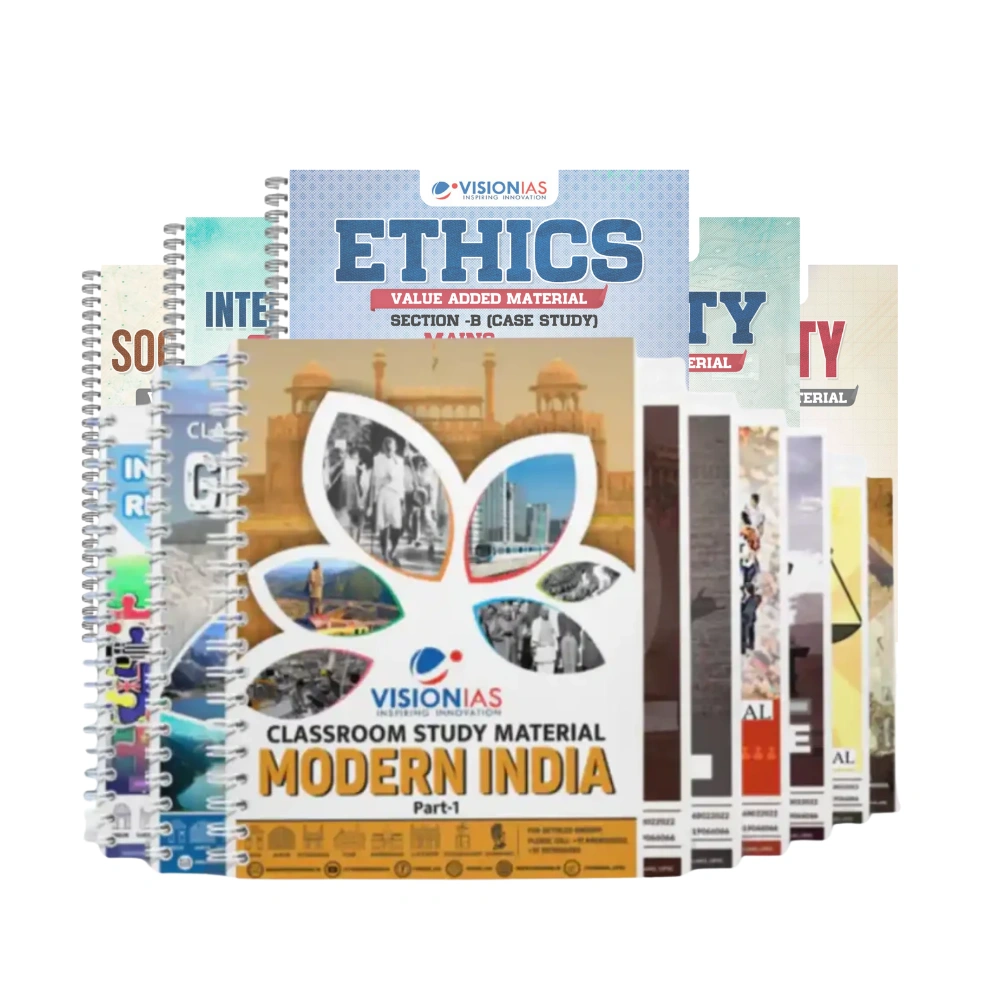
Because so much of the GS core (polity, economy, geography, science & tech, current affairs) overlaps with the UPSC framework, aspirants build a strong base using established GS notes. A comprehensive set such as the Vision IAS GS 2026-27 booklets covers the national portion of the syllabus, which you then supplement with Gujarat-specific static material. For the fast-moving current events section, a monthly resource like the Vision IAS Current Affairs Magazine (January 2026) keeps you aligned with the notification cycle.
GPSC Mains Syllabus 2026: Paper-Wise Breakdown
The Mains is where the exam is won or lost. Each of the three merit GS papers has a defined thematic spread, and the qualifying language papers test functional command rather than literature.
GS Paper 1 (Mains)
History and cultural heritage of India and Gujarat; Indian geography and resources; disaster management. Emphasis on Gujarat’s history, art, and contribution to the freedom movement. Expect questions that reward specific regional detail — dynasties, reform movements, and monuments unique to Gujarat.
GS Paper 2 (Mains)
Indian Constitution and polity; governance and public administration; social justice; India and the world; the role of civil services. Strong current-affairs linkage with governance and schemes, so pair static constitutional knowledge with recent policy developments.
GS Paper 3 (Mains)
Indian economy and planning; science, technology and innovation; environment and ecology; internal security; the economy of Gujarat. Data- and scheme-heavy — ideal for revision through concise notes and regularly updated figures.
Language & Essay Papers (Mains)
The Gujarati and English papers test grammar, comprehension, precis/translation, and short writing. They are qualifying, but skipping them is the single most common self-inflicted failure. The Essay paper is merit-counting and rewards structure, balance, and evidence far more than flowery language.
| Mains Paper | Focus Areas | Recommended Prep Angle |
|---|---|---|
| Essay (150) | Two essays on socio-economic, governance, philosophical themes | Structure, balance, and quoting data/committees |
| GS 1 (150) | History, culture, geography, disaster management | Static base + Gujarat-specific facts |
| GS 2 (150) | Polity, governance, social justice, IR | Constitution + current governance |
| GS 3 (150) | Economy, sci-tech, environment, security | Notes + monthly current affairs |
| Gujarati (150) | Grammar, comprehension, essay, translation | Qualifying — practice writing |
| English (150) | Grammar, precis, comprehension, essay | Qualifying — practice writing |
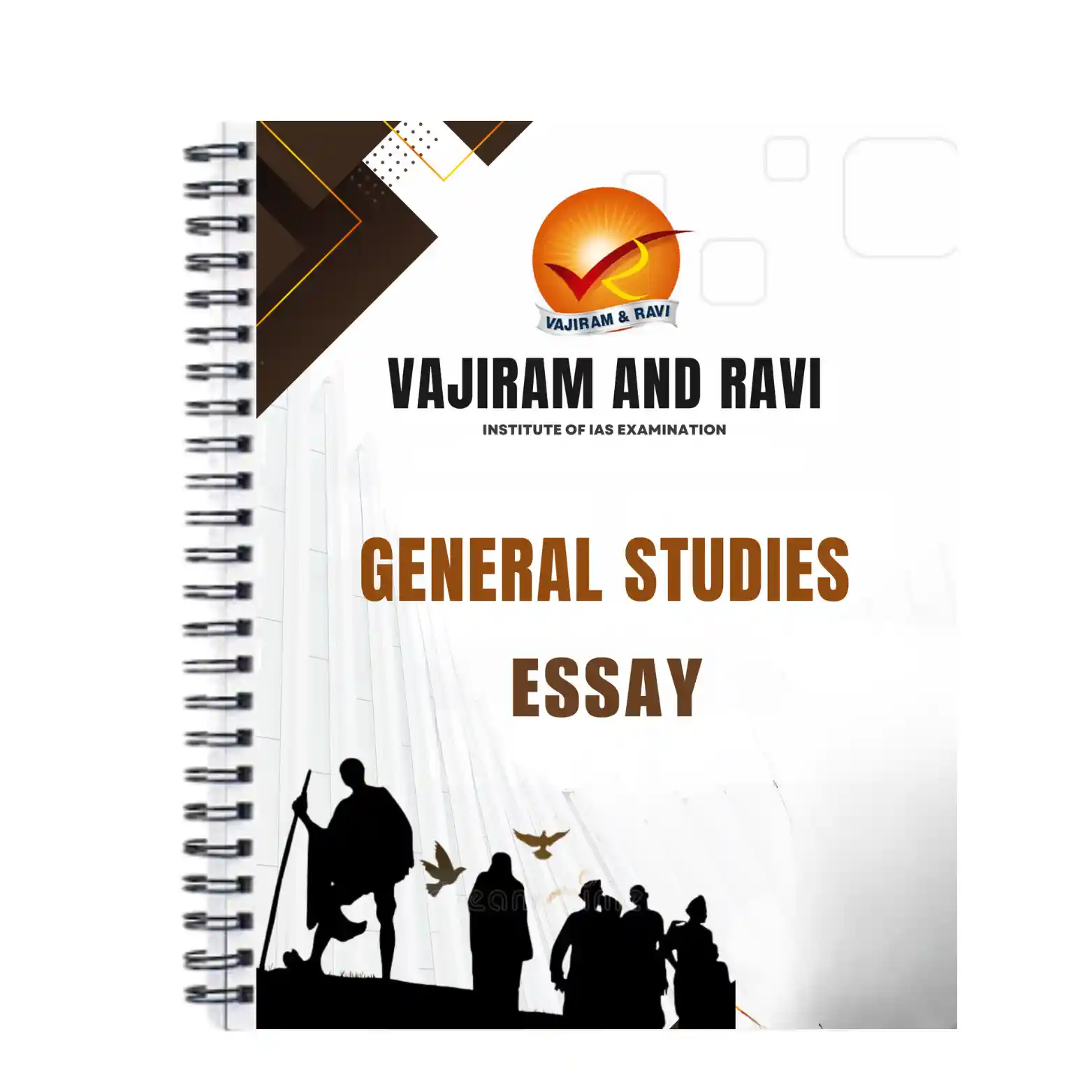
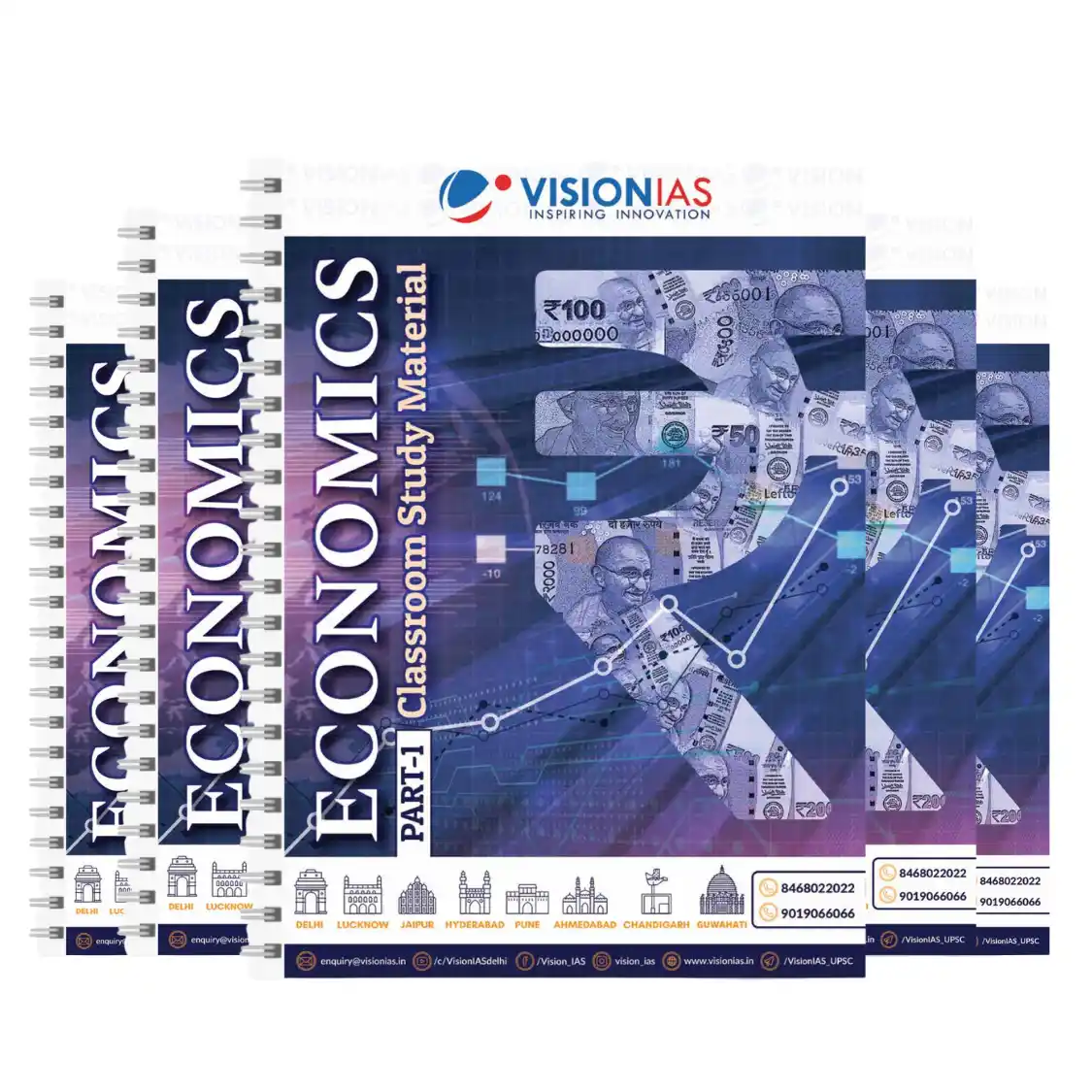
The Essay paper alone carries 150 marks and rewards a clear, structured, example-driven approach — a dedicated resource like the Vajiram Essay Notes helps you master introductions, flow, and conclusions. For the economy-heavy portions of both Prelims Paper 2 and Mains GS 3, focused material such as the Vision IAS Economics Notes gives you the conceptual depth to attempt analytical questions.
Which Subjects Are Covered in GPSC General Studies?
General Studies is the backbone of both Prelims and Mains, so it is worth isolating exactly what “GS” means here. Across the papers, GPSC General Studies covers seven broad domains:
- History & Cultural Heritage — ancient to modern India, with a strong Gujarat layer (Harappan sites, Sultanate and Maratha periods, the freedom struggle, and Gujarat’s art and literature).
- Geography — physical, economic and social geography of India, the world, and Gujarat, plus resources and demographics.
- Polity & Governance — the Constitution, institutions, Panchayati Raj, public administration, and the role of the civil services.
- Economy & Planning — macroeconomics, budgeting, banking, agriculture, and Gujarat’s economic profile.
- Science, Technology & Environment — everyday science, IT and space, biotech, ecology, and climate.
- Current Affairs — Gujarat, national and international events, tied to schemes and policy.
- Reasoning & Aptitude — logical reasoning, data interpretation and mental ability, concentrated in Prelims Paper 2.
The unifying theme is the Gujarat dimension threaded through every domain — this is what distinguishes GPSC GS from a generic national syllabus.
Can the GPSC Exam Be Given in Gujarati Medium?
Yes. This is one of the biggest advantages of GPSC over an all-India exam. The objective Prelims and the descriptive Mains (except the dedicated Gujarati and English language papers) can be attempted in either Gujarati or English medium. The GPSC publishes the question paper bilingually, and you may write your GS and Essay answers in Gujarati.
This means a Gujarati-medium aspirant can prepare largely in their comfort language, using Gujarati-medium static content for the state-specific portions while relying on standard GS material for the national syllabus. Whichever medium you pick, stay consistent in mock tests so your speed and terminology are exam-ready.
How to Download the GPSC Syllabus PDF (English & Gujarati)
For gpsc syllabus pdf download gujarati and English, always use the official source rather than third-party copies — GPSC occasionally revises the pattern with each notification cycle.
- Visit the official GPSC website: gpsc.gujarat.gov.in
- Open the “Syllabus” or “Advertisement” section.
- Locate the advertisement for the Class 1-2 (State Civil Services) post you applied to via OJAS.
- Download the Preliminary and Main syllabus PDFs — both are provided in English and Gujarati.
- Cross-check the pattern in the PDF against the current notification, since marks and paper counts can change per cycle.
Note: OJAS itself does not host a separate syllabus — the notification link on OJAS points back to the GPSC advertisement page where the PDF resides. Save the PDF locally and print the pattern page so you can tick off topics as you cover them.
Eligibility, Vacancies & How to Apply on OJAS
The combined Class 1-2 advertisement typically covers a large block of posts — recent cycles have carried vacancy blocks such as 71 and 213 posts across services. Always confirm the exact number in the current-year notification.
| Criterion | Requirement |
|---|---|
| Education | Bachelor’s degree from a recognised university (any stream) |
| Age | Generally 20/21 to 35 years, with relaxations for reserved categories |
| Nationality | Indian citizen (as per GPSC rules) |
| Language | Working knowledge of Gujarati and/or Hindi |
| Application portal | OJAS (ojas.gujarat.gov.in) |
How to apply: register on OJAS with a valid email and mobile, fill personal and educational details, upload photo and signature in the prescribed format, select the GPSC advertisement, pay the fee online, and print the confirmation. Keep the application number safe for downloading the admit card later.
How to Cover the GPSC Syllabus 2026: Preparation Timeline
A realistic 10-12 month plan maps each syllabus block to a phase. Adjust to your notification date.
| Phase | Duration | Focus |
|---|---|---|
| Foundation | Months 1-4 | NCERT + static GS (history, polity, geography, economy) + Gujarat-specific base |
| Advanced | Months 5-7 | Standard reference notes, sci-tech, environment, current affairs habit |
| Prelims sprint | Months 8-9 | MCQ practice, full-length mock tests, revision of high-yield topics |
| Mains focus | Months 10-11 | Answer writing, Essay practice, language papers, Gujarat integration |
| Interview | Final month | DAF-style bio, current affairs, mock interviews |
Common Mistakes to Avoid
- Treating Prelims marks as if they count in merit — they do not.
- Ignoring the Gujarat-specific portions of history, geography, and economy that differentiate GPSC from UPSC.
- Underestimating the qualifying Gujarati/English language papers and failing to clear their minimum.
- Blind guessing in Prelims despite the 1/3rd negative marking.
- Skipping answer-writing practice for the 900-mark descriptive Mains.
- Studying from an old syllabus PDF instead of re-downloading it for the current notification cycle.
Recommended Books & Study Material for GPSC 2026
Because the GS core of GPSC mirrors the national civil services syllabus, most toppers combine a strong standard GS set with Gujarat-specific static books and a current-affairs subscription. The table below maps syllabus sections to resource types.
| Syllabus Section | Resource Type | Example |
|---|---|---|
| Complete GS (Prelims + Mains) | Full booklet set | Vision IAS GS 2026-27 |
| Economy (P2 + Mains GS3) | Subject notes | Vision IAS Economics Notes |
| Essay paper (150) | Essay guide | Vajiram Essay Notes |
| Current affairs | Monthly magazine | Vision IAS CA Jan 2026 |
Supplement these with a Gujarat-focused static book (state history, geography, economy, polity) and a Prelims MCQ test series to build accuracy under the negative-marking regime. The right mix is a national GS spine plus a thin, well-revised Gujarat layer — not two full syllabi.
How to Use This Syllabus Guide
This guide consolidates the GPSC Class 1-2 exam structure, subject-wise topics, medium options, negative-marking rules and download steps as published by the Gujarat Public Service Commission. Exam patterns, mark distributions and vacancy counts are revised by GPSC from time to time, so the golden rule stands: treat the figures here as a study map and confirm every number against the official advertisement and syllabus PDF on gpsc.gujarat.gov.in before you finalise your strategy.
Frequently Asked Questions
What is the syllabus of GPSC Class 1-2 exam?
The GPSC Class 1-2 syllabus spans three stages: an objective Prelims with two General Studies papers (400 marks) covering history, polity, geography, economy, science & tech and current affairs; a descriptive Mains of six papers (900 marks) including Essay, three GS papers and Gujarati & English language papers; and a 50-mark Interview. Gujarat-specific content runs throughout.
How many papers are there in GPSC prelims and mains?
The Prelims has two objective papers (GS 1 and GS 2), each of 200 marks. The Mains has six descriptive papers — Gujarati, English, Essay, and GS 1, 2 and 3 — each of 150 marks, totalling 900 marks.
Is OJAS and GPSC the same thing?
No. OJAS is the Gujarat government’s online application portal where you fill and submit the form. GPSC is the commission that conducts the exam, sets the syllabus, and declares results. You apply on OJAS but download the syllabus from gpsc.gujarat.gov.in.
How do I download the GPSC syllabus PDF in Gujarati?
Go to gpsc.gujarat.gov.in, open the Syllabus or Advertisement section, select the Class 1-2 post, and download the Prelims and Mains syllabus PDFs — both are available in Gujarati and English. Always verify against the current notification.
What is the exam pattern for GPSC 2026?
The GPSC Class 1-2 pattern for 2026 has three stages: a qualifying Prelims of two objective GS papers (400 marks total) with 1/3rd negative marking; a merit-deciding descriptive Mains of six papers (900 marks) with no negative marking; and a 50-mark Interview. The final merit is Mains plus Interview (950 marks); Prelims is only a screening gate.
Is there negative marking in the GPSC prelims exam?
Yes. The GPSC Prelims deducts 1/3rd mark for each wrong answer in the objective papers, with additional penalties for multiple or blank responses as per booklet rules. The descriptive Mains has no negative marking.
Which subjects are covered in GPSC General Studies?
GPSC General Studies covers history and cultural heritage, geography, polity and governance, economy and planning, science & technology and environment, current affairs, and reasoning/aptitude. Each domain carries a distinct Gujarat-specific layer alongside the national and international content.
Can the GPSC exam be given in Gujarati medium?
Yes. Except the dedicated English language paper, the Prelims and Mains (including GS and Essay) can be attempted in Gujarati medium. GPSC provides bilingual question papers, making it accessible to Gujarati-medium aspirants.
Recommended Study Material


Competer
The Competer team: we pack the orders, so we know which editions aspirants keep coming back for.
Get it printed
State PCS study material aspirants order most on Competer, delivered across India
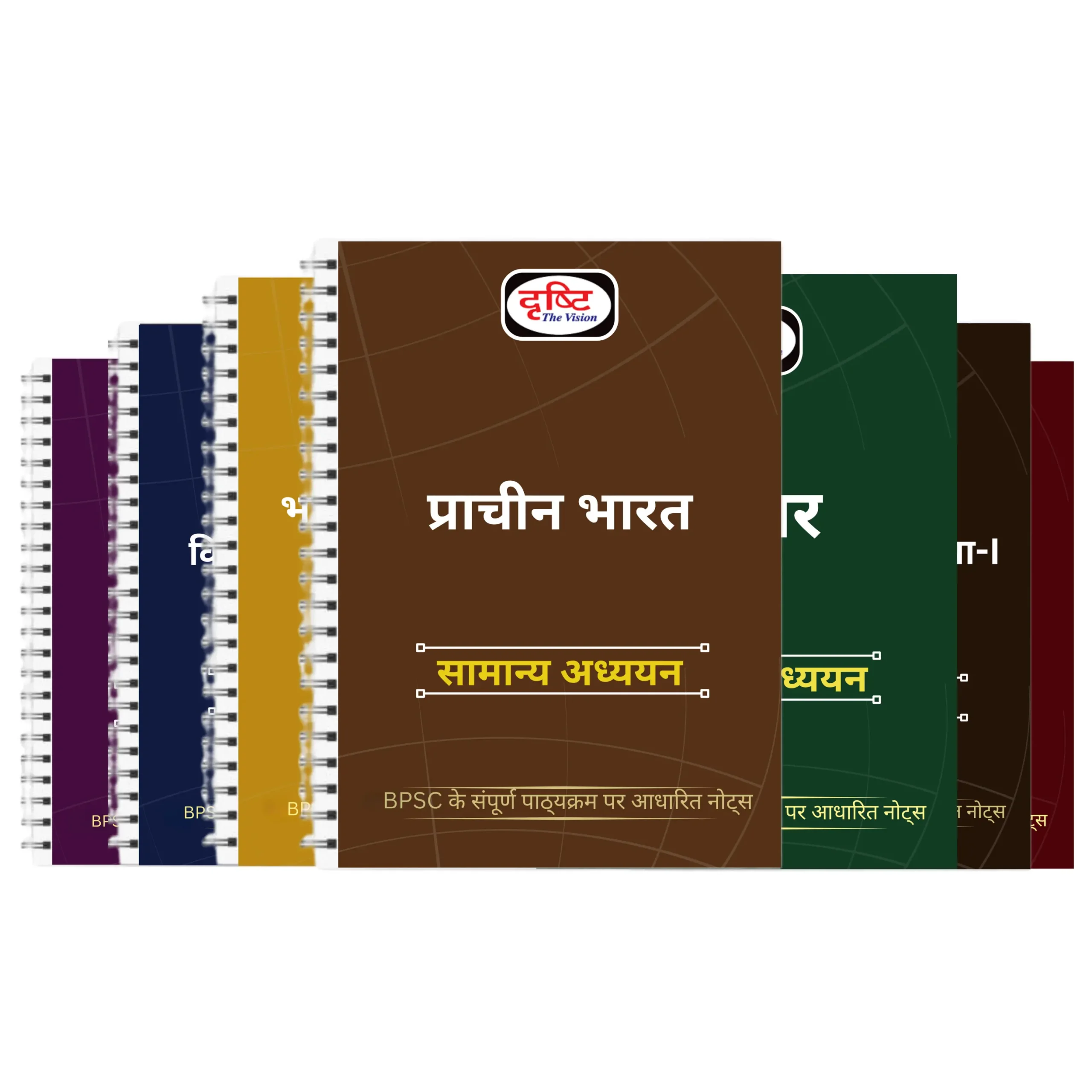 Drishti BPSC Books 2025-2026 | Bihar Civil Services Exam | Hindi Medium Set of 24₹4,899View on Competer →
 Drishti UPPCS Notes 2025-26 | GS UPPSC Hindi Medium | 30 Printed Booklets₹6,199View on Competer →
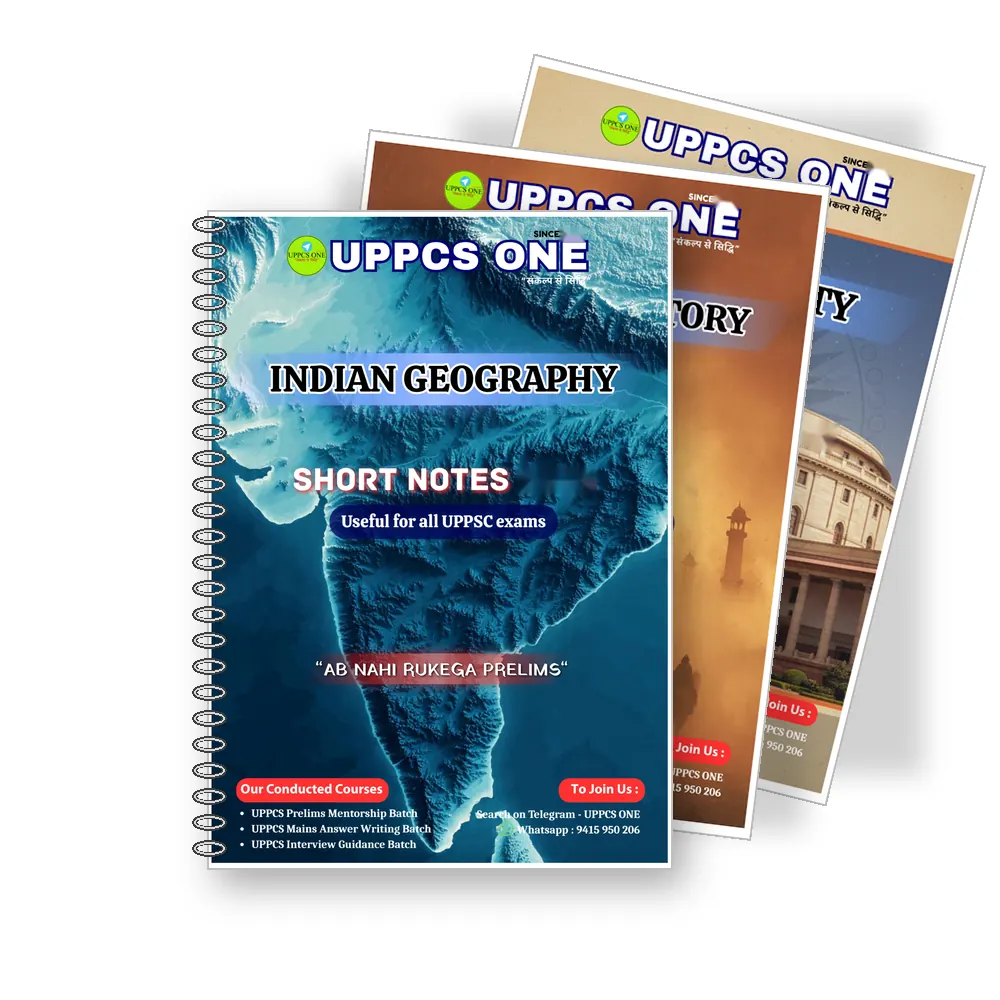 UPPCS ONE General Studies Printed Notes 2026 | UPPCS One GS Notes for UPPSC Prelims and Mains in English | 11 Booklets Set | Indian Polity, Economy, Modern History, Biology, Environment Ecology, Uttar Pradesh Special₹999View on Competer →Drishti UPPSC Books 2025-26 | GS UPPCS Hindi Medium Booklets Set of 30₹6,199View on Competer →
Continue reading
More in Buying Guides



Need help choosing?
Tell us your exam and stage on WhatsApp, we suggest the right set.