

NDA Syllabus 2026: Maths & GAT Subject-Wise
Complete NDA syllabus 2026 — subject-wise Maths & GAT topics, exam pattern & marking scheme, marks weightage, NCERT chapter map, SSB stages.
 Competer
12 min read
The NDA syllabus is set by the UPSC and has just two written papers — Paper 1 Mathematics (300 marks) and Paper 2 General Ability Test, or GAT (600 marks) — for a written total of 900 marks, followed by a 900-mark SSB Interview. Paper 1 carries 120 objective questions and Paper 2 carries 150 questions; each paper runs 2.5 hours and both have negative marking. The academic content is drawn largely from the NCERT Class 11 and 12 syllabus, so a Class 12 student who has studied Mathematics and Science is already covering most of it.
This guide gives you the complete, subject-wise NDA syllabus for 2026, the exact exam pattern and marking scheme, previous-year weightage trends, a chapter-by-chapter NCERT map, an honest most-important-vs-skippable topic list, a 6-month study plan, and how to download the official PDF — everything a defence aspirant needs to plan preparation from Class 11 onward.
NDA Syllabus 2026 — Quick Facts
- Papers: 2 written papers — Mathematics and GAT (the GAT bundles English + six GK streams).
- Written marks: 900 (Maths 300 + GAT 600); SSB Interview: 900; Grand total: 1800.
- Questions: Maths 120, GAT 150 (50 English + 100 GK).
- Level: NCERT Class 11–12 / JEE-foundation, not JEE Advanced depth.
- Conducted: twice a year (NDA I and NDA II) — the syllabus is identical for both cycles.
- Mode & languages: offline OMR, objective; both papers in English and Hindi except the GAT English section.
NDA Syllabus 2026 at a Glance
The NDA (National Defence Academy) written examination is conducted twice a year by the Union Public Service Commission — NDA I (notified around December, exam in April) and NDA II (notified around May, exam in September). It is a single-day, two-session objective test. Here is how the whole selection is structured before we break down each subject.
| Stage | Component | Maximum Marks |
|---|---|---|
| Written Exam | Paper 1 — Mathematics | 300 |
| Written Exam | Paper 2 — General Ability Test (GAT) | 600 |
| Written Total | Paper 1 + Paper 2 | 900 |
| SSB Interview | Intelligence & Personality Test | 900 |
| Grand Total | Written + SSB | 1800 |
So there are two subjects/papers in the NDA written exam — Mathematics and the GAT — but the GAT itself bundles English plus six General Knowledge streams, which is why aspirants often say the exam covers “many subjects.” The syllabus does not change between NDA I and NDA II, so the plan below works for either cycle.
NDA Exam Pattern 2026 & Marking Scheme
Understanding the NDA exam pattern 2026 is as important as the syllabus, because negative marking decides who clears the cut-off. Both papers are entirely objective (multiple choice) and available in English and Hindi (except the English section of the GAT).
| Paper | Subject | Questions | Max Marks | Duration | Marks/Correct | Negative/Wrong |
|---|---|---|---|---|---|---|
| Paper 1 | Mathematics | 120 | 300 | 2.5 hours | +2.5 | −0.83 |
| Paper 2 | GAT — Part A (English) | 50 | 200 | 2.5 hours | +4 | −1.33 |
| Paper 2 | GAT — Part B (GK) | 100 | 400 | (same session) | +4 | −1.33 |
| Total | — | 270 | 900 | 5 hours | — | — |
Key takeaways from the marking scheme:
- Every wrong answer in Maths costs you one-third of 2.5 = 0.83 marks; every wrong GAT answer costs one-third of 4 = 1.33 marks.
- Blind guessing is punished heavily in the GAT — one wrong answer wipes out roughly a third of a correct one, so answer only when you can eliminate at least two options.
- There is no sectional cut-off inside the GAT, but there is an overall written cut-off, and the SSB stage carries 900 marks — as much as the entire written exam — so the written score only decides who gets called.
NDA Maths Syllabus 2026 (Paper 1 — 300 Marks)
The NDA maths syllabus is the highest-scoring paper because answers are unambiguous. It is pitched at the Class 11 and 12 level — comparable to NCERT and JEE-foundation material, not JEE Advanced depth. Below is the full topic list with the approximate number of questions each area draws, based on previous years’ trend analysis.
| Topic | Approx. Questions | NCERT Class Coverage |
|---|---|---|
| Algebra (sets, complex numbers, quadratic equations, sequences, permutations & combinations, binomial theorem, logarithms) | 20–25 | Class 11 |
| Matrices & Determinants | 8–12 | Class 12 |
| Trigonometry (ratios, identities, inverse functions, heights & distances) | 15–20 | Class 11 |
| Analytical Geometry (2D & 3D — lines, circles, conics, planes) | 15–20 | Class 11 & 12 |
| Differential Calculus (limits, continuity, derivatives, applications) | 15–20 | Class 11 & 12 |
| Integral Calculus & Differential Equations | 10–15 | Class 12 |
| Vector Algebra | 5–8 | Class 12 |
| Statistics & Probability | 15–20 | Class 11 & 12 |
Is NDA Maths tough?
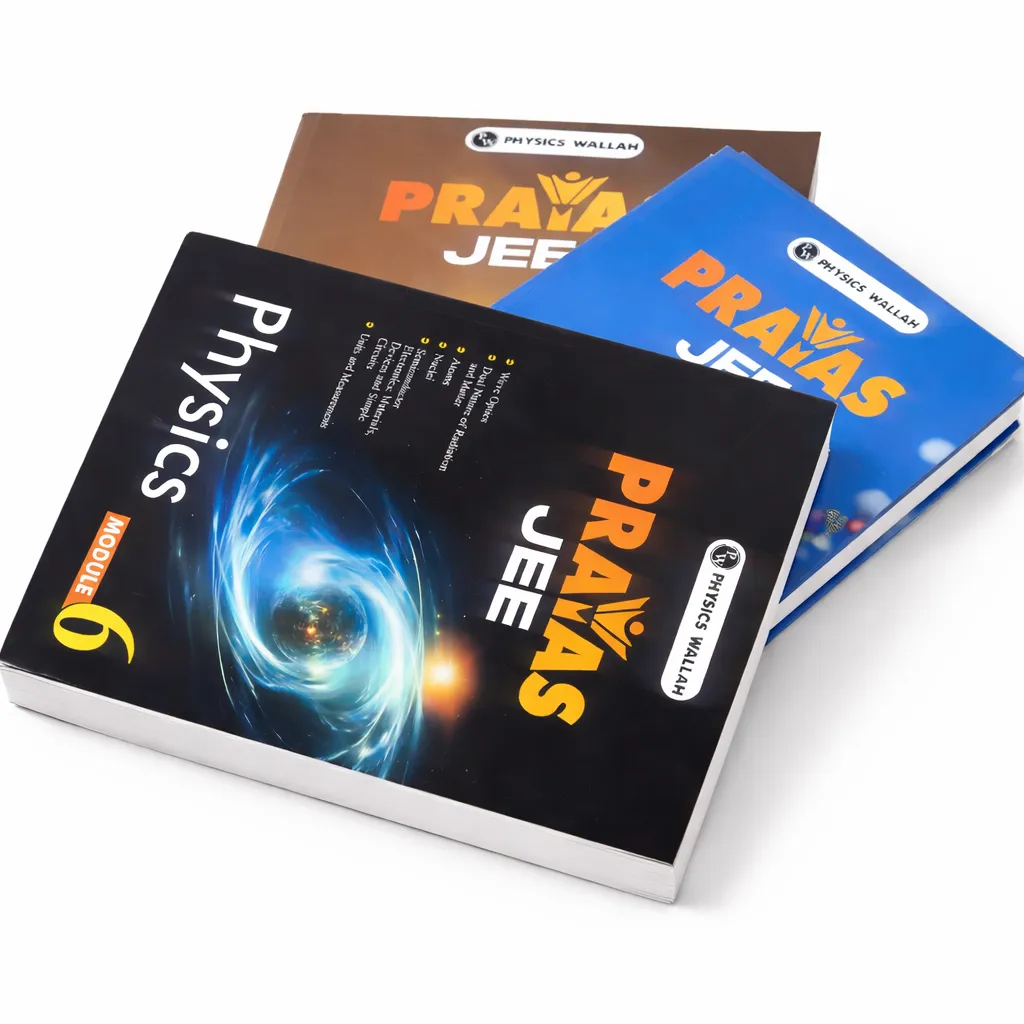
NDA maths is not conceptually harder than your Class 12 board syllabus — the challenge is speed. You get roughly 75 seconds per question, so calculation-heavy topics like calculus and determinants must be practised until they are reflexive. Aspirants who have prepared for JEE Main find NDA Maths comfortable; that is why structured Class 11–12 modules such as the PW Prayas JEE Modules (18 books for 11+12) and the eSaral IIT JEE Modules double up neatly as NDA Maths preparation — they cover algebra, trigonometry, coordinate geometry and calculus with graded practice sets.
NDA GAT Syllabus 2026 (Paper 2 — 600 Marks)
The GAT is where most aspirants lose marks because the syllabus is broad. It is divided into Part A — English (200 marks) and Part B — General Knowledge (400 marks).
| GAT Section | Questions | Marks | Share of Paper 2 |
|---|---|---|---|
| Part A — English | 50 | 200 | 33% |
| Part B — General Knowledge | 100 | 400 | 67% |
| Total GAT | 150 | 600 | 100% |
GAT Part A — English Syllabus & Question Types
The English section tests grammar and usage at the Class 12 level. Most guides only list topic names; here is what each type actually looks like in the paper so you can target scoring.
| English Topic | What the Question Looks Like | Approx. Questions |
|---|---|---|
| Spotting Errors | Identify the grammatically wrong part of a sentence | 8–10 |
| Comprehension / Cloze | Read a passage and answer inference/vocabulary questions | 8–12 |
| Synonyms & Antonyms | Choose the closest / opposite meaning of a highlighted word | 8–10 |
| Sentence Improvement & Ordering | Rearrange jumbled parts / pick the better phrasing | 6–10 |
| Fill in the Blanks (grammar & vocab) | Select the correct preposition, tense or word | 6–8 |
| Idioms & Phrases | Pick the correct meaning of an idiom | 4–6 |
English is the fastest 200 marks in the paper — the questions are short and there is no calculation. Aim to finish English in 40–45 minutes and bank a high, low-risk score before moving to GK.
GAT Part B — General Knowledge Syllabus (400 Marks)
General Knowledge is officially split into six sections. The approximate weightage below is based on past-paper frequency and helps you decide where to invest time.
| Section | Subject | Approx. Marks | Approx. Questions |
|---|---|---|---|
| A | Physics | 100 | ~25 |
| B | Chemistry | 60 | ~15 |
| C | General Science (Biology + everyday science) | 40 | ~10 |
| D | History & Freedom Movement | 80 | ~20 |
| E | Geography | 80 | ~20 |
| F | Current Events | 40 | ~10 |
Physics is the single biggest GK section — motion, work-energy, heat, light, sound, electricity, magnetism and simple machines. Chemistry covers physical & chemical changes, elements & compounds, acids/bases/salts, and common reactions. General Science touches human physiology, plant/animal life, nutrition and diseases. History spans the freedom movement, the Constitution and world history basics; Geography covers Earth, atmosphere, climate, resources and Indian geography; Current Events asks about recent national and international affairs, sports and defence news.
Because Physics, Chemistry and General Science together make up around 200 marks — half the GK paper — science-based Class 11–12 modules are high-value here. The Physics and Chemistry portions of the Careerwill NEET Study Modules map cleanly onto NDA’s General Science demand, while a monthly current-affairs source such as the Vision IAS Current Affairs Magazine keeps the Current Events section covered without hunting across newspapers.
Subject-Wise Marks Weightage & High-Scoring Topics
If you had to rank the whole 900-mark written exam by return-on-effort, this is the order most toppers follow — a genuinely subject-wise view of the NDA syllabus.
| Area | Marks | Difficulty | Priority |
|---|---|---|---|
| GAT English | 200 | Low | Very High — quick, safe marks |
| Mathematics | 300 | Medium | Very High — objective, high volume |
| GK Physics | ~100 | Medium | High |
| GK History + Geography | ~160 | Low-Medium | High — static, memorisable |
| GK Chemistry + General Science | ~100 | Medium | Medium |
| Current Events | ~40 | Low | Medium — cheap if you read daily |
Most Important vs Skippable Topics (Honest Guidance)
Coaching sites rarely tell you what to skip. Based on past-paper frequency, here is a candid breakdown:
- Never skip (high frequency): Trigonometry, Calculus, Algebra & Probability in Maths; the entire English section; Physics (mechanics, light, electricity), Indian History freedom movement, and physical/Indian Geography in GK.
- Study but don’t over-invest: 3D geometry, differential equations, vector algebra in Maths; world history and detailed economic geography in GK.
- Low-yield / read once: obscure static GK trivia and very recent one-off current events — high volume, low return. Do not sacrifice Maths practice for these.
NCERT Chapter Mapping — Which Class 11/12 Chapter Covers What
Yes, the NDA syllabus overlaps heavily with NCERT, but it is not identical — NDA adds application-style objective questions and some topics (like heights & distances or basic mechanics) that boards treat lightly. Use this map to revise the right chapters.
| NDA Topic | NCERT Source (Class) |
|---|---|
| Sets, Relations, Functions | Maths Class 11 Ch 1–2 |
| Trigonometry | Maths Class 11 Ch 3 |
| Complex Numbers, P&C, Binomial | Maths Class 11 Ch 5, 7, 8 |
| Matrices & Determinants | Maths Class 12 Ch 3–4 |
| Differential & Integral Calculus | Maths Class 12 Ch 5–8 |
| Vector Algebra & 3D Geometry | Maths Class 12 Ch 10–11 |
| Probability & Statistics | Maths Class 11 Ch 15 + Class 12 Ch 13 |
| Physics (mechanics, heat, optics, electricity) | Science Class 9–10 + Physics Class 11 |
| Chemistry (matter, acids-bases, metals) | Science Class 9–10 + Chemistry Class 11 |
| Indian Freedom Movement & Polity | History & Civics Class 8–10 |
| Geography (Earth, climate, resources) | Geography Class 9–11 |
Can Arts & Commerce Students Apply for NDA?
Yes — with a caveat tied to the wing you choose:
- Army Wing: Any Class 12 pass (Arts, Commerce or Science) is eligible. Arts/commerce students still sit the same written paper, including Mathematics — the syllabus does not change for them.
- Air Force, Navy & Naval Academy: You must have studied Physics, Chemistry and Mathematics (PCM) in Class 11 and 12.
So an arts student can join the Army wing but must still master the full NDA maths syllabus, because there is no separate, easier Maths paper. As per UPSC eligibility, candidates must be roughly 16.5–19.5 years old and unmarried; women are now eligible across all wings. Always confirm exact dates against the official notification for your NDA I or NDA II cycle.
SSB Interview — Stage I & Stage II
Clearing the written exam only earns a call to the 5-day SSB Interview (900 marks), which tests Officer-Like Qualities, not textbook knowledge.
| Stage | Tests | Purpose |
|---|---|---|
| Stage I (Day 1 — screening) | Officer Intelligence Rating (OIR) + Picture Perception & Description Test (PP&DT) | Shortlists candidates; many are sent home the same day |
| Stage II (Days 2–5) | Psychology Tests (TAT, WAT, SRT, Self-Description) | Assesses personality & thinking patterns |
| Stage II | Group Testing Officer (GTO) tasks | Group discussion, planning, outdoor tasks, command task |
| Stage II | Personal Interview + Conference | One-on-one assessment and final board decision |
Where to Download the Official NDA Syllabus PDF
You can download the complete official NDA syllabus PDF (Maths + GAT, subject-wise) directly from the UPSC exam notification on upsc.gov.in — every year’s Detailed Notification carries the full syllabus in its appendix. To get it: open upsc.gov.in, go to the Examinations / Active Examinations section, open the NDA & NA (I or II) 2026 notification, and scroll to the appendix titled “Syllabus.” For daily study, save a subject-wise checklist built from the tables above so you can tick off each topic as you finish it. Keep the official PDF as your single source of truth, since coaching handouts occasionally miss sub-topics like heights & distances or hyperbolic functions.
6-Month NDA Preparation Plan (Syllabus-Linked)
A realistic timeline that ties each phase to the NCERT chapters and marks weightage above.
| Phase | Focus | Goal |
|---|---|---|
| Month 1–2 | Maths (Algebra, Trigonometry) + English grammar + Class 9–10 Science revision | Build fundamentals; finish English basics |
| Month 3–4 | Maths (Calculus, Geometry, Probability) + Physics & Chemistry + History/Geography | Cover the high-weightage GK core |
| Month 5 | Full-length mocks + Current Affairs consolidation + weak-area drills | Fix timing and negative-marking control |
| Month 6 | Previous-year papers + revision of formula sheets & static GK | Peak accuracy; simulate exam conditions |
How to prepare for the NDA exam from the syllabus
Work topic-by-topic against the weightage tables, not chapter-by-chapter blindly. Solve at least 8–10 years of previous-year papers — NDA recycles concepts heavily. Maintain a formula notebook for Maths and Physics, revise it daily, and take a timed mock every week from Month 4 to train yourself to skip low-confidence questions and beat the negative marking. Anchor every study block to the official UPSC syllabus so you never drift into topics the exam does not ask.
Best Study Material Mapped to the NDA Syllabus
Because no single “NDA book” covers everything well, aspirants build a kit from proven Class 11–12 modules:
- Maths + Physics + Chemistry: PW Prayas JEE Modules or eSaral IIT JEE Modules — graded theory and practice that overlap directly with NDA Maths and GK science.
- General Science (Biology + physiology): the Careerwill NEET Study Modules for clean, exam-oriented science coverage.
- Current Events: a monthly Vision IAS Current Affairs Magazine to keep Section F current without daily newspaper clutter.
Pair these with the official UPSC syllabus PDF and previous-year papers, and you have every corner of the NDA syllabus 2026 covered.
Frequently Asked Questions
What is the syllabus of the NDA exam?
The NDA syllabus has two papers: Paper 1 Mathematics (300 marks) covering algebra, trigonometry, calculus, geometry, vectors, statistics and probability; and Paper 2 General Ability Test (600 marks) covering English plus General Knowledge in Physics, Chemistry, General Science, History, Geography and Current Events. The written total is 900 marks, followed by a 900-mark SSB Interview.
How many subjects are there in the NDA exam?
There are two papers — Mathematics and the General Ability Test. However, the GAT itself contains English and six GK streams (Physics, Chemistry, General Science, History, Geography, Current Events), so functionally you study eight subject areas.
Which subjects are included in the NDA GAT paper?
The GAT has two parts. Part A is English (50 questions, 200 marks). Part B is General Knowledge (100 questions, 400 marks) split into six streams — Physics, Chemistry, General Science, History & Freedom Movement, Geography, and Current Events. Physics is the largest GK stream, followed by History and Geography.
Is NDA maths tough and what level is it?
NDA maths is set at the Class 11–12 (NCERT/JEE-foundation) level. It is not conceptually very hard, but speed matters — you get about 75 seconds per question across 120 questions, so accuracy and fast calculation are the real challenge.
Can arts or commerce students apply for NDA?
Yes. Arts and commerce students can apply for the Army wing and sit the same written exam, including Mathematics. For the Air Force, Navy and Naval Academy, candidates must have studied Physics, Chemistry and Mathematics (PCM) in Class 11 and 12.
What is the exam pattern and marking scheme of NDA?
Mathematics has 120 questions for 300 marks (+2.5 correct, −0.83 wrong) in 2.5 hours. The GAT has 150 questions for 600 marks (+4 correct, −1.33 wrong) in 2.5 hours, split into 50 English questions (200 marks) and 100 GK questions (400 marks).
How do I prepare for the NDA exam from the syllabus?
Prioritise by weightage: secure English and Maths first, then Physics and static History/Geography. Map each topic to its NCERT chapter, keep a daily-revised formula notebook, solve 8–10 years of previous-year papers, and take a timed mock every week from Month 4 to control negative marking. Use the official UPSC syllabus PDF as your final checklist.
Is the NDA syllabus the same as Class 11 and 12 NCERT?
It overlaps heavily but is not identical. Most Maths and Science content matches NCERT Class 11–12, yet NDA adds application-style objective questions and some topics (like heights & distances and basic mechanics) that boards treat lightly, so use the official UPSC syllabus PDF as your final checklist.
Recommended Study Material




Competer
The Competer team: we pack the orders, so we know which editions aspirants keep coming back for.
Get it printed
UPSC study material aspirants order most on Competer, delivered across India
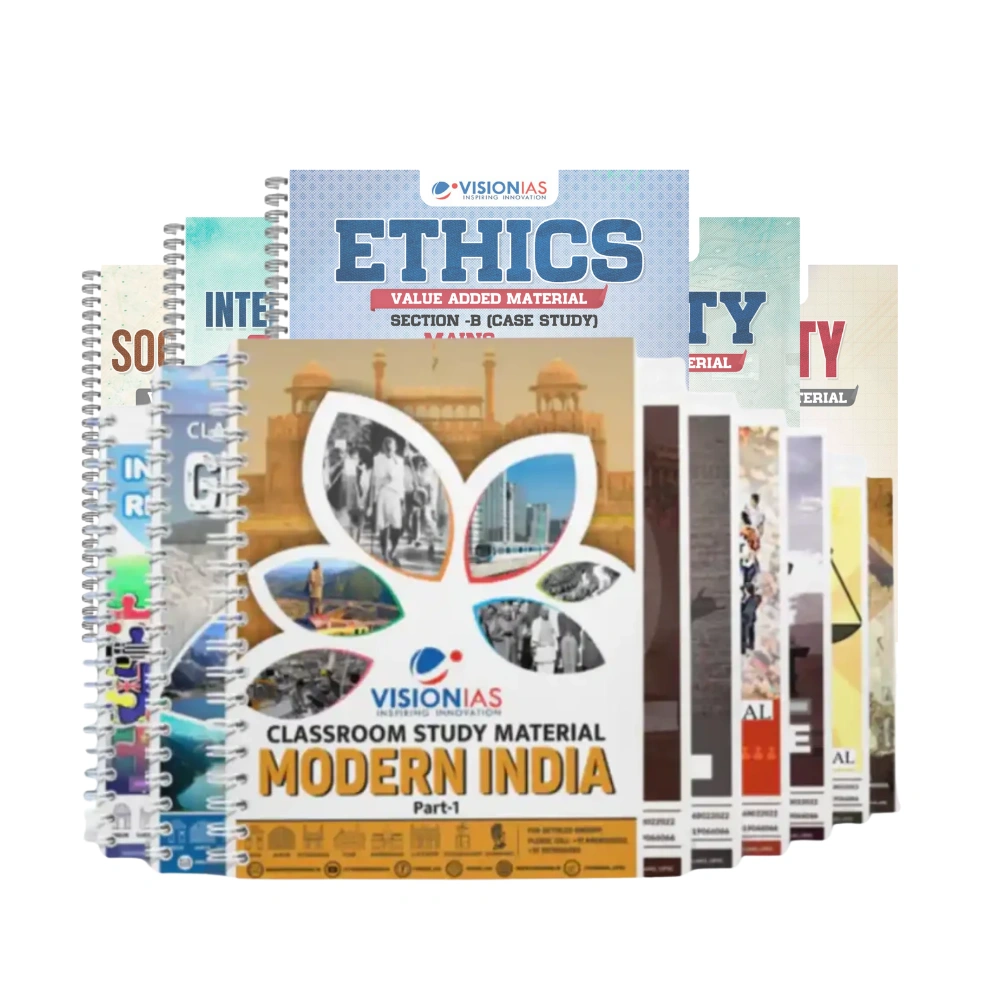 Vision IAS GS 2026-27 Booklets with Value Added Materials - 56 Booklets₹6,599View on Competer →
 Vision IAS Current Affairs Magazine December 2025 | English Medium Edition₹199
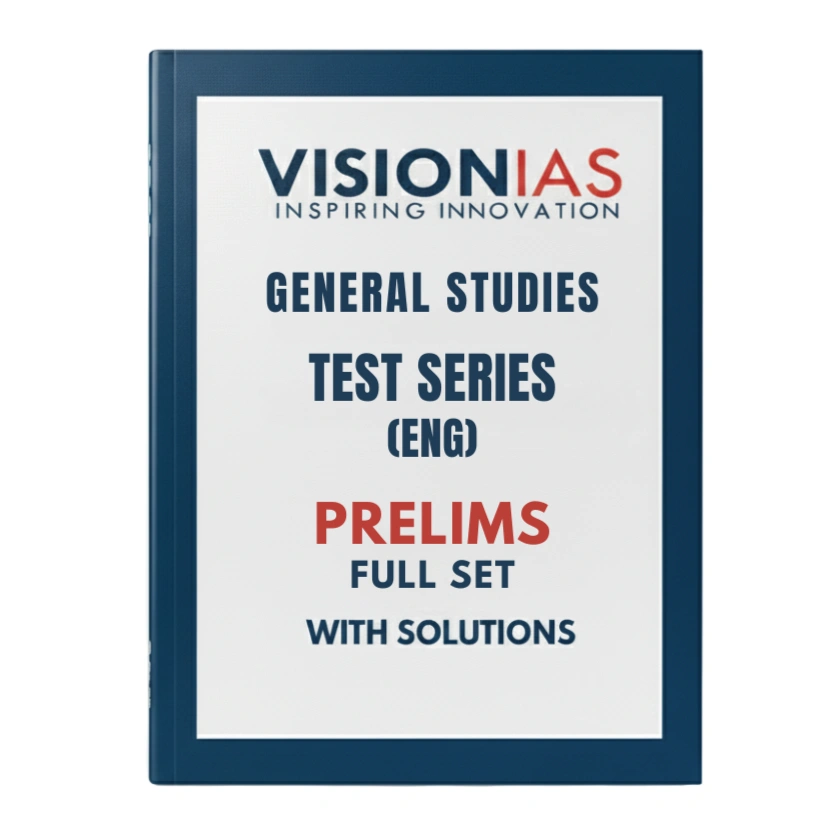 Vision IAS Prelims Test Series 2026 | UPSC Prelims GS Tests in English Medium₹1,249View on Competer →
 Vajiram Economics Notes 2025-2026 UPSC Economics Optional Booklets Set of 5₹1,285View on Competer →
Continue reading
More in Buying Guides



Need help choosing?
Tell us your exam and stage on WhatsApp, we suggest the right set.