

NCERT Books for NEET 2026: Subject-Wise List
NCERT books for NEET 2026: full subject & class-wise list, chapter weightage, is NCERT enough.
 Competer
The NCERT books for NEET are the 6 core NCERT science textbooks — Biology, Physics and Chemistry for Class 11 and Class 12 — and they are the single most important resource for the exam. Roughly 80–85% of NEET questions are framed directly or indirectly from NCERT, and in Biology this rises to nearly 90%. To be exam-ready you should read all six line by line, master every diagram and in-text example, and then pair them with one good MCQ/revision companion for practice.
This guide gives you the complete class-wise and subject-wise NCERT booklist, chapter-wise weightage tables for the latest NTA pattern, a line-by-line reading plan, verified PDF download steps, and a ready-to-buy study bundle so you are not stitching resources from ten different pages. The weightage figures here are compiled from analysis of recent NEET question papers (2020–2025) and the current rationalised syllabus, so treat them as a tested priority guide rather than loose estimates. Whether you are a dropper or a Class 11 beginner, this is the only NCERT roadmap you need for NEET 2026.
NCERT Books for NEET 2026: Quick Answer & Key Takeaways
If you only read one section, read this. These are the points NEET toppers and coaching mentors agree on about NCERT:
- Six core books: Physics, Chemistry and Biology for Class 11 and Class 12 are mandatory and non-negotiable.
- ~80–85% of NEET is NCERT-based overall, climbing to ~90–95% in Biology and ~85–90% in Chemistry.
- Is NCERT enough for NEET? Yes for Biology and Inorganic Chemistry; necessary-but-not-sufficient for Physics and Physical Chemistry, which need numerical practice.
- Read 3–4 times, not once — NCERT rewards repetition, in-text matter and diagrams far more than a single pass.
- Use the latest rationalised edition and get it free from the official NCERT portal (steps below).

Which NCERT Books Are Required for NEET 2026?
NEET tests three subjects — Physics, Chemistry and Biology (Botany + Zoology) — across the Class 11 and Class 12 syllabus prescribed by NTA. That means six mandatory NCERT textbooks. Chemistry and some Biology editions are split into Part I and Part II volumes, so in print you will actually be handling more booklets than six, but conceptually it is six subject-class combinations.
Here is the exact list of NCERT books for NEET Physics Chemistry Biology, class-wise:
| Subject | Class 11 Book(s) | Class 12 Book(s) |
|---|---|---|
| Physics | Physics Part I & Part II | Physics Part I & Part II |
| Chemistry | Chemistry Part I & Part II | Chemistry Part I & Part II |
| Biology | Biology (single volume, Units 1–5) | Biology (single volume, Units 6–10) |
For NCERT books for NEET Biology Class 11 and 12 specifically, note that Biology is a single textbook per class — Class 11 covers Diversity, Plant & Animal Structure, Cell Biology and Plant/Human Physiology, while Class 12 covers Reproduction, Genetics, Biology in Human Welfare, Biotechnology and Ecology. These two books alone decide the 360-mark Biology section that makes or breaks a NEET rank.
Why NCERT Books for NEET Are Non-Negotiable
The NEET syllabus released by NTA is built directly on the NCERT curriculum. The National Medical Commission and NTA repeatedly align question papers with NCERT text, which is why coaching institutes, toppers and the official syllabus all point back to the same six books.
There are three concrete reasons NCERT is non-negotiable:
- Direct question lift: Many Biology and Inorganic Chemistry questions are taken almost verbatim from NCERT lines, tables and footnotes.
- Syllabus match: After the NTA syllabus rationalisation, the NEET syllabus now mirrors the current NCERT content — topics deleted from NCERT are also out of NEET scope.
- Factual accuracy: NEET rewards precise recall. NCERT phrasing is the “official” answer key examiners lean on, so reading other books first can introduce conflicting facts.
In short: reference books help you practise, but NCERT decides what is correct. That is the core idea behind every ncert based books for neet preparation strategy that actually works.
How Much of NEET Comes Directly From NCERT? (Weightage)
Based on question-paper analysis across recent NEET years, the overwhelming majority of the paper traces back to NCERT. The exact split varies year to year, but the ranges below are stable and widely reported.
| Subject | Approx. NCERT-based share | Importance for NEET |
|---|---|---|
| Biology (Botany + Zoology) | ~90–95% | Very High |
| Chemistry (esp. Inorganic & Organic basics) | ~85–90% | Very High |
| Physics | ~65–75% | High (NCERT + numerical practice) |
| Overall paper | ~80–85% | Core foundation |
The pattern is clear: for Biology and Inorganic Chemistry, NCERT is close to the entire syllabus. For Physics, NCERT builds the concept and formula base, but you must add numerical problem practice because NEET Physics is application-heavy rather than text-recall. A growing share of NEET questions are also assertion-reason and statement-based items drawn straight from NCERT sentences — one more reason to read the exact wording, not a paraphrased summary.
Subject-Wise Importance Ranking of NCERT for NEET
Not every subject needs NCERT in the same way. Allocate your reading intensity accordingly:
| Priority | Subject / Area | How to treat NCERT |
|---|---|---|
| 1 — Very High | Biology (Class 11 & 12) | Memorise every line, diagram, flowchart and example |
| 2 — Very High | Inorganic Chemistry | NCERT is almost the complete source; read exhaustively |
| 3 — High | Organic Chemistry | NCERT for named reactions & mechanisms, then practise |
| 4 — High | Physical Chemistry | NCERT for concepts/formulae + heavy numerical practice |
| 5 — High | Physics | NCERT for theory & formulae; solve numericals separately |
Chapter-Wise NCERT Weightage for NEET Biology
Biology carries 360 of the 720 marks, so these chapters deserve the most NCERT hours. The figures below are approximate question counts observed across recent NEET papers and should be used as a priority guide, not a guarantee.
Class 11 Biology — Chapter Weightage
| Unit / Chapter | Approx. questions | Priority |
|---|---|---|
| Cell: The Unit of Life & Biomolecules | 4–6 | Very High |
| Plant & Human Physiology (combined) | 8–11 | Very High |
| Morphology & Anatomy of Flowering Plants | 3–5 | High |
| Animal Kingdom & Structural Organisation | 3–5 | High |
| Biological Classification & Plant Kingdom | 3–4 | High |
| The Living World & Biodiversity basics | 1–2 | Moderate |
Class 12 Biology — Chapter Weightage
| Unit / Chapter | Approx. questions | Priority |
|---|---|---|
| Genetics & Evolution | 8–12 | Very High |
| Ecology & Environment | 6–9 | Very High |
| Reproduction (Human + Plant) | 6–8 | Very High |
| Biotechnology & its Applications | 3–5 | High |
| Biology in Human Welfare | 3–5 | High |
Is NCERT biology sufficient for NEET? For theory and facts, yes — NCERT Biology is close to complete. Your only additional need is MCQ practice to convert that knowledge into speed and accuracy under the clock.
Chapter-Wise NCERT Weightage for NEET Chemistry & Physics
Chemistry rewards NCERT reading heavily, especially Inorganic. Physics rewards NCERT concepts plus problem-solving. Use the tables to decide where NCERT time pays off most.
Chemistry — High-Yield NCERT Chapters
| Chapter | Class | Approx. questions |
|---|---|---|
| Chemical Bonding & Molecular Structure | 11 | 2–3 |
| p-Block, d- & f-Block Elements (Inorganic) | 11 & 12 | 4–6 |
| Coordination Compounds | 12 | 2–3 |
| Organic: GOC, Hydrocarbons, Oxygen/Nitrogen compounds | 11 & 12 | 6–9 |
| Thermodynamics, Equilibrium, Solutions, Electrochemistry | 11 & 12 | 5–7 |
Physics — High-Yield NCERT Chapters
| Chapter | Class | Approx. questions |
|---|---|---|
| Mechanics (Laws of Motion, Work-Energy, Rotation) | 11 | 6–9 |
| Thermodynamics & Kinetic Theory | 11 | 2–4 |
| Electrostatics & Current Electricity | 12 | 5–7 |
| Magnetism & Electromagnetic Induction | 12 | 3–5 |
| Optics & Modern Physics | 12 | 5–8 |
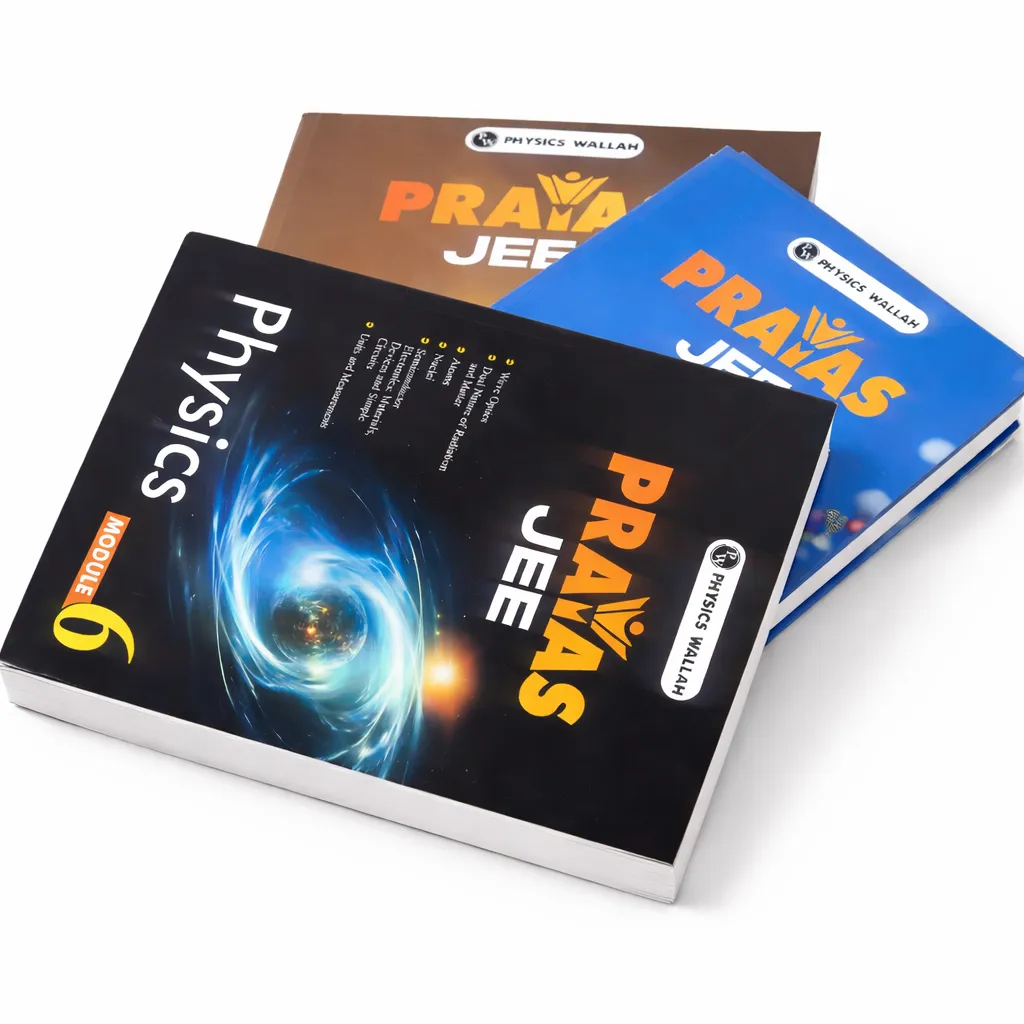
For Physics and Physical Chemistry, NCERT builds the theory but the marks come from numericals. Concept-plus-problem module sets such as the PW Prayas modules for Class 11+12 and the eSaral complete modules are useful companions for drilling Physics and Chemistry numericals once your NCERT reading is done.
Are NCERT Exemplar Books Needed for NEET?
Alongside the six main textbooks, NCERT also publishes Exemplar Problems for Physics, Chemistry and Biology. These are not a substitute for the main books, but they are high-value for the subjects where recall alone is not enough:
- Physics & Physical Chemistry: Exemplar MCQs and numericals are tougher than in-text examples and train the exact application skill NEET tests — many aspirants find Exemplar questions mirror the difficulty of real NEET numericals.
- Biology & Inorganic Chemistry: Exemplar is optional here; your main textbook plus a Fingertips-style MCQ book usually covers the recall you need.
- How to use it: Treat Exemplar as a second-pass practice layer after you finish the main NCERT chapter, not as first-read material.
In short: NCERT Exemplar is a smart add-on for Physics and Physical Chemistry, and optional elsewhere — it never replaces the core six books.
Is NCERT Enough for NEET? The Honest Answer
Is NCERT enough for NEET? For Biology and Inorganic Chemistry, NCERT alone can get you the vast majority of marks. For Physics and Physical Chemistry, NCERT is necessary but not sufficient — you will not clear a competitive cut-off on text reading alone because those sections demand practised numerical speed.
Can I crack NEET with only NCERT books? You can clear NEET and even score well in Biology on NCERT alone, but a top rank (600+) realistically needs NCERT as the foundation plus a structured MCQ/revision companion and test practice. Think of it as: NCERT for 100% of the theory, reference material for the extra accuracy and speed.
| Goal | NCERT alone? | What to add |
|---|---|---|
| Qualify NEET / clear cut-off | Largely yes | Previous-year questions |
| Score 550–600 | Not quite | 1 MCQ companion + test series |
| Score 650+ / top rank | No | NCERT + reference set + full-length mocks |
Best NCERT-Based Books for NEET 2026 (Supplementary Set)
The best ncert books for neet 2026 strategy is NCERT first, then exactly one trusted companion per subject — not ten. Over-buying reference books is the most common droppers’ mistake. Here is a lean, proven list:
| Subject | Core (must) | Companion (pick one) |
|---|---|---|
| Biology | NCERT Class 11 & 12 | MTG NCERT at Your Fingertips / Trueman’s |
| Physics | NCERT Class 11 & 12 | HC Verma / DC Pandey (Arihant) |
| Chemistry (Physical) | NCERT Class 11 & 12 | OP Tandon |
| Chemistry (Organic) | NCERT Class 11 & 12 | MS Chauhan |
| Chemistry (Inorganic) | NCERT Class 11 & 12 | NCERT itself + MTG Fingertips |
If you prefer one integrated, exam-oriented package aligned to the latest NTA pattern rather than assembling many authors, a full module set like the Careerwill NEET Study Module Set (23 modules, 4200+ pages, mindmaps) complements your NCERT reading with topic notes and practice in one place.
How to Read NCERT Books for NEET Effectively
How to read NCERT books for NEET effectively is where most aspirants lose marks — they read passively. Use this active, repetition-based method instead:
- Line-by-line, first pass: Read every sentence including in-text boxes, examples, summary points and the “Do you know?” asides. Underline facts, figures and exceptions.
- Diagram mastery: For Biology, redraw and label every diagram (heart, nephron, flower, DNA replication). NEET regularly asks diagram-based questions.
- Note-making: Make short margin notes or a one-page summary per chapter — not a rewrite of the book, only facts you keep forgetting.
- Second pass + MCQs: Re-read and immediately solve chapter-wise MCQs from a companion to lock in recall.
- Spaced revision: Revise each NCERT chapter at least 3–4 times before the exam; Biology deserves even more cycles.
A simple per-chapter micro-routine that works: (1) read the full chapter once for flow; (2) re-read slowly and highlight every number, name, exception and labelled diagram; (3) write a half-page fact sheet from memory; (4) solve 30–50 MCQs on that chapter the same day; (5) re-read only your highlights and fact sheet in each later revision cycle. This turns a passive read into recall you can reproduce under exam pressure.
Which Class NCERT Is More Important for NEET — 11th or 12th?
Both are essential and the mark split is nearly even, but Class 11 is often weaker for droppers because it is older. In Biology the Class 12 units (Genetics, Ecology, Reproduction) are slightly higher-yield, while Class 11 Physics mechanics is foundational for the entire Physics paper. Treat them as 50:50 and never skip Class 11.
NCERT Study Plan & Timeline for NEET 2026
A realistic ncert based books for neet preparation timeline, whether you have 10–12 months or are revising:
| Phase | Duration | NCERT focus |
|---|---|---|
| Foundation | Months 1–5 | First line-by-line pass of all 6 books + basic MCQs |
| Strengthening | Months 6–9 | Second pass + companion books + chapter tests |
| Revision | Months 10–11 | Third/fourth NCERT revision + full-length mocks |
| Final sprint | Last 30 days | NCERT fact revision, diagrams, PYQs, weak areas |
Where to Download the Official NCERT Books for NEET PDF (Free & Verified Steps)
You can get every NCERT textbook free and legally from the official portal. For ncert books for neet pdf download, follow these verified steps:
- Go to the official NCERT site (ncert.nic.in) and open the “Textbooks (PDF)” / e-books section.
- Select class (11 or 12), then the subject — Physics, Chemistry or Biology.
- Download chapter-wise PDFs or the complete book; Chemistry/Physics are split into Part I and Part II.
- Verify you have the current edition (see the next section) before you start studying.
| Book | Format available | Source |
|---|---|---|
| Class 11 Physics, Chemistry, Biology | Chapter-wise & full PDF | Official NCERT portal (free) |
| Class 12 Physics, Chemistry, Biology | Chapter-wise & full PDF | Official NCERT portal (free) |
| Physical printed set | Books / module set | Bookstores & study-material stores |
PDFs are great for search and quick reference, but most toppers read NCERT in print for better retention, line-marking and long study sessions without screen fatigue.
Which Edition of NCERT Should I Use for NEET?
Always use the latest NCERT edition that matches the current NTA-rationalised syllabus. After the recent syllabus revisions, several topics and lines were removed from NCERT and are now out of NEET scope — studying an old edition means wasting hours on deleted content and missing updated phrasing.
| Check | Latest edition | Old edition (avoid) |
|---|---|---|
| Syllabus match | Aligned to rationalised NEET syllabus | Contains deleted/out-of-syllabus topics |
| Chapter numbering | Updated/merged chapters | Older numbering, extra chapters |
| How to confirm | Check print year & “rationalised content” note on the first pages | No rationalisation note |
To confirm you have the right copy: check the publication year on the inside cover, look for the rationalised-content note, and cross-check the chapter list against the official NEET 2026 syllabus.
Ready-to-Buy NCERT + Companion Checklist for NEET
Instead of hunting book by book, use this complete checklist so nothing is missed before you start:
| Item | Why you need it | Status |
|---|---|---|
| NCERT Class 11 — Physics, Chemistry, Biology | Core foundation (~half the syllabus) | Must-have |
| NCERT Class 12 — Physics, Chemistry, Biology | Core foundation (~half the syllabus) | Must-have |
| One MCQ/revision companion (e.g. NCERT at Your Fingertips) | Converts reading into exam speed | Strongly recommended |
| NCERT Exemplar (Physics & Physical Chemistry) | Tougher numericals for application practice | Recommended |
| Integrated NEET module set | Topic notes, mindmaps & practice in one place | Recommended for self-study |
| Previous-year questions + mock test series | Pattern familiarity & time management | Final-phase must |
For an all-in-one, latest-pattern option that sits on top of your NCERT reading, the Careerwill NEET Study Module Set covers the complete syllabus with mindmaps and is designed by Kota faculties — a practical companion when you want structured notes alongside the official textbooks.
Common Mistakes With NCERT for NEET
- Reading once and moving on: NCERT rewards 3–4 revisions, not a single read.
- Skipping in-text matter: Examples, tables, footnotes and summary boxes are frequent question sources.
- Ignoring diagrams: Especially fatal in Biology and Physics ray-diagrams.
- Over-collecting reference books: One companion per subject beats five half-read ones.
- Using an old edition: You end up studying out-of-syllabus deleted content.
- NCERT-only for Physics: Without numerical practice, Physics scores stay low.
Frequently Asked Questions
Which NCERT books are best for NEET?
The best NCERT books for NEET are the Class 11 and Class 12 NCERT textbooks for Physics, Chemistry and Biology — six core books in total. These exactly match the NTA NEET syllabus and are the primary source for about 80–85% of the paper, so they should be read before any reference book.
Is NCERT enough to crack NEET?
NCERT is enough to clear NEET and to nearly complete Biology and Inorganic Chemistry, but a high rank also needs numerical practice in Physics and Physical Chemistry plus a test series. Treat NCERT as the complete theory base and add one companion book and mocks for speed and accuracy.
How much of NEET comes directly from NCERT?
Around 80–85% of the overall NEET paper is based directly or indirectly on NCERT, rising to roughly 90–95% in Biology and 85–90% in Chemistry. Physics has a lower direct share (about 65–75%) because it is numerical and application-driven rather than text-recall.
Which class NCERT is more important for NEET, 11th or 12th?
Both classes are almost equally weighted, so neither can be skipped. Class 12 Biology units like Genetics, Ecology and Reproduction are slightly higher-yield, while Class 11 Physics mechanics is the foundation for the whole Physics paper — study both as a 50:50 priority.
Is NCERT biology sufficient for NEET?
Yes, NCERT Biology is essentially sufficient for the theory and facts, since nearly 90% of NEET Biology questions come from it. The only addition you need is chapter-wise MCQ practice and a revision companion to build recall speed and handle tricky assertion-reason questions.
Can I crack NEET with only NCERT books?
You can qualify NEET and score very well in Biology and Inorganic Chemistry using only NCERT, but a top rank (600+) is hard on NCERT alone because Physics and Physical Chemistry need practised numerical speed. Use NCERT for the full theory base, then add one MCQ companion, previous-year questions and full-length mocks.
How should I read NCERT books for NEET effectively?
Read each chapter actively: a first flow-read, a slow second read where you highlight every fact, number, exception and diagram, a half-page fact sheet from memory, same-day chapter MCQs, then revise only your highlights 3–4 times. Passive single reads are the main reason aspirants lose easy NCERT-based marks.
Which edition of NCERT should I use for NEET?
Use the latest rationalised NCERT edition that matches the current NTA NEET syllabus. Older editions contain deleted, out-of-syllabus topics and outdated chapter numbering — confirm your copy by checking the recent print year and the rationalised-content note on the opening pages.
Are NCERT Exemplar books needed for NEET?
NCERT Exemplar is strongly recommended for Physics and Physical Chemistry, where its tougher MCQs and numericals mirror NEET-level application. For Biology and Inorganic Chemistry it is optional, since the main textbook plus a Fingertips-style MCQ book usually covers the recall you need. It is an add-on, never a replacement for the six core books.
Recommended Study Material



Competer
The Competer team: we pack the orders, so we know which editions aspirants keep coming back for.
Get it printed
NEET study material aspirants order most on Competer, delivered across India
Careerwill NEET Study Module Set (English Medium) | Complete Syllabus | 23 Modules | 4200+ Pages | Mindmaps | Updated With Latest NTA Pattern | Designed By Kota Best NEET Faculties₹2,799 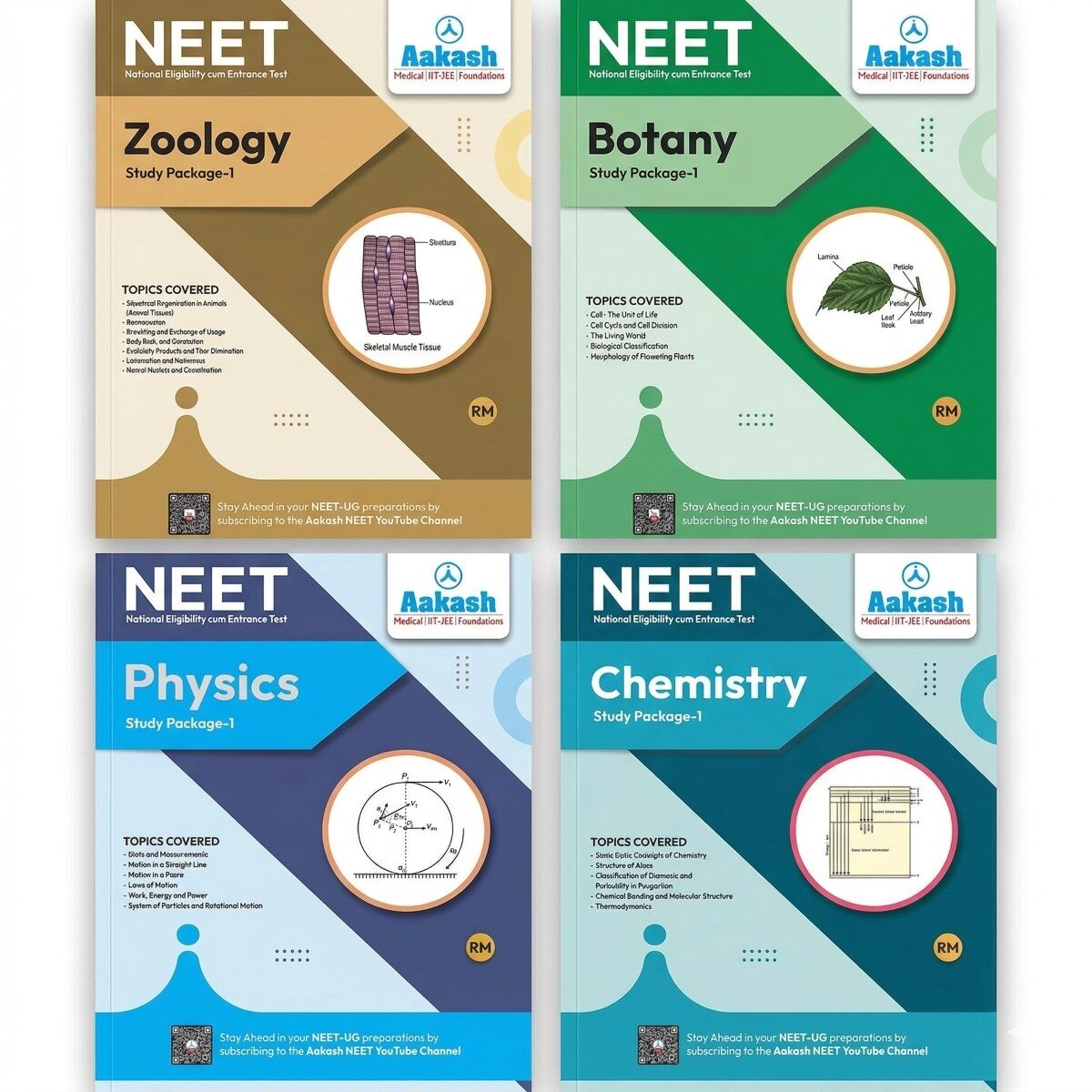 Aakash NEET 11th+12th Complete 17 Book Set | Edition 2026₹4,999
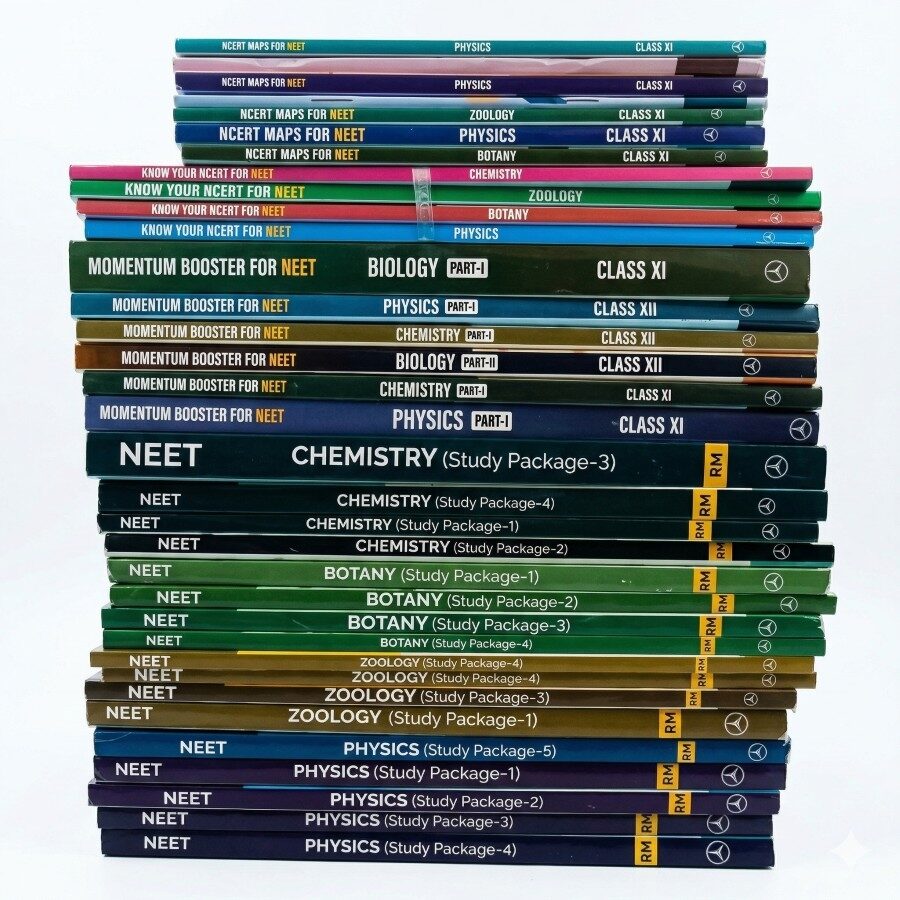 Aakash NEET Medical Complete Package Set of 35 Booklets | 2026 Edition₹9,999
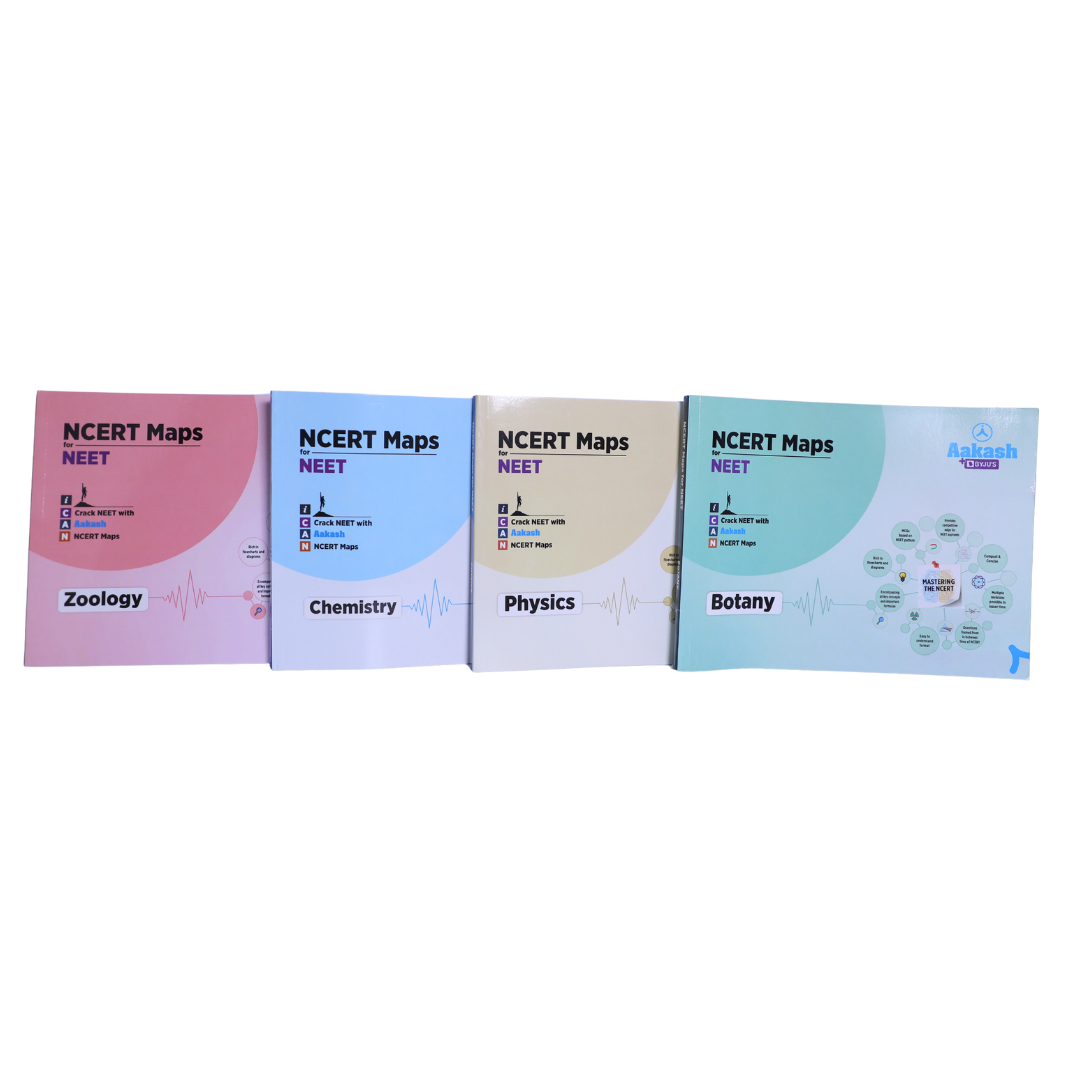 Aakash NCERT Maps for NEET Complete 4 Book Set Edition 2025 English₹1,600
Continue reading
More in Buying Guides



Need help choosing?
Tell us your exam and stage on WhatsApp, we suggest the right set.