

How to Prepare for UPSC: Step-by-Step Guide 2026
Learn how to prepare for UPSC in 2026: exam pattern, syllabus, NCERT booklist, timetable, a 1-year plan and self-study tips to crack it without coaching.
 Competer

To learn how to prepare for UPSC, start by understanding the three-stage exam (Prelims, Mains, Interview), read the official syllabus line by line, finish NCERTs from Class 6 to 12, then move to standard books like Laxmikant and Spectrum while reading one newspaper daily. A disciplined beginner needs roughly 12 to 18 months and 6 to 8 focused hours a day, and yes, you can clear the exam through self-study at home without coaching if you follow a fixed booklist, make short notes, revise relentlessly, and practise answer writing plus mock tests.
This guide is deliberately product-agnostic. Instead of upselling an expensive course, it tells you exactly what to study, what to buy, what to skip, and how to build a routine, whether you are a 12th-pass student, a college-goer, a working professional, or a dropper attempting again. Every exam date, age limit and attempt number below should be cross-checked against the official UPSC notification on upsc.gov.in, which is released each year (usually in February). Let us build your roadmap stage by stage.
Key takeaways at a glance:
- The exam has three stages — Prelims (screening), Mains (9 papers), and Interview — and only Mains + Interview (2025 marks) decide your rank.
- Self-study at home works: a fixed booklist, consolidated notes, revision, and a test series can replace coaching at a fraction of the cost.
- Realistic timeline: 12–18 months at 6–8 focused hours a day for most beginners; one year is enough if you are full-time.
- Start with NCERTs (Class 6–12), then standard books, then current affairs — all mapped to the official syllabus.
- CSAT, answer writing, and mock tests are the three most under-prepared, most decisive areas.
How to Prepare for UPSC: The 3 Stages at a Glance
The Union Public Service Commission (UPSC) Civil Services Examination (CSE) selects officers for the IAS, IPS, IFS and other allied services. It is a single examination conducted in three successive stages across roughly a year. You must clear each stage to reach the next, and only the Mains and Interview marks (out of 2025) decide your final rank.
| Stage | Purpose | Nature | Marks | Approx. Month |
|---|---|---|---|---|
| Prelims | Screening/qualifying | 2 objective papers (MCQ) | Not counted in final rank | May-June |
| Mains | Merit-deciding | 9 descriptive papers | 1750 | September |
| Interview | Personality Test | Board discussion | 275 | Jan-April |
The biggest beginner mistake is treating Prelims and Mains as separate silos. They share about 60-70% of the syllabus, so you should prepare in an integrated way from day one, building content that serves both the objective Prelims and the analytical Mains.

UPSC Exam Pattern and Syllabus Explained
Before you buy a single book, download and print the official UPSC syllabus and keep it on your desk. Every topic you study must map back to a syllabus keyword. A clean, syllabus-only reference such as the GS Score Latest Syllabus Booklet 2026-27 helps you tick off topics without getting lost in course brochures.
Prelims Pattern (Stage 1)
| Paper | Questions | Marks | Duration | Negative Marking |
|---|---|---|---|---|
| GS Paper 1 (General Studies) | 100 | 200 | 2 hours | 1/3 per wrong answer |
| GS Paper 2 (CSAT) | 80 | 200 | 2 hours | 1/3 per wrong answer |
CSAT (Paper 2) is qualifying only, needing 33% (66/200), but every year thousands are eliminated here because they treat it casually. The GS Paper 1 score decides whether you clear the cut-off.
Mains Pattern (Stage 2)
| Paper | Subject | Marks | Counted in Merit? |
|---|---|---|---|
| Paper A | Compulsory Indian Language | 300 | No (qualifying, 25%) |
| Paper B | English | 300 | No (qualifying, 25%) |
| Essay | Essay | 250 | Yes |
| GS 1 | History, Geography, Society | 250 | Yes |
| GS 2 | Polity, Governance, IR | 250 | Yes |
| GS 3 | Economy, Environment, S&T, Security | 250 | Yes |
| GS 4 | Ethics, Integrity, Aptitude | 250 | Yes |
| Optional 1 & 2 | Chosen subject | 250 + 250 | Yes |
So the written merit is out of 1750, and the interview adds 275, for a grand total of 2025 marks. In plain terms: Prelims only gets you through the door, Mains answer quality builds your rank, and the interview fine-tunes it.
Eligibility Criteria
| Criterion | Requirement |
|---|---|
| Nationality | Indian citizen (relaxations for some services) |
| Education | Bachelor’s degree in any discipline |
| Minimum Age | 21 years |
| Maximum Age (General) | 32 years |
| Attempts (General) | 6 |
| Attempts (OBC) | 9 |
| Attempts (SC/ST) | Unlimited up to age limit |
Age and attempt relaxations also apply to PwBD and certain other categories, so verify your exact eligibility in the current year’s notification. Final-year degree students can appear for Prelims, which is why many aspirants begin serious preparation in their last year of college.
How to Start UPSC Preparation for Beginners: Your First 7 Days
If you have zero background, do not open Laxmikant on day one. Spend your first week orienting yourself so you do not waste months later. Here is a concrete quick-start for someone starting from scratch.
- Day 1-2: Read the full official syllabus twice. Watch 2-3 topper interviews to understand the journey, not to copy it blindly.
- Day 3: Download the last 5 years of Prelims and Mains question papers. Reading past papers early tells you the depth and style UPSC actually demands.
- Day 4-5: Pick your newspaper (The Hindu or Indian Express) and start reading it daily, even if slowly.
- Day 6: Finalise a minimal booklist (given below) and decide your target attempt year.
- Day 7: Start NCERTs with Class 6 History. Build the habit of 2-3 hours of distraction-free study.
This “understand the exam before touching content” approach is what separates aspirants who clear in 1-2 attempts from those who drift for years. The point of week one is not to cover syllabus — it is to make sure every hour you spend in month two is pointed in the right direction.
Building Your Foundation with NCERTs (Class 6-12)
NCERT textbooks are the single most recommended starting point because UPSC questions are rooted in these fundamentals, and they are freely downloadable. Finish them before any advanced book; they build the vocabulary and base you need.
| Subject | NCERT Classes to Read | Priority |
|---|---|---|
| History | 6-12 (esp. Themes in Indian History I, II, III) | High |
| Geography | 6-12 (Fundamentals, Physical, Human) | High |
| Polity | 9-12 (Political Science) | Medium (Laxmikant is primary) |
| Economics | 9-12 (esp. Macroeconomics, Indian Economic Development) | High |
| Science | 6-10 (General Science) | Medium |
| Art & Culture | 11 (An Introduction to Indian Art) | High |
Make one-line margin notes as you read and revise each NCERT at least twice. Do not hoard multiple editions; one set, read deeply, beats five sets skimmed.
The Complete UPSC Booklist: What to Buy and What to Skip
Resource hoarding is the number one money-and-time trap. A minimal, standard booklist, finished and revised, outperforms a shelf of untouched material. Here is the time-tested core list every aspirant converges on.
| Subject | Standard Book / Source | Also Covers (Mains) |
|---|---|---|
| Polity | Indian Polity by M. Laxmikant | GS 2 |
| Geography | Certificate Physical Geography by G.C. Leong | GS 1 |
| Economy | Indian Economy by Ramesh Singh | GS 3 |
| Modern History | Spectrum / India’s Struggle by Bipan Chandra | GS 1 |
| Art & Culture | Nitin Singhania | GS 1 |
| Environment | Shankar IAS Environment | GS 3 |
| Ethics | Lexicon / standard ethics notes | GS 4 |
| Current Affairs | Newspaper + one monthly magazine | All GS |
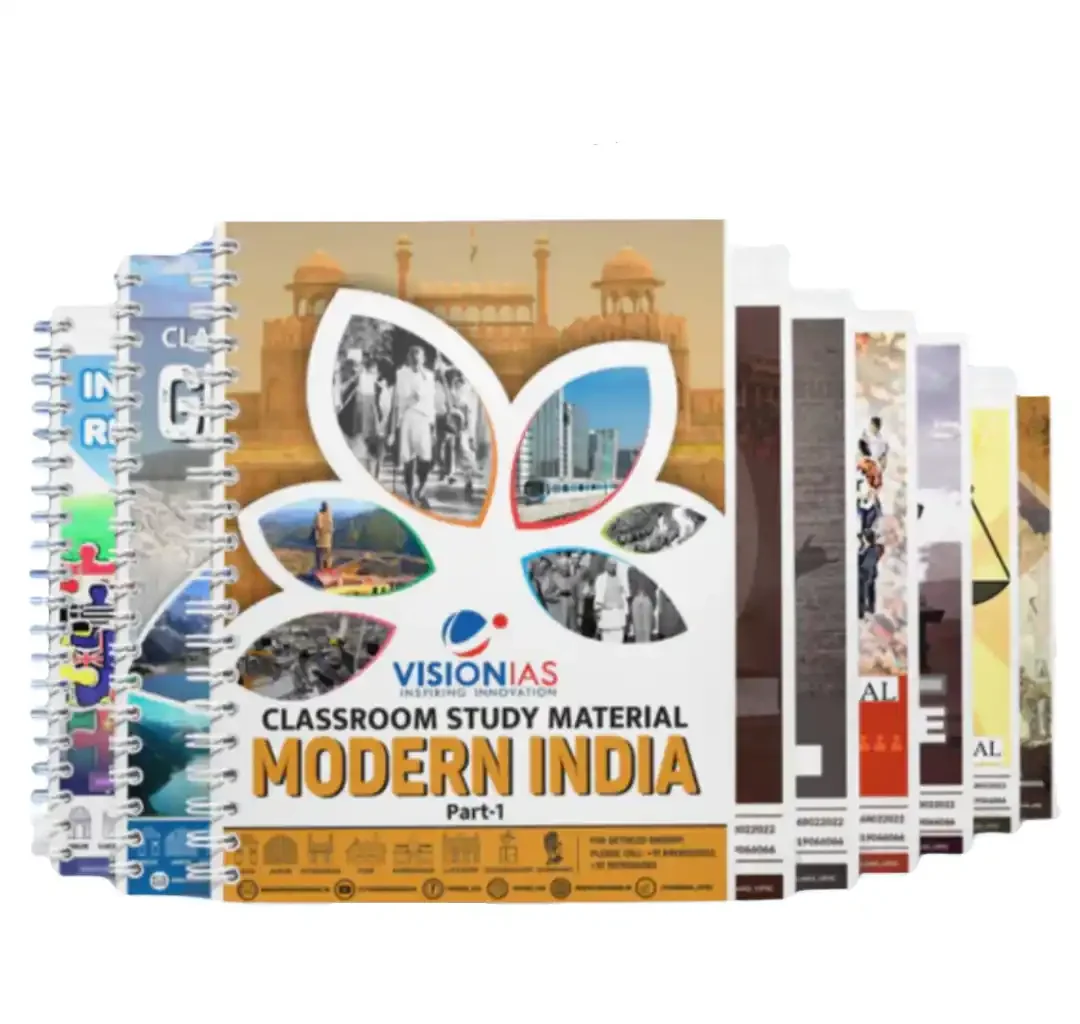
Instead of buying unconsolidated single books for every micro-topic, many beginners prefer a ready GS notes set that already maps the entire syllabus into revision-friendly booklets. A consolidated option like Vision IAS English Study Material 2025-2026 or Drishti IAS English Study Material can replace a dozen scattered books and save you the effort of self-compiling notes. For economy specifically, a focused set such as Vision IAS Economics Notes keeps GS 3 compact. Hindi-medium aspirants can use Drishti IAS Hindi Study Material as their core set.
UPSC Preparation Strategy for Prelims and Mains (Subject-Wise)
A smart UPSC preparation strategy for Prelims and Mains treats them as one integrated study with two different outputs: fact recall for Prelims, structured arguments for Mains. Here is how to approach each GS subject.
Polity
Laxmikant cover to cover, 3-4 times. Link every article to current events (bills, Supreme Court judgments). High scoring and predictable.
History & Art and Culture
Modern India is Prelims and Mains heavy; Ancient and Medieval mostly Prelims. Make timelines and one-page summaries of movements.
Geography
Use NCERT + Leong + an atlas. Practise map-based questions; climate, mapping and economic geography repeat often.
Economy
Focus on concepts (fiscal policy, inflation, banking) plus the Budget and Economic Survey. Current-affairs driven.
Environment & Science and Technology
Largely current-affairs based. Track conventions, species in news, and technology missions rather than rote theory.
| Subject | Approx. Prelims Weight | Approx. Mains Paper | Nature |
|---|---|---|---|
| Polity | High | GS 2 | Static + Current |
| History & Culture | High | GS 1 | Mostly Static |
| Geography | Medium-High | GS 1 | Static + Map |
| Economy | High | GS 3 | Current-heavy |
| Environment | Very High | GS 3 | Current-heavy |
| Science & Tech | Medium | GS 3 | Current-heavy |
For Mains, answer writing is non-negotiable. Start with one question a day after your first syllabus pass, and solve topic-wise previous-year questions. A PYQ-focused resource like the Forum IAS UPSC Prelims Toolkit (Topic-Wise PYQ 1992-2025) shows you exactly which themes repeat, so you study with the exam in mind rather than reading endlessly.
Daily Newspaper and Current Affairs Routine
Current affairs cut across every GS paper, yet beginners either ignore it or drown in it. The fix is a fixed, time-boxed routine, not endless scrolling.
- Newspaper (60-90 min/day): Read The Hindu or Indian Express. Focus on national policy, governance, economy, international relations and editorials; skip crime, sports and page-3 news.
- Note-making (20-30 min): Maintain subject-wise digital or short handwritten notes. One event = 3-4 crisp lines linked to a syllabus topic.
- Monthly magazine (revision): One consolidated monthly magazine replaces the stress of “did I miss something.” Use the newspaper for depth and the magazine for consolidation, not both exhaustively.
A single reliable monthly compilation such as the Vision IAS Current Affairs Magazine January 2026 is enough; do not subscribe to four magazines. The principle is coverage without hoarding.
How to Prepare for UPSC at Home Without Coaching
Many aspirants ask whether they can crack the exam alone. The honest answer: yes, plenty of rank-holders clear it through self-study. How to prepare for UPSC at home without coaching comes down to three things coaching provides that you must self-arrange, discipline, structured material, and feedback.
| Factor | Coaching | Self-Study at Home |
|---|---|---|
| Cost | ₹1.5-2.5 lakh+ | ₹10,000-25,000 (material) |
| Structure | Ready schedule | You design the plan |
| Pace | Fixed, often fast | Your own pace |
| Doubt-solving | Faculty | Peers, online communities |
| Feedback | Built-in tests | Buy a test series separately |
The self-study substitute for classroom feedback is a good test series with analysis. For Prelims accuracy, a program like the Vision IAS Prelims Test Series 2026 replicates exam pressure, while Mains answer evaluation builds writing discipline. You get coaching-level rigour at a fraction of the cost.
Myth-buster: Coaching does not “guarantee” selection, and self-study is not “inferior.” What matters is a fixed booklist, consistent revision, and test practice, available to both paths.
CSAT Strategy: The Silent Eliminator
CSAT (Prelims Paper 2) is qualifying, but it eliminates thousands every year, especially non-maths backgrounds, because they underestimate it. Treat it as a must-clear hurdle from month one if you are weak in aptitude.
- Target 90-100 marks (safe margin above the 66 cut-off).
- Prioritise comprehension (largest chunk), then basic numeracy, then logical reasoning.
- Practise 1-2 CSAT papers weekly; consistency beats cramming the month before.
If aptitude is your weak zone, a dedicated practice program like the Vision IAS CSAT Test Series 2025-26 or Vajiram CSAT Complete Booklet Set builds speed and accuracy well before the exam, so it never becomes the reason you miss the GS cut-off.
Creating a UPSC Preparation Timetable and Booklist Plan
Your UPSC preparation timetable and booklist must match your life situation. A college student, a full-time professional, and a dropper cannot follow the same plan. Below are realistic, hour-constrained templates.
| Aspirant Type | Daily Study Hours | Realistic Timeline | Focus |
|---|---|---|---|
| Full-time dropper | 8-10 hrs | 12-14 months | Full syllabus + tests |
| College student | 4-5 hrs | 18-24 months | NCERT + standard books early |
| Working professional | 3-4 hrs | 18-30 months | Weekends for tests, audio/notes on commute |
| Repeater (post-Prelims) | 6-8 hrs | 6-10 months | Answer writing + weak areas |
A sample daily split for a full-time aspirant: newspaper (1.5 hrs), static subject (3 hrs), optional (2 hrs), revision + answer writing (1.5 hrs), current-affairs notes (1 hr). Working professionals should front-load static subjects on weekends and use weekdays for current affairs and short revision.
How to Prepare for UPSC in 1 Year, 6 Months, or After 12th
How to prepare for UPSC in 1 year
One year is enough if you study full-time with discipline. Months 1-4: NCERTs + standard books + daily newspaper. Months 5-8: revision + Prelims-oriented current affairs + optional. Months 9-11: full-length mock tests + answer writing. Final month: revision only, no new material.
Is 6 months enough?
Six months is tight but workable only for fast learners or repeaters with a base. You will need 10+ hours daily, a ruthlessly minimal booklist, and heavy reliance on consolidated notes and test series rather than reading every book cover to cover.
How to prepare for UPSC after 12th
You cannot write the exam until you hold a degree, but your college years are a golden runway. Read NCERTs, develop the newspaper habit, pick a graduation subject that could double as your optional (like Political Science, Sociology, or History), and attempt Prelims in your final year. Starting early with light, consistent effort beats a panicked one-year sprint later.
Choosing an Optional Subject
Your optional carries 500 marks and can make or break your rank. Pick based on interest, availability of material, past scoring trend, and overlap with GS, not on “which is trending.”
| Popular Optional | GS Overlap | Best For |
|---|---|---|
| PSIR (Political Science & IR) | GS 2 (Polity, IR) | Arts/humanities, interest in governance |
| Sociology | GS 1 (Society), GS 4 | Beginners, concise syllabus |
| Geography | GS 1, GS 3 | Science/diagram-friendly aspirants |
| Public Administration | GS 2, GS 4 | Governance-focused aspirants |
| Anthropology | GS 1 | Science students, short syllabus |
Whatever you choose, use one standard source set and stick to it. For instance, PSIR aspirants often rely on Shubhra Ranjan PSIR Notes, while Sociology aspirants use focused optional booklets. Consistency with one source trumps collecting many.
Budget Breakdown: What Self-Study Actually Costs
A realistic self-study budget is a fraction of coaching fees. Here is where your money should and should not go.
| Item | Spend or Skip | Approx. Cost |
|---|---|---|
| NCERTs | Spend (or download free) | ₹0-2,000 |
| Consolidated GS notes set | Spend | ₹4,000-8,000 |
| Newspaper | Spend | ₹300/month |
| One monthly magazine | Spend | ₹200-300/month |
| Optional subject material | Spend (one set) | ₹1,500-2,500 |
| Prelims + CSAT test series | Spend | ₹2,000-3,000 |
| Multiple coaching modules | Skip | – |
| Duplicate books per topic | Skip | – |
Total realistic self-study cost: roughly ₹12,000-25,000 for a full cycle, versus ₹1.5 lakh-plus for coaching. The money is best spent on consolidated notes, one magazine, and a test series, not on hoarding resources.
Note-Making, Revision, and Common Mistakes to Avoid
Reading is not studying; retention is. Two habits decide your result: short, revisable notes and scheduled revision (the 3-revision rule, revise each topic at least three times before the exam).
- Hoarding resources: Five books per subject means none get revised. Fix one source.
- Skipping revision: New content without revision is leaking water into a bucket with holes.
- Ignoring CSAT and answer writing: Both are silent eliminators.
- No mock tests: You cannot improve what you do not measure.
- Comparing with others: Run your own race; consistency beats intensity.
Health, Consistency, and Motivation
UPSC is a marathon of 12-24 months. Burnout fails more aspirants than lack of intelligence. Sleep 7 hours, exercise 30 minutes daily, take one half-day off weekly, and track small wins. Consistency of 6 focused hours daily for a year beats erratic 14-hour bursts followed by weeks of fatigue. Your mental stamina is as much a syllabus topic as Polity.
Frequently Asked Questions
How can I start preparing for UPSC as a complete beginner?
Begin by reading the official syllabus and previous-year papers, then finish NCERTs (Class 6-12) before standard books like Laxmikant and Spectrum. Start reading one newspaper daily from day one, fix a realistic timetable, and make short notes you can revise multiple times.
Can I crack UPSC without coaching through self-study at home?
Yes. Many rank-holders clear UPSC through self-study. You need a fixed minimal booklist or consolidated GS notes, a daily newspaper and one monthly magazine, regular revision, answer-writing practice, and a test series to replace classroom feedback, all at a fraction of coaching cost.
How many hours should I study per day for UPSC?
Full-time aspirants typically study 6-8 focused hours daily, droppers 8-10, and working professionals or college students 3-5 hours. Consistency and revision matter far more than raw hours; six quality hours daily for a year beats erratic long sessions.
Is 1 year or 6 months enough to prepare for UPSC?
One year is sufficient for a disciplined full-time aspirant covering NCERTs, standard books, current affairs, and mock tests. Six months is possible only for fast learners or repeaters with an existing base, requiring 10+ hours daily and heavy reliance on consolidated notes and tests.
Which books are best for UPSC preparation?
The core list is Laxmikant (Polity), G.C. Leong (Geography), Ramesh Singh (Economy), Spectrum/Bipan Chandra (History), Nitin Singhania (Art and Culture), and Shankar IAS (Environment), plus NCERTs and a current-affairs magazine. Consolidated GS notes sets can replace scattered single books for easier revision.
How do I prepare for UPSC along with a job or college?
Front-load static subjects on weekends, use weekdays for the newspaper and short revision, and leverage commute time for notes or audio. Aim for 3-4 consistent daily hours, choose a graduation subject that overlaps with an optional, and plan an 18-30 month timeline rather than rushing.
Which optional subject is best for UPSC?
There is no single “best” optional; the best one for you overlaps with GS, has readily available material, and genuinely interests you. Popular high-overlap choices include PSIR, Sociology, Geography, Public Administration, and Anthropology. Pick one, use a single standard source set, and practise previous-year optional papers rather than switching subjects midway.
What is the UPSC exam pattern and syllabus?
UPSC CSE has three stages: Prelims (two objective papers — GS Paper 1 counted for the cut-off and CSAT qualifying at 33%), Mains (nine descriptive papers, of which seven count toward the 1750-mark merit), and a 275-mark Interview. The syllabus spans history, geography, polity, economy, environment, science and technology, ethics, and an optional subject; always read it directly from the official notification on upsc.gov.in.
What is a good UPSC preparation timetable and booklist for beginners?
Beginners should spend the first 2-4 months on NCERTs plus standard books (Laxmikant, Leong, Ramesh Singh, Spectrum, Nitin Singhania, Shankar IAS) with daily newspaper reading, then shift to revision, current affairs and mock tests. Study hours should match your situation — roughly 8-10 for droppers, 4-5 for students, and 3-4 for working professionals — with revision and answer writing built in from the start.
Recommended Study Material



Competer
The Competer team: we pack the orders, so we know which editions aspirants keep coming back for.
Get it printed
UPSC study material aspirants order most on Competer, delivered across India
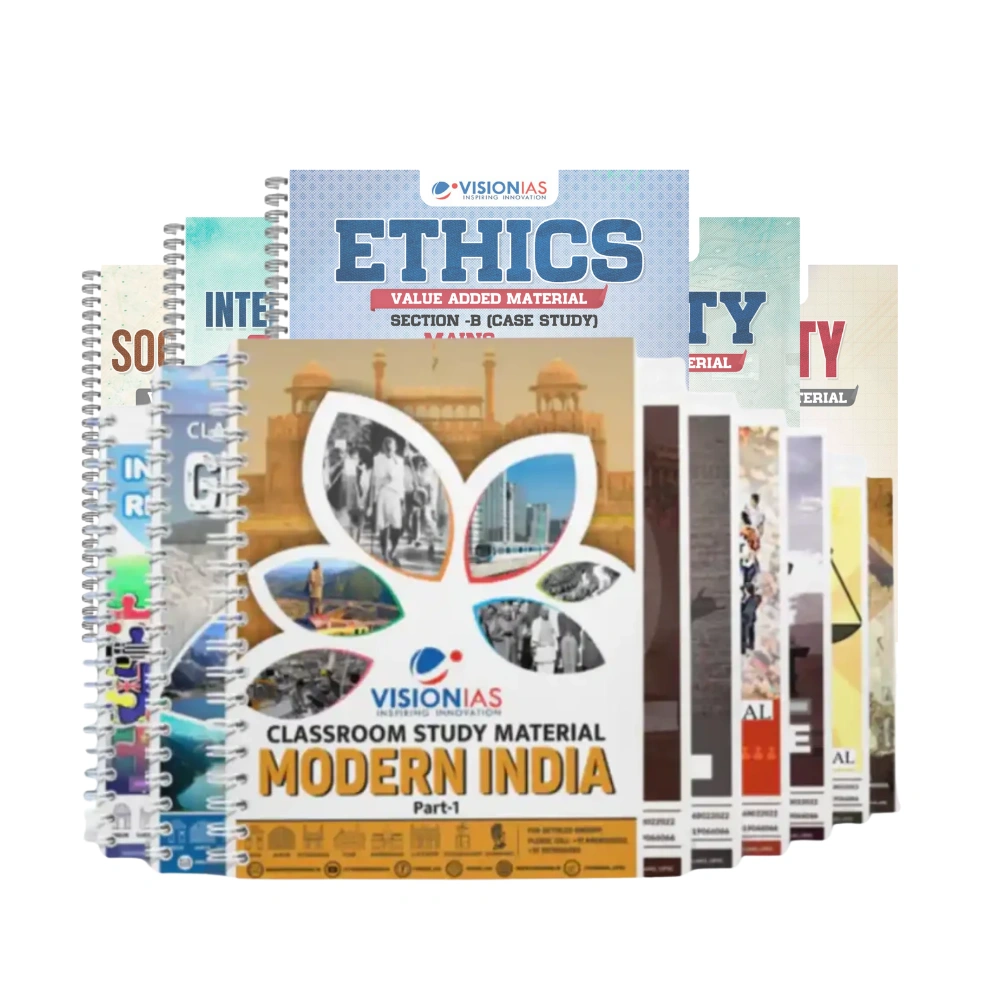 Vision IAS GS 2026-27 Booklets with Value Added Materials - 56 Booklets₹6,599View on Competer →
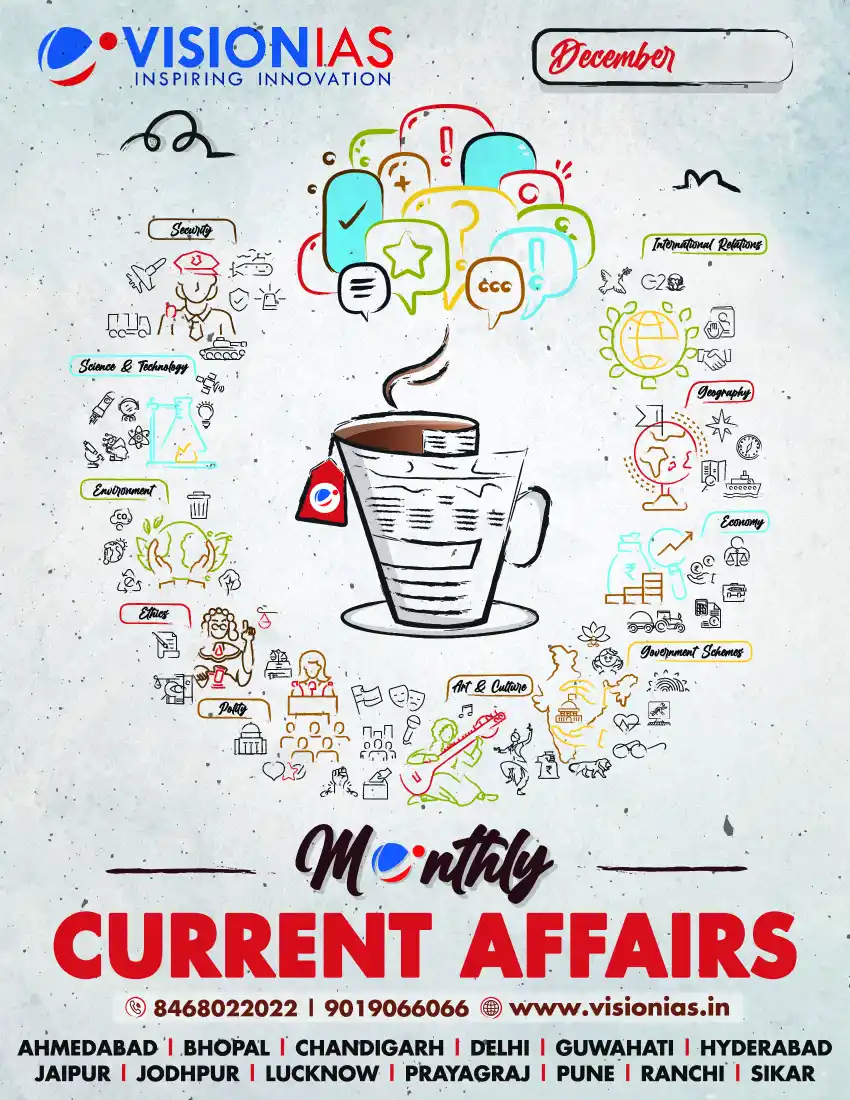 Vision IAS Current Affairs Magazine December 2025 | English Medium Edition₹199
 Vision IAS Prelims Test Series 2026 | UPSC Prelims GS Tests in English Medium₹1,249View on Competer →
 Vajiram Economics Notes 2025-2026 UPSC Economics Optional Booklets Set of 5₹1,285View on Competer →
Continue reading
More in Buying Guides



Need help choosing?
Tell us your exam and stage on WhatsApp, we suggest the right set.