

How to Prepare for NEET 2027: Strategy, Timetable & Books
How to prepare for NEET 2027 at home without coaching: exam pattern, chapter weightage, a free self-study time table, best books and a mock-test plan.
 Competer

How to prepare for NEET: master the NCERT textbooks cover-to-cover (especially Biology, which gives ~85–90% of its questions directly from NCERT), follow a fixed daily time table of 5–7 hours for school students or 8–10 hours for droppers, and take a full-length mock test every week starting 6–8 months before the exam. Build concepts first, solve previous-year questions (PYQs), maintain an error notebook, and revise with active recall — and you can crack NEET at home, even without coaching.
This guide gives you everything the top pages leave out: exact chapter-wise weightage, a ready-to-use printable self study time table for Class 11, Class 12 and droppers, a budget book-and-test-series map, mock-score benchmarks to know if you are on track, and 30/60/90-day crash plans for late starters.
Editorial note: this guide is maintained by the Competer study-material team and mapped against the latest NTA exam pattern for the NEET 2027 cycle. The weightage figures come from analysing the pattern of recent NEET/AIPMT papers, and the score-to-rank bands below are directional — treat them as a compass, not a guarantee, since real cut-offs shift every year.
How to Prepare for NEET 2027: The Complete Step-by-Step Roadmap
NEET (National Eligibility cum Entrance Test) is the single national gateway to MBBS, BDS, AYUSH and veterinary seats in India. Preparation is not about studying harder than everyone else — it is about studying the right material in the right order and testing yourself relentlessly. Here is the roadmap in seven moves, each explained in detail below:
- Step 1 — Understand the exam pattern and marking scheme.
- Step 2 — Break the syllabus into high- and low-weightage chapters.
- Step 3 — Make NCERT your core, then layer reference books only where NCERT is thin.
- Step 4 — Follow a realistic, written daily time table.
- Step 5 — Apply subject-wise strategy (Physics, Chemistry, Biology).
- Step 6 — Take weekly mock tests and solve PYQs under timed conditions.
- Step 7 — Revise with short notes, flashcards and an error notebook.
Whether you are a Class 11 student with two years in hand or a dropper with one focused year, the framework is identical — only the daily hours and depth of revision change.

NEET Exam Pattern & Marking Scheme 2027
You cannot plan a strategy without knowing exactly what you are up against. NEET is a single pen-and-paper (OMR) test of 720 marks with 180 questions to be answered in 200 minutes (3 hours 20 minutes). Every correct answer earns +4 marks; every wrong answer loses 1 mark (negative marking); unattempted questions score zero.
| Component | Detail |
|---|---|
| Total marks | 720 |
| Total questions | 180 (all to be attempted) |
| Duration | 200 minutes (3 hr 20 min) |
| Correct answer | +4 marks |
| Wrong answer | −1 mark |
| Unattempted | 0 marks |
| Mode | Offline (OMR sheet) |
| Medium | 13 languages incl. English & Hindi |
The paper is split across four subjects, each carrying 45 questions and 180 marks. Note that Biology is effectively two sections — Botany and Zoology — which together make it the single largest scoring area at 360 marks.
| Subject | Questions | Marks | Share of paper |
|---|---|---|---|
| Physics | 45 | 180 | 25% |
| Chemistry | 45 | 180 | 25% |
| Botany | 45 | 180 | 25% |
| Zoology | 45 | 180 | 25% |
| Total | 180 | 720 | 100% |
Why the −1 negative marking changes everything: a careless guess that goes wrong costs you 5 marks of swing (the +4 you could have scored plus the −1 penalty). Top scorers attempt almost all questions but guess only when they can eliminate at least two options. Train this instinct during mocks, not on exam day.
Break Down the NEET Syllabus: High vs Low Weightage Chapters
The NEET syllabus spans the full Class 11 and Class 12 NCERT for Physics, Chemistry and Biology. But marks are not spread evenly — a handful of chapters repeatedly dominate the paper. Studying blindly wastes time; studying by weightage is how toppers finish the syllabus and still have months left for revision. Below are the consistently high-weightage chapters per subject (based on recent NEET trends). Master these first.
Physics — high-weightage chapters
| Chapter / Unit | Approx. questions | Priority |
|---|---|---|
| Mechanics (Laws of Motion, Work-Energy, Rotation) | 8–10 | Very High |
| Electrodynamics (Current Electricity, Magnetism, EMI) | 8–9 | Very High |
| Modern Physics & Electronics (Semiconductors, Dual Nature, Atoms-Nuclei) | 6–7 | High |
| Optics (Ray & Wave) | 4–5 | High |
| Thermodynamics & Kinetic Theory | 3–4 | Medium |
Chemistry — high-weightage chapters
| Chapter / Unit | Approx. questions | Priority |
|---|---|---|
| Organic: GOC, Hydrocarbons, Aldehydes/Ketones/Acids, Biomolecules | 12–14 | Very High |
| Inorganic: Chemical Bonding, p-block, Coordination Compounds, Periodic Table | 11–13 | Very High |
| Physical: Equilibrium, Thermodynamics, Solutions, Electrochemistry | 10–12 | High |
| Mole Concept & Redox | 3–4 | Medium |
Biology — high-weightage chapters
| Chapter / Unit | Approx. questions | Priority |
|---|---|---|
| Human Physiology | 12–14 | Very High |
| Genetics & Evolution | 12–14 | Very High |
| Ecology & Environment | 10–12 | Very High |
| Cell Biology & Biomolecules | 8–9 | High |
| Plant Physiology | 7–8 | High |
| Reproduction | 7–8 | High |
| Biotechnology | 5–6 | Medium |
For an even deeper chapter-by-chapter mark breakup, our Careerwill NEET study modules tag every topic with its latest NTA weightage and include mind-maps that map directly onto this priority order.
The NCERT-First Strategy (Especially for Biology)
If you remember one thing from this guide, remember this: NCERT is not a reference — it is the syllabus. NEET questions, particularly in Biology, are lifted almost line-for-line from the NCERT textbook. Toppers routinely say ~85–90% of Biology comes directly from NCERT, including captions under diagrams, examples in boxes, and even the summary lines.
Is NCERT enough to crack NEET?
For Biology, NCERT is almost enough on its own. For Chemistry, NCERT fully covers Inorganic and Organic theory but you will want a supplement for Physical numericals. For Physics, NCERT builds the concepts but is thin on solved problems, so pair it with a dedicated problem book. In short: NCERT is the non-negotiable core for all three subjects, and reference books exist only to plug its specific gaps.
Which subject should I start with for NEET preparation?
Start with Biology. It is the highest-scoring subject (360 marks), the most NCERT-dependent, and the most memory-and-revision based — so an early start means more revision cycles. Begin Biology and Chemistry together (both reward NCERT mastery), and bring Physics in parallel because it needs the longest runway for problem-solving practice.
Read each NCERT line like it is a potential question. For Biology, make a rule: three full reads of every chapter before the exam — first for understanding, second for notes, third for rapid recall. Highlight the diagrams; draw them from memory. For Chemistry, NCERT fully covers Inorganic and Organic theory and reaction mechanisms — do not skip the exercise questions or the in-text examples.
Your NEET Self Study Time Table (Free Printable Template)
Most guides describe a schedule in prose but never hand you one you can actually pin to your wall. Here is a differentiated plan — copy it into a notebook or print it. First, how many hours each type of aspirant should target.
| Aspirant | Study hours/day | Weekly mocks | Focus |
|---|---|---|---|
| Class 11 student | 5–6 hrs | 1 (subject-wise) | Build concepts, stay ahead of school syllabus |
| Class 12 student | 6–7 hrs | 1–2 (full + part) | Finish Class 12 syllabus + revise Class 11 |
| Dropper / repeater | 8–10 hrs | 2–3 (mostly full-length) | Full-syllabus revision + heavy test practice |
Sample daily self study time table (print this)
| Time slot | School student | Dropper |
|---|---|---|
| Early morning (6:00–8:00) | Physics concepts / numericals | Physics numericals + revision |
| Mid-morning (8:00–11:00) | School / Biology NCERT | Biology NCERT + notes (2 chapters) |
| Afternoon (12:00–2:00) | Rest / light revision | Chemistry (Organic/Physical) |
| Evening (4:00–7:00) | Chemistry + Biology | Full/sectional mock or PYQs |
| Night (8:00–10:30) | Revision + error notebook | Mock analysis + flashcards |
Weekly and monthly goals
Translate hours into targets so you can measure progress:
- Weekly: finish 3–4 NCERT chapters (across subjects), solve 2 chapter-wise PYQ sets, take at least 1 mock, and fully revise the previous week’s topics on Sunday.
- Monthly: complete one full unit per subject, take 4 full-length mocks, and rewrite your short notes for every chapter covered that month.
- Non-negotiable: one weekly “revision-only” day where you learn nothing new — you only consolidate.
Keep 6.5–7.5 hours of sleep and 30–45 minutes of physical activity in the schedule; a burnt-out brain forgets NCERT lines just as fast as a lazy one.
10 NEET Preparation Tips That Actually Move Your Score
If you want the whole strategy distilled into a checklist of high-impact NEET preparation tips, pin these to your desk:
- Finish NCERT before any reference book — concepts first, supplements second.
- Study by weightage, not by chapter order — secure the Very High chapters first.
- Write one-page short notes per chapter from day one; they become your final-month syllabus.
- Take timed mocks and analyse every wrong answer — analysis is worth more than the attempt.
- Solve PYQs chapter-wise as you finish each topic, then full-length later.
- Keep one error notebook and actually revise it — this is the single highest-ROI habit.
- Use active recall and spaced repetition instead of passive re-reading.
- Protect sleep and a daily walk — memory consolidates during rest, not all-nighters.
- Keep your phone out of the room during study blocks.
- Measure monthly progress in mock scores, not hours logged.
Subject-Wise Strategy: Physics, Chemistry & Biology
Physics — concepts before numericals
Physics is where most students bleed marks. The fix is sequence: understand the concept and derivation first, memorise the formula sheet second, and only then drill numericals. Build a one-page formula sheet per chapter and revise it daily. Because NCERT Physics is thin on solved problems, this is the one subject where a dedicated problem book is essential (see the books section). Aim for 40–50 varied problems per chapter before moving on.
Chemistry — split the three branches
Treat Chemistry as three mini-subjects. Physical Chemistry is formula- and numerical-based — practise like Physics. Inorganic Chemistry is pure NCERT memorisation — read it 4–5 times and make trend tables (periodic properties, p-block anomalies). Organic Chemistry is mechanism-based — understand GOC and reaction logic rather than rote-learning reactions. Organic + Inorganic together are the highest-return area because they are the most NCERT-aligned and least time-consuming once learned.
Biology — NCERT, diagrams and recall
Read NCERT, annotate every diagram, and convert dense pages into bullet-point short notes. Use active recall: close the book and write what you remember. Biology rewards repetition — the more revision cycles, the higher your accuracy. Ecology and Human Physiology alone can fetch 90+ marks if mastered.
Best Books for NEET Preparation
Keep your booklist lean. The number-one mistake is buying ten books and finishing none. NCERT is the core for all three subjects; reference books plug the specific gaps NCERT leaves.
| Subject | Core (must) | Reference / practice |
|---|---|---|
| Biology | NCERT Class 11 & 12 (both) | Chapter-wise PYQ bank; diagram-based MCQ book |
| Physics | NCERT (concepts) | DC Pandey / HC Verma for numericals |
| Chemistry | NCERT (Inorganic + Organic) | MTG / reference MCQ book; Physical numericals book |
| All subjects | — | 30-year NEET/AIPMT PYQ book; one good test series |
What are the best books for NEET preparation?
For 90% of aspirants the winning combination is: NCERT (all subjects) + DC Pandey for Physics + a reliable MCQ/reference book for Chemistry + a chapter-wise previous-year question bank. That is enough to score 650+. If you want a single, exam-pattern-aligned package instead of assembling books, the Careerwill NEET Study Module Set — 23 modules, 4,200+ pages with mind-maps is designed by Kota faculty and updated to the latest NTA pattern, which saves you the guesswork of stitching sources together. Students balancing NEET with engineering backup can pair it with the eSaral IIT JEE modules for shared Physics and Chemistry fundamentals.
Mock Tests, PYQs & Tracking Your Progress
When should I start taking mock tests for NEET?
Start full-length mock tests 6–8 months before the exam — once your syllabus is 60–70% complete. Before that, do sectional/chapter-wise tests as you finish each chapter. In the final 2–3 months, take a full 200-minute mock every week (droppers: 2–3 per week), always at the same time of day as the real exam to train your stamina and focus.
Analyse more than you attempt. A mock gives value only in the analysis: for every wrong answer, log the chapter, the reason (concept gap / silly error / guess), and the correct approach into your error notebook. Re-attempt that question type the next day.
How do I know if my mock scores are on track?
Use these rough NEET score-to-rank benchmarks to judge whether your mocks point toward your target. Treat them as directional (actual cut-offs vary year to year):
| NEET score (out of 720) | Indicative rank band | Typical outcome |
|---|---|---|
| 680–720 | Top ~1,000 | Top government MBBS seats |
| 650–679 | ~1,000–10,000 | Strong government MBBS chances |
| 600–649 | ~10,000–25,000 | Government MBBS (many states) / good BDS |
| 550–599 | ~25,000–55,000 | State quota MBBS / BDS possibilities |
| 480–549 | Above ~55,000 | Private/BDS/AYUSH depending on category |
If your mock scores are climbing ~15–25 marks per month and crossing 550+ by three months out, you are on track for 650+. If they are flat, your problem is almost always revision and analysis — not new material.
Revision Strategy: Short Notes, Active Recall & the Error Notebook
Learning once is useless without revision. Build three tools from day one:
- Short notes / flashcards: one page or one card per chapter with formulas, trends, exceptions and diagram labels. These are what you revise in the final month, not the textbook.
- Active recall: instead of re-reading, test yourself — cover the page and reproduce it. Recall strengthens memory far more than passive reading.
- Error notebook: every mistake from every mock and PYQ goes here. In the last month you revise only your error notebook and short notes — this is the single highest-ROI habit of toppers.
Dedicate roughly the final one month entirely to revision and mocks — no new chapters. Spaced repetition (revise after 1 day, 1 week, 1 month) locks information into long-term memory.
How to Balance Board Exams with NEET Preparation
Class 12 students worry that boards and NEET pull in opposite directions. In practice they overlap heavily: the NEET syllabus is the NCERT syllabus, so every hour on NCERT theory serves both. Keep NEET as your base preparation all year, then carve out a focused 30–45 day window before boards for board-specific practice — writing long answers, diagrams with proper labelling, and solving sample papers in the board format. Do not abandon mocks entirely during this window; one NEET mock a week keeps your MCQ speed and negative-marking instinct alive. After boards, you will typically have 30–45 days left before NEET — treat that purely as revision, PYQs and full-length mocks, not new learning.
Crash Plans: Last 30 / 60 / 90 Days for Late Starters & Droppers
Started late? You can still maximise your score with a ruthless, weightage-first plan. The rule is simple: cover high-weightage NCERT chapters, skip nothing in Biology, and test daily.
| Time left | Strategy | Mocks |
|---|---|---|
| 90 days | Finish NCERT Biology + Chemistry fully; high-weightage Physics only; chapter-wise PYQs daily | 1 full mock every 4–5 days |
| 60 days | Revision + PYQs only; drop lowest-weightage chapters; master diagrams & formula sheets | 2 full mocks/week + analysis |
| 30 days | Only short notes, error notebook, and full mocks; no new material; fix recurring mistakes | Mock every 2–3 days |
Can I prepare for NEET in one year or 6 months?
Yes. One year is comfortable for a focused dropper studying 8–10 hours a day. Six months is tight but doable if you are disciplined: prioritise Biology and Chemistry (540 of 720 marks), cover only high-weightage Physics, and spend 50% of your time on PYQs and mocks. The feasibility depends far more on consistency and revision than on total months available.
How to Prepare for NEET at Home Without Coaching
Can I crack NEET by self-study at home without coaching?
Yes — thousands do it every year. NEET is NCERT-heavy and highly predictable, which makes it well-suited to disciplined self-study. What coaching provides — structure, doubt-solving, tests and peer pressure — you can replicate at home with a fixed time table, a good test series, online lectures for tough topics, and an error notebook. The deciding factors are consistency and honest self-testing, not the coaching brand.
The rural / limited-internet and Hindi-medium aspirant
If you have patchy internet or study in Hindi, you are not at a disadvantage on NEET — the exam is offered in Hindi and 11 other regional languages, and the entire syllabus exists in printed NCERT (available in Hindi). Build your prep around printed modules and PYQ books you can use offline, download lectures in advance when you do have connectivity, and form a small local study group to replace coaching doubt-sessions. A well-organised printed module set removes the need for constant streaming altogether.
Common Mistakes to Avoid in NEET Preparation
- Ignoring NCERT while chasing fancy reference books — this is the biggest score-killer, especially in Biology and Inorganic Chemistry.
- Skipping mock tests or not analysing them — attempting 50 mocks without analysis is worth less than 10 analysed ones.
- Rote learning without understanding — fails you on application-based NEET questions.
- No revision plan — learning new chapters until the last week and revising nothing.
- Hoarding resources — ten half-read books instead of one finished one.
- Neglecting Physics until it is too late to build problem-solving speed.
- Reckless guessing that bleeds marks via negative marking.
Health, Consistency & Beating Distractions
NEET is a two-year marathon, not a sprint. Sleep 6.5–7.5 hours — sleep is when memory consolidates, so cutting it to study more is counterproductive. Eat on time, take a daily walk or workout, and schedule short breaks (the Pomodoro method — 50 minutes study, 10 minutes rest — works well). Keep your phone in another room during study blocks; social media is the single biggest thief of aspirants’ hours. Manage stress by trusting the process: a steady 7 hours daily for two years beats erratic 14-hour bursts followed by burnout. Consistency, not intensity, is what produces 650+ scores.
How to score 650+ or 700+ in NEET?
To cross 650, you need near-perfect Biology (330+/360), strong Chemistry (150+/180) and competent Physics (130+/180). For 700+, Biology must be almost flawless, Chemistry 165+, and Physics 150+ — which demands months of numerical practice and extremely low silly-error rates. The path there is NCERT mastery, 60+ analysed full-length mocks, and an error notebook you actually revise.
Frequently Asked Questions
Can I crack NEET by self-study at home without coaching?
Yes. NEET is NCERT-based and predictable, so a disciplined home setup with a fixed time table, a good test series, online lectures for hard topics, and an error notebook can fully replace coaching. Consistency and honest self-testing decide your result, not the coaching institute.
How many hours should I study per day to crack NEET?
Class 11 students should aim for 5–6 focused hours, Class 12 students 6–7 hours, and droppers 8–10 hours per day. Quality and revision matter more than raw hours — consistent focused study beats long distracted sessions.
Is NCERT enough to crack NEET?
For Biology, NCERT is almost enough on its own (~85–90% of questions come from it). For Chemistry, NCERT covers Inorganic and Organic well but needs a supplement for Physical numericals. For Physics, NCERT builds concepts but you must add a problem book like DC Pandey for numerical practice.
Which subject should I start with for NEET preparation?
Start with Biology — it carries the most marks (360), is the most NCERT-dependent, and needs the most revision cycles. Study Chemistry alongside it and run Physics in parallel so its numerical practice gets a long runway.
When should I start taking mock tests for NEET?
Begin full-length mock tests 6–8 months before the exam, once your syllabus is about 60–70% complete. Do chapter-wise tests earlier as you finish topics, and move to one weekly full mock (droppers: 2–3) in the final months — always analysing each one in an error notebook.
Can I prepare for NEET in one year or six months?
Yes to both. One year suits a focused dropper studying 8–10 hours daily. Six months is tight but possible if you prioritise Biology and Chemistry (540 marks), cover only high-weightage Physics, and spend half your time on PYQs and mocks. Discipline and revision matter more than the number of months.
Can an average student crack NEET?
Yes. NEET rewards consistency and smart revision far more than raw talent. An average student who finishes NCERT, studies by weightage, takes and analyses weekly mocks, and maintains an error notebook can realistically reach 600+. The students who fail are usually the ones who skip revision and mock analysis, not the ones with average marks.
Recommended Study Material


Competer
The Competer team: we pack the orders, so we know which editions aspirants keep coming back for.
Get it printed
NEET study material aspirants order most on Competer, delivered across India
Careerwill NEET Study Module Set (English Medium) | Complete Syllabus | 23 Modules | 4200+ Pages | Mindmaps | Updated With Latest NTA Pattern | Designed By Kota Best NEET Faculties₹2,799 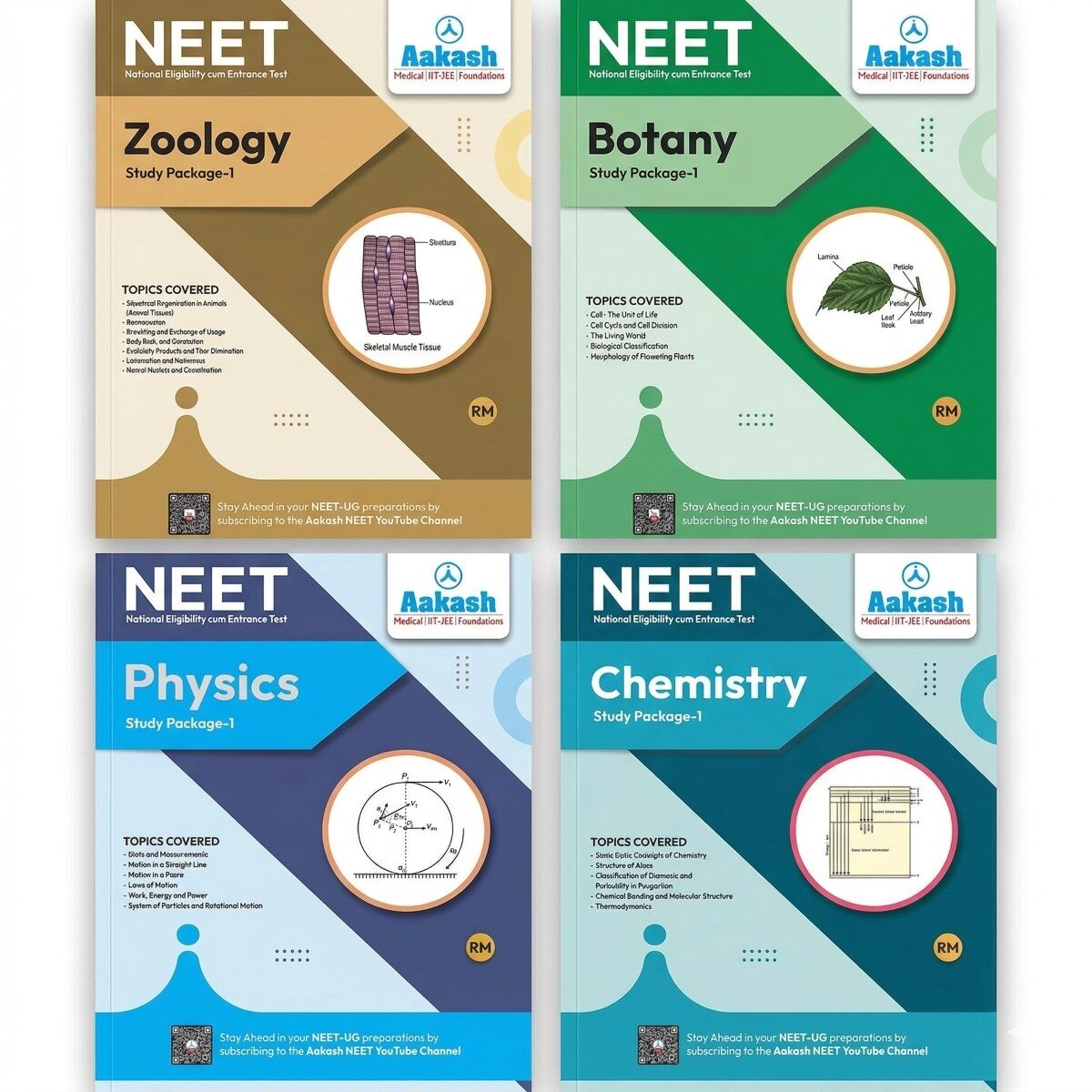 Aakash NEET 11th+12th Complete 17 Book Set | Edition 2026₹4,999
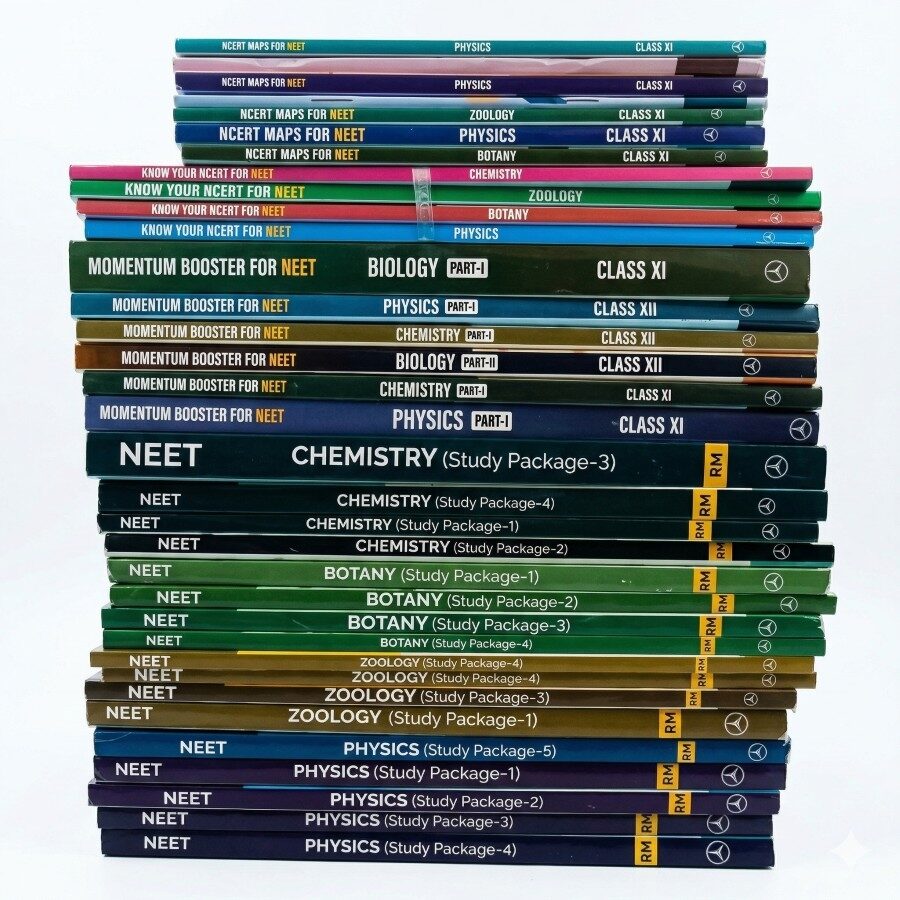 Aakash NEET Medical Complete Package Set of 35 Booklets | 2026 Edition₹9,999
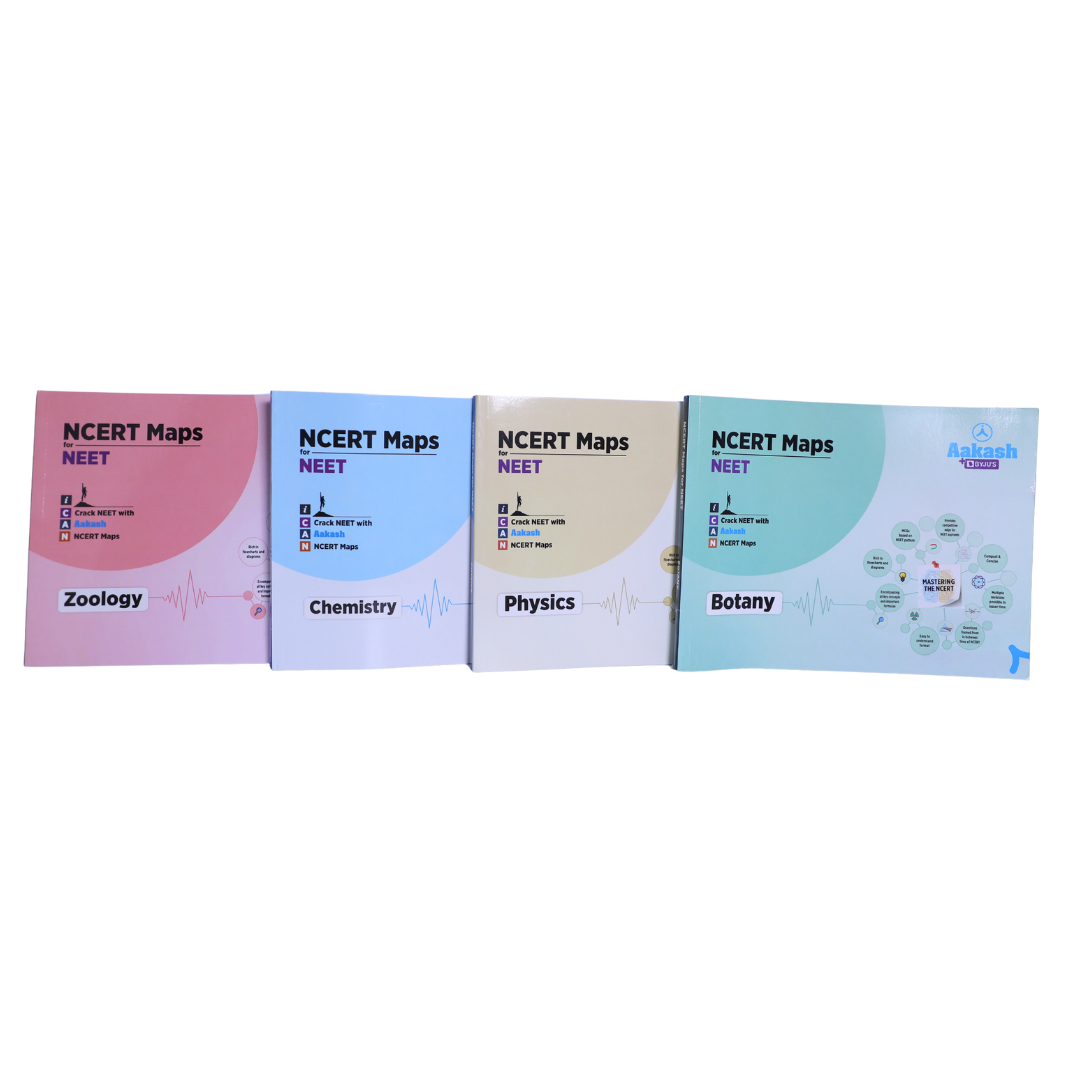 Aakash NCERT Maps for NEET Complete 4 Book Set Edition 2025 English₹1,600
Continue reading
More in Buying Guides



Need help choosing?
Tell us your exam and stage on WhatsApp, we suggest the right set.