

DSSSB Syllabus 2026: PRT, TGT, PGT Exam Pattern
Complete DSSSB syllabus 2026 with post-wise Tier 1 & Tier 2 exam pattern, PRT/TGT/PGT topics, negative marking, qualifying marks.
 Competer
17 min read

The DSSSB syllabus for 2026 is built around a two-stage structure: a Tier 1 Computer-Based Test of 200 MCQs (200 marks, 2 hours) covering General Awareness, General Intelligence & Reasoning, Numerical Ability, English and Hindi language, plus a post-specific subject section — followed by a Tier 2 exam (objective + descriptive) for higher posts like TGT, PGT, JE and AE. The Delhi Subordinate Services Selection Board (DSSSB) classifies every vacancy as either a one-tier post (single CBT) or a two-tier post (CBT + descriptive/skill test), and there is negative marking of 0.25 marks for each wrong answer. This guide breaks down the complete post-wise DSSSB syllabus, exam pattern, marking scheme, weightage and how to download the syllabus PDF, so you can plan your preparation with precision.
Last updated: September 2026. The exam pattern below reflects DSSSB’s standard scheme; because the Board publishes an indicative syllabus per post code, always cross-check the exact Section B module against the latest official notification for the post you are applying to.
DSSSB Syllabus 2026: Overview at a Glance
DSSSB recruits for thousands of Group B and Group C posts across Delhi Government departments, autonomous bodies, local bodies (MCD, NDMC) and Delhi’s schools. Because the Board hires for over a hundred different post codes — from Primary Teacher (PRT) and Post Graduate Teacher (PGT) to Junior Engineer, Assistant Section Officer and Patwari — the DSSSB syllabus 2026 is not one fixed list. Instead, it is a common aptitude core (Section A) combined with a post-specific subject module (Section B). Understanding this two-part design is the single most important step in decoding what to study.
| Particular | Detail |
|---|---|
| Conducting body | Delhi Subordinate Services Selection Board (DSSSB) |
| Exam mode | Online Computer-Based Test (CBT) |
| Exam stages | One-Tier or Two-Tier (post-dependent) |
| Tier 1 questions | 200 MCQs |
| Tier 1 marks | 200 marks |
| Duration | 2 hours (120 minutes) |
| Negative marking | 0.25 mark per wrong answer |
| Medium | English & Hindi (bilingual, except language papers) |
| Official syllabus | Indicative syllabus published by DSSSB per post |
Use this page as a master reference, then confirm your post-specific Section B from the notification. The sections that follow move from the general pattern to the exact post-wise DSSSB syllabus for PRT, TGT, PGT and major non-teaching posts.
DSSSB Exam Pattern 2026: One-Tier vs Two-Tier Posts
The first thing every aspirant must do is find out whether the post applied for is a one-tier or a two-tier examination. The DSSSB exam pattern changes entirely based on this classification, and studying the wrong pattern is the most common preparation mistake.
One-Tier posts (single CBT)
These posts are decided on the basis of a single Tier 1 CBT (sometimes with a skill/typing test where the role demands it). Examples include Patwari, Jail Warder, Junior Assistant, Matric-level and Higher Secondary-level clerical and technical posts. There are two sub-variants: One-Tier (General) and One-Tier (Technical), where the technical version replaces part of the general aptitude with the subject concerned.
Two-Tier posts (CBT + descriptive)
Higher-grade posts — TGT, PGT, Assistant Engineer (AE), Junior Engineer (JE), Assistant Section Officer/Grade equivalents, Legal Assistant and similar — require a Tier 1 objective test and a Tier 2 exam that includes a descriptive component. Tier 2 tests writing skill, subject depth and, for many posts, a subject-specific objective section.
| Classification | Stages | Example Posts |
|---|---|---|
| One-Tier (General) | Tier 1 CBT only | Junior Assistant, LDC, Patwari, Jail Warder |
| One-Tier (Technical) | Tier 1 CBT (with subject) + skill test if applicable | Stenographer, Data Entry Operator, Pharmacist |
| Two-Tier | Tier 1 CBT + Tier 2 (objective + descriptive) | TGT, PGT, JE, AE, ASO, DASS Grade 2 |
What is the difference between one-tier and two-tier DSSSB posts?
In short: a one-tier post is finalised on a single CBT (plus a qualifying skill or physical test where the role needs one), while a two-tier post adds a second, tougher stage with a descriptive paper. One-tier suits clerical, entry-level and field posts; two-tier is reserved for teaching, engineering and administrative posts where writing ability and deeper subject knowledge must be assessed. Confirm your post’s tier before you build a timetable — it decides whether you need descriptive-writing practice at all.
DSSSB Tier 1 Exam Pattern & Marking Scheme
The Tier 1 CBT is common to almost every DSSSB recruitment. It carries 200 objective questions for 200 marks, to be answered in 2 hours. The paper is divided into Section A (general aptitude and languages) and Section B (the post-specific subject). The exact split of marks between the two sections depends on the post.
| Section | Component | Approx. Questions | Marks |
|---|---|---|---|
| Section A | General Awareness | 40 | 40 |
| General Intelligence & Reasoning Ability | 40 | 40 | |
| Arithmetical & Numerical Ability | 40 | 40 | |
| Test of Hindi Language & Comprehension | 20 | 20 | |
| Test of English Language & Comprehension | 20 | 20 | |
| Section B | Post-specific subject / qualification-level topics | 100 | 100 |
| Total | 200 | 200 | |
For teaching posts (PRT, TGT, PGT) the Section B of 100 marks is typically split between the concerned teaching subject and pedagogy/child development. For non-teaching technical posts, Section B is the engineering or discipline subject. For purely clerical one-tier general posts, the paper often stays weighted toward the Section A aptitude. Note that the difficulty level of the aptitude and language sections is calibrated to the post’s minimum qualification — matriculation level for entry posts, graduation level for graduate-entry posts.
How many questions are asked in DSSSB Tier 1 exam?
DSSSB Tier 1 contains 200 multiple-choice questions carrying 200 marks in total, to be completed within 2 hours (120 minutes). That works out to roughly 36 seconds per question, so speed and accuracy matter as much as knowledge. Broadly, about 100 marks come from the Section A core and 100 marks from the post-specific Section B, though the split can shift for one-tier general posts.
Is there negative marking in DSSSB exam?
Yes. Every correct answer earns 1 mark and every wrong answer results in a deduction of 0.25 marks. Unattempted questions carry no penalty. Because a quarter-mark is lost for each mistake, blind guessing hurts your score — attempt only when you can eliminate at least two options.
DSSSB Tier 2 Exam Pattern (TGT, PGT, JE, AE & More)
For two-tier posts, clearing Tier 1 makes you eligible for Tier 2. The Tier 2 paper is designed to test in-depth subject knowledge and writing ability, and its structure varies by post category. Broadly, Tier 2 has an objective Part 1 and a descriptive Part 2.
| Part | Nature | Content | Marks (indicative) |
|---|---|---|---|
| Part 1 | Objective (MCQ) | Mental ability, reasoning & general awareness / subject | 100 |
| Part 2 | Descriptive | Essay, Letter/Application writing, Precis, Comprehension, Expansion of ideas (English & Hindi) | 100 |
The descriptive Part 2 typically asks for an essay, a letter or application, a précis and a comprehension passage in both English and Hindi. For engineering posts (JE, AE), the objective portion is dominated by the concerned engineering discipline (Civil/Electrical/Mechanical). For teaching posts, the emphasis in Tier 2 shifts to subject specialisation and teaching methodology. Where the role demands it — Stenographer, DEO, Junior Assistant — a qualifying typing or skill test is conducted after the written stages. Because the descriptive paper is marked by evaluators rather than a machine, presentation, structure and clean handwriting-equivalent typing (for CBT descriptive) can meaningfully affect your score.
DSSSB Post-Selector Table: Match Your Post to Its Syllabus
This is the table most ranking pages leave out. Instead of mixing generic and post-specific patterns, use the selector below to jump straight to your exact tier, sections and Section B focus. This mapping is the fastest way to know precisely what the DSSSB syllabus means for you.
| Post | Tier | Section A | Section B focus | Skill/Typing test |
|---|---|---|---|---|
| PRT (Primary Teacher) | One-Tier (Tech) | Yes | Subject concerned + Child Development & Pedagogy | No |
| TGT (Trained Graduate Teacher) | Two-Tier | Yes | Subject + Pedagogy (Tier 2 subject depth) | No |
| PGT (Post Graduate Teacher) | Two-Tier | Yes | Post-graduate subject + teaching methodology | No |
| Junior Engineer (JE) | Two-Tier | Yes | Civil/Electrical/Mechanical Engineering | No |
| Assistant Engineer (AE) | Two-Tier | Yes | Concerned engineering discipline | No |
| ASO / DASS Grade 2 | Two-Tier | Yes | Descriptive writing + general studies | No |
| Junior Assistant / LDC | One-Tier | Yes | General aptitude weighted | Typing test |
| Stenographer | One-Tier | Yes | General aptitude | Stenography/typing |
| Patwari | One-Tier | Yes | General aptitude + basic computation | No |
| Jail Warder | One-Tier | Yes | General aptitude + PE&MT | Physical test |
Section-Wise DSSSB Syllabus (Section A Core)
The Section A core appears in virtually every DSSSB paper. Master these five areas and you have covered 100 of the 200 Tier 1 marks for most posts. Below is the detailed topic list per section.
General Intelligence & Reasoning Ability
Both verbal and non-verbal reasoning are tested: analogies, similarities and differences, space visualisation, problem-solving, analysis and judgement, decision-making, visual memory, discrimination, observation, relationship concepts, arithmetical reasoning, verbal and figure classification, arithmetic number series, coding-decoding, syllogism, blood relations, direction sense, seating arrangement, and non-verbal series.
Arithmetical & Numerical Ability (with Data Interpretation)
Number systems, computation of whole numbers, decimals and fractions, relationship between numbers, percentage, ratio and proportion, average, interest (simple & compound), profit and loss, discount, mensuration, time and work, time and distance, ratio and time, and data interpretation (tables, bar graphs, pie charts). The level is typically matric to graduate depending on the post.
Test of English Language & Comprehension
Understanding and comprehension of the English language, error spotting, fill in the blanks, synonyms, antonyms, spelling/detecting misspelt words, idioms and phrases, one-word substitution, improvement of sentences, active/passive voice, direct/indirect narration, and cloze passage.
Test of Hindi Language & Comprehension (हिंदी)
हिंदी भाषा की समझ, गद्यांश पर आधारित प्रश्न, पर्यायवाची, विलोम, वर्तनी शुद्धि, मुहावरे एवं लोकोक्तियाँ, संधि, समास, वाक्य शुद्धि, अनेक शब्दों के लिए एक शब्द, और व्याकरण आधारित प्रश्न&red;। The Hindi section mirrors the English section in structure and tests grammar plus comprehension.
General Awareness — With the Delhi-Specific Angle
DSSSB places distinctive emphasis on Delhi. Beyond national current affairs, history, geography, polity, economy, general science and sports, the Board frequently asks about Delhi’s administration, the National Capital Territory (NCT) governance structure, Delhi’s history and monuments, MCD/NDMC functioning, Delhi government schemes and Delhi-centric current affairs. Aspirants who ignore this Delhi angle routinely lose easy marks.
| General Awareness Sub-Area | Representative Topics |
|---|---|
| National & International | Current affairs, awards, sports, important days |
| History | Ancient, medieval, modern India, national movement |
| Polity | Constitution, Parliament, fundamental rights, Panchayati Raj |
| Geography | India & world physical/economic geography |
| Economy | Budget, banking, economic terms, schemes |
| Science | Everyday physics, chemistry, biology |
| Delhi-specific | NCT administration, Delhi history, MCD/NDMC, local current affairs |
A regularly updated current affairs source is non-negotiable for this section. Aspirants preparing the General Awareness portion often pair a static GK book with a monthly magazine such as the Vision IAS Current Affairs Magazine January 2026 to keep the dynamic portion current right up to exam day.
DSSSB PRT Syllabus 2026 (Primary Teacher)
The DSSSB PRT syllabus is a one-tier technical exam. Section A carries the general aptitude and language core, while Section B (around 100 marks) focuses on the teaching aptitude and child development at the primary level. There is no separate Tier 2 for PRT.
| Section | Topics | Marks |
|---|---|---|
| General Awareness | Current affairs, Delhi GK, static GK | 20 |
| Reasoning | Verbal & non-verbal reasoning | 20 |
| Numerical Ability | Arithmetic, data interpretation | 20 |
| Hindi | Grammar & comprehension | 20 |
| English | Grammar & comprehension | 20 |
| Section B — Child Development & Pedagogy | Development of the child, learning, pedagogy, EVS/Maths/Language methodology | 100 |
Child Development & Pedagogy topics (PRT/TGT)
This is the area top pages describe only vaguely. The detailed pedagogy breakdown includes: concept of development and its relationship with learning; principles of child development; influence of heredity and environment; socialisation processes; Piaget, Kohlberg and Vygotsky — constructs and critical perspectives; concepts of child-centred and progressive education; intelligence and multi-dimensional intelligence; language and thought; gender roles; individual differences among learners; assessment for and of learning; formulating questions, continuous and comprehensive evaluation; inclusive education and understanding children with special needs; addressing learners from diverse backgrounds; concept of learning and its processes; factors contributing to learning; cognition and emotions; motivation and learning; and the role of the teacher. Candidates who have already prepared for CTET or a state TET will find substantial overlap here, though DSSSB frames the questions around its own indicative syllabus.
DSSSB TGT Syllabus 2026 (Trained Graduate Teacher)
The DSSSB TGT syllabus follows the two-tier pattern. Tier 1 covers the general aptitude core plus subject-cum-pedagogy; the higher-level subject depth and descriptive writing come in Tier 2. TGT posts exist for subjects such as Maths, Science, Social Science, English, Hindi, Sanskrit and Natural Science.
| TGT Subject | Key Section B Coverage |
|---|---|
| TGT Maths | Number systems, algebra, geometry, mensuration, trigonometry, statistics, coordinate geometry |
| TGT Natural Science | Physics, chemistry, biology up to secondary level; scientific method, environment |
| TGT Social Science | History, geography, civics/polity, economics up to secondary level |
| TGT English | Grammar, literature, comprehension, composition, phonetics |
| TGT Hindi | व्याकरण, साहित्य, गद्य-पद्य, रचना |
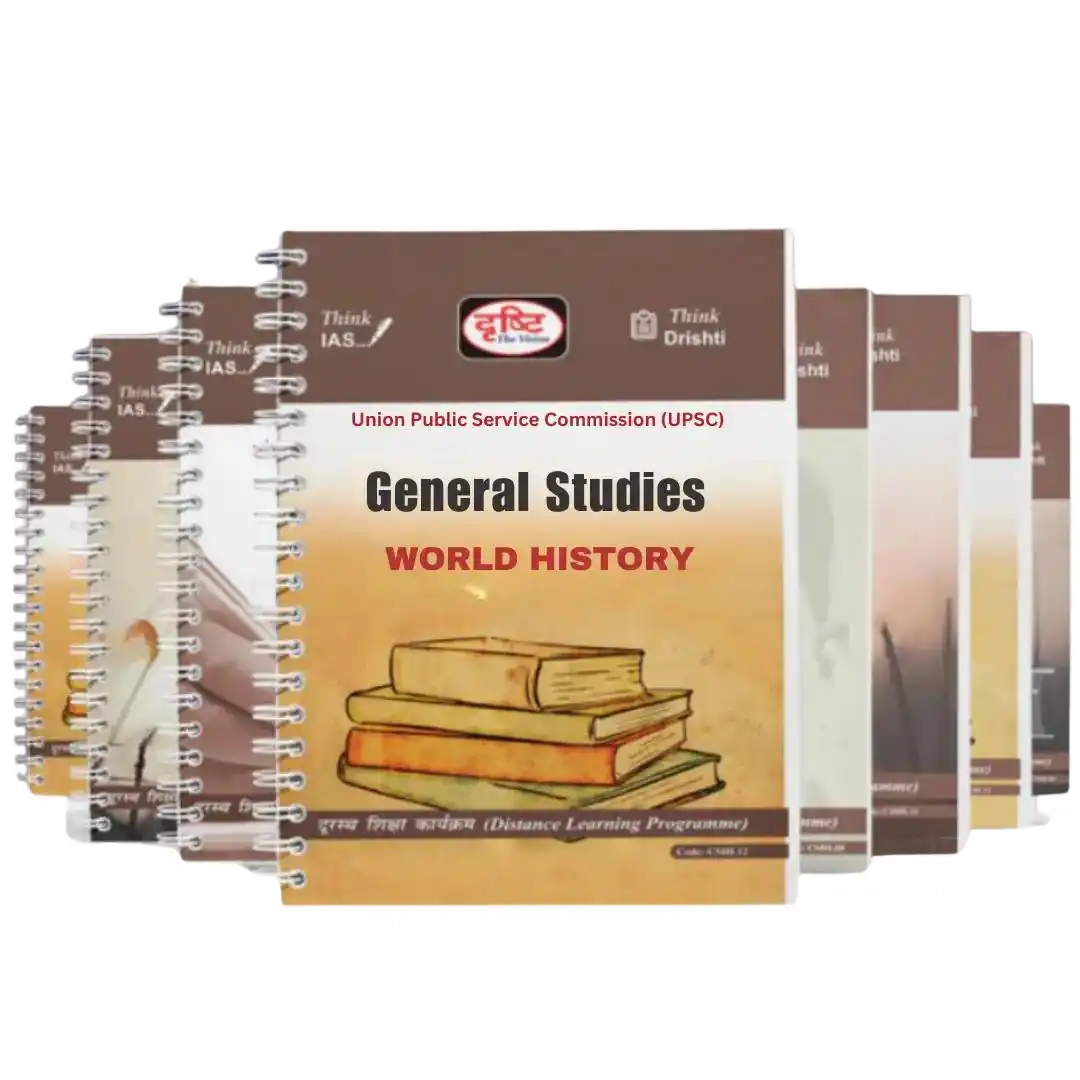
The subject portion is set at the graduation standard while pedagogy is tested at the teaching-methodology level. A structured GS foundation helps immensely with the Social Science and General Awareness overlap — many candidates build this base using comprehensive material like the Drishti IAS English Study Material, which covers history, polity, geography and economy in depth.
DSSSB PGT Syllabus 2026 (Post Graduate Teacher)
The DSSSB PGT syllabus is the most subject-intensive of the teaching posts and follows a two-tier structure. Section B and Tier 2 test the concerned subject at the post-graduate level along with teaching methodology. PGT subjects include Maths, Physics, Chemistry, Biology, Commerce, Economics, History, Geography, Political Science, English, Hindi and more.
| PGT Subject | Representative Post-Graduate-Level Topics |
|---|---|
| PGT Maths | Calculus, algebra, real analysis, differential equations, vectors, probability |
| PGT Physics | Mechanics, thermodynamics, optics, electromagnetism, modern physics |
| PGT Chemistry | Physical, organic, inorganic chemistry, chemical bonding, thermochemistry |
| PGT Biology | Cell biology, genetics, botany, zoology, ecology, biotechnology |
| PGT Commerce | Accountancy, business studies, financial management, auditing |
| PGT Economics | Micro/macroeconomics, Indian economy, statistics, development economics |
For PGT, teaching methodology and the subject’s higher-order concepts carry the maximum weight, so a candidate must combine deep subject revision with pedagogy practice. Since the PGT subject standard is post-graduation, do not rely on secondary-school notes alone — anchor your revision to a graduate/post-graduate textbook in your discipline and use DSSSB previous-year papers to gauge the depth actually asked.
DSSSB Non-Teaching Posts Syllabus (JE, ASO, DASS, Junior Assistant)
Non-teaching posts share the same Section A aptitude core but differ sharply in Section B. Engineering posts test the discipline concerned, administrative posts test general studies and descriptive writing, and clerical posts add a typing/skill test.
| Post | Section B / Tier 2 Focus |
|---|---|
| Junior Engineer (Civil) | Building materials, surveying, estimation, structural analysis, hydraulics, construction management |
| Junior Engineer (Electrical) | Circuits, machines, power systems, measurement, control systems |
| Assistant Engineer | Advanced discipline-specific engineering + design |
| ASO / DASS Grade 2 | General studies, essay, letter/application, comprehension, précis |
| Junior Assistant / LDC | General aptitude + typing skill test |
| Pharmacist / Lab Technician | Concerned technical/paramedical subject |
DSSSB Marking Scheme & Qualifying Marks 2026
Understanding the marking and qualifying criteria helps you set a realistic target. Each correct answer gives +1 mark; each wrong answer deducts 0.25 marks. Selection is based on Tier 1 (and Tier 2 where applicable) plus any qualifying skill test.
What are the qualifying marks for DSSSB exam?
DSSSB applies category-wise minimum qualifying marks. The indicative thresholds are shown below; the final cut-off is always higher and depends on vacancies and competition.
| Category | Minimum Qualifying Marks |
|---|---|
| General (UR) | 40% |
| OBC (Delhi) | 35% |
| SC / ST | 30% |
| PwD | 30% |
| Ex-Servicemen | Relaxed as per rules |
Clearing the minimum qualifying marks only makes you eligible — final selection is on merit against the number of vacancies. In practice, cut-offs for popular posts run well above these floors, so target a score comfortably higher than the qualifying line rather than aiming to just scrape through.
Is the DSSSB exam conducted in Hindi and English both?
Yes. Except for the language-specific sections (the English test is in English and the Hindi test is in Hindi), the DSSSB question paper is bilingual — every question appears in both English and Hindi, so candidates can answer comfortably in their preferred language.
DSSSB Study Plan & Weightage Table 2026
Top-ranking pages rarely give you a marks-per-topic priority map. Use this weightage-based study plan to decide where to invest time first. The idea is simple: protect the high-weight, high-certainty sections before chasing low-yield topics.
| Area | Approx. Weight (Tier 1) | Priority | Prep Time (weeks) |
|---|---|---|---|
| Section B (post subject) | 100 / 200 | Highest | 6 |
| General Awareness (incl. Delhi GK) | 40 / 200 | High | 4 |
| Reasoning | 40 / 200 | High | 3 |
| Numerical Ability | 40 / 200 | Medium | 3 |
| Hindi | 20 / 200 | Medium | 2 |
| English | 20 / 200 | Medium | 2 |
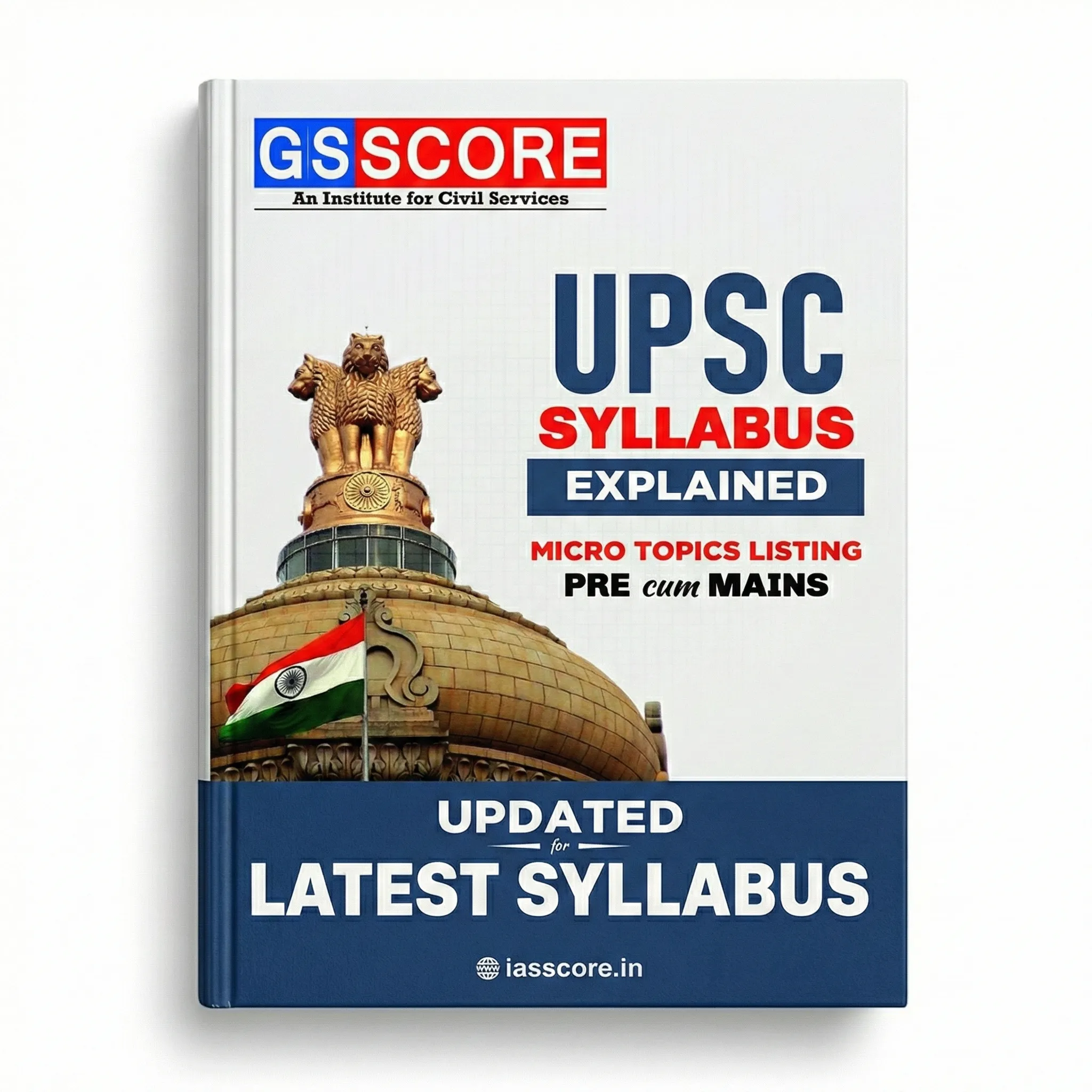
A workable 12-week timeline: spend the first six weeks building Section B (your subject) alongside daily current affairs; use weeks seven to ten to consolidate reasoning, numerical ability and both languages; and reserve the final two weeks for full-length mock tests, previous year papers and Delhi GK revision. If you understand the exact syllabus structure of the exam you target, a dedicated syllabus booklet — like the GS Score Latest Syllabus Booklet 2026-27 for general-studies foundations — keeps your topic list disciplined and prevents scope creep.
How to Download the DSSSB Syllabus PDF 2026
DSSSB publishes an indicative syllabus for each post along with the recruitment notification. To get the official DSSSB syllabus PDF download, follow these steps:
- Visit the official DSSSB website (dsssb.delhi.gov.in).
- Open the ‘Notice Board’ or the specific advertisement for your post code.
- Locate the ‘Indicative Syllabus’ annexure attached to the notification PDF.
- Download and save the post-specific syllabus and exam pattern.
- Match the Section B module in the annexure to the post-selector table above so you know exactly what to prepare.
Because DSSSB syllabi are post-specific, always confirm the Section B module for your exact post code from the latest notification rather than relying on a generic list. There is no single “master” DSSSB syllabus PDF that covers every post at once — the authentic file is the annexure inside your post’s advertisement. Bookmark this page as your consolidated DSSSB syllabus 2026 reference and pair it with that official annexure.
Best Books, Previous Year Papers & Mock Tests for DSSSB 2026
Your resource stack should cover three layers: a standard aptitude/reasoning book, a Delhi-focused general awareness source, and a subject-specific module for Section B. Solving previous year DSSSB papers reveals repeated question patterns, while sectional and full-length mock tests build the speed you need to attempt 200 questions in 120 minutes without triggering negative marking.
| Resource Type | Purpose |
|---|---|
| Aptitude & Reasoning book | Cover Section A quantitative and reasoning |
| General Awareness + current affairs | Static GK plus Delhi and national current affairs |
| Subject/pedagogy module | Section B depth for your specific post |
| Previous year papers | Identify repeated topics and difficulty level |
| Mock tests | Time management and negative-marking control |
Aspirants targeting teaching or administrative posts frequently reuse strong UPSC/PSC-grade general studies notes for the history-polity-geography-economy overlap; comprehensive printed sets such as the Drishti IAS English Study Material serve this dual purpose well, and a monthly current affairs digest keeps the dynamic General Awareness portion updated. Competer prints and delivers these study materials so you can build a focused, exam-ready shelf without hunting for scattered PDFs.
Common Mistakes to Avoid in DSSSB Preparation
Three errors sink most first-time DSSSB candidates. First, studying the wrong pattern — always confirm one-tier vs two-tier for your post before you start. Second, ignoring the Delhi-specific General Awareness, which is easy to score but routinely skipped. Third, mismanaging negative marking by over-attempting; with a 0.25 penalty, disciplined attempting beats reckless guessing. Fix these three and your effective score rises without learning a single extra topic. A fourth, quieter mistake is preparing from an outdated syllabus — re-verify Section B against the current notification each cycle, because DSSSB revises post-wise modules from time to time.
Frequently Asked Questions
What is the syllabus of DSSSB exam?
The DSSSB syllabus has two parts: Section A — a common core of General Awareness, General Intelligence & Reasoning, Numerical Ability, Hindi and English — and Section B, a post-specific subject module. For teaching posts, Section B includes the concerned subject plus child development and pedagogy; for engineering and technical posts it is the relevant discipline.
What is the exam pattern for DSSSB Tier 1 and Tier 2?
Tier 1 is a Computer-Based Test of 200 objective questions for 200 marks in 2 hours, split into Section A (aptitude and languages) and Section B (subject). Tier 2, applicable to two-tier posts like TGT, PGT, JE and AE, adds an objective Part 1 and a descriptive Part 2 (essay, letter/application, précis) plus a skill/typing test where required.
Is there negative marking in DSSSB exam?
Yes. Each correct answer awards 1 mark and each wrong answer deducts 0.25 marks. Unattempted questions are not penalised, so it is wise to attempt only questions where you can eliminate at least two options.
How many questions are asked in DSSSB Tier 1 exam?
DSSSB Tier 1 contains 200 multiple-choice questions carrying 200 marks in total, to be completed within 2 hours (120 minutes). Roughly 100 marks come from the Section A core and 100 marks from the post-specific Section B.
What is the difference between one-tier and two-tier DSSSB posts?
One-tier posts are selected through a single Tier 1 CBT (with a skill test if the role needs it), such as Junior Assistant, Patwari or Jail Warder. Two-tier posts require both Tier 1 and a descriptive Tier 2 exam, such as TGT, PGT, Junior Engineer and Assistant Engineer.
What are the qualifying marks for DSSSB exam?
Indicative category-wise minimums are around 40% for General/UR, 35% for OBC (Delhi) and 30% for SC/ST/PwD, with relaxation for Ex-Servicemen as per rules. These are only eligibility thresholds — the actual selection cut-off is merit- and vacancy-driven and usually runs higher.
Is the DSSSB exam conducted in Hindi and English both?
Yes. Apart from the dedicated language papers, the DSSSB question paper is bilingual and every question appears in both English and Hindi, letting candidates answer in whichever language they are more comfortable with.
How to download the DSSSB syllabus PDF?
Visit the official DSSSB website, open the notification or advertisement for your specific post, and download the ‘Indicative Syllabus’ annexure attached to it. Since the syllabus is post-specific, always verify the Section B module for your exact post code from the latest official notification.
Recommended Study Material


Competer
The Competer team: we pack the orders, so we know which editions aspirants keep coming back for.
Get it printed
SSC study material aspirants order most on Competer, delivered across India
 Parmar SSC GK Polity 4.0 Batch Notes 2026-27 | English Medium Edition₹545View on Competer →
 Parmar SSC GK Geography 4.0 Batch Notes 2026-27 | English Medium Edition₹745View on Competer →
 Parmar SSC GK History 4.0 Batch Notes 2026-27 | English Medium Edition₹745View on Competer →
 Parmar SSC GK Polity in Hindi - 4.0 Batch Notes 2026-27₹545View on Competer →
Continue reading
More in Buying Guides



Need help choosing?
Tell us your exam and stage on WhatsApp, we suggest the right set.