

CTET Paper 2 Syllabus 2026: Subject-Wise Topics
Complete CTET Paper 2 syllabus 2026 with subject-wise topics, exam pattern, marks, NCERT mapping, best books.
 Competer
16 min read

The CTET Paper 2 syllabus covers four areas for aspiring teachers of Classes VI to VIII: Child Development & Pedagogy (30 marks), Language I (30 marks), Language II (30 marks), and either Mathematics & Science (60 marks) or Social Studies/Social Science (60 marks). The paper carries 150 objective questions for 150 marks, must be completed in 2 hours 30 minutes, and has no negative marking. Candidates choose Maths & Science if they are Mathematics/Science graduates and Social Studies if they hold arts/humanities degrees, while any other candidate may pick either subject.
This guide breaks down the complete subject-wise ctet paper 2 syllabus, the exam pattern with marks and duration, NCERT class-wise mapping, high-weightage topics from previous years, best books, section-wise strategy, and a clean single-page PDF you can print — everything you need to plan your preparation for the CBSE Central Teacher Eligibility Test.
CTET Paper 2 Syllabus 2026 at a Glance
Before the detailed breakdown, here is the entire ctet paper 2 syllabus 2026 snapshot in one place — useful for a quick revision or a screenshot:
- Sections: 4 — Child Development & Pedagogy, Language I, Language II, and Mathematics & Science OR Social Studies/Social Science.
- Total questions / marks: 150 MCQs for 150 marks.
- Duration: 2 hours 30 minutes (150 minutes).
- Marks per question: 1 mark; four options, one correct answer.
- Negative marking: None — attempt every question.
- Qualifying score: 60% (90/150), with relaxation for reserved categories.
- Content level: Classes VI–VIII, drawn from NCERT.
- Mode & language: Computer-Based Test, bilingual (English & Hindi).
- Certificate validity: Lifetime.
What Is CTET Paper 2 and Who Should Take It?
The Central Teacher Eligibility Test (CTET) is conducted by the Central Board of Secondary Education (CBSE) to certify candidates for teaching posts in Central Government schools such as KVS, NVS, and Central Tibetan schools, as well as many state and private schools that accept the CTET score. The exam has two independent papers:
- Paper 1 — for candidates who wish to teach Classes I to V (primary stage).
- Paper 2 — for candidates who wish to teach Classes VI to VIII (elementary/upper-primary stage).
If you want to teach at both levels, you can appear for both papers. Paper 2 is designed for graduates who have completed (or are pursuing) a B.Ed, D.El.Ed, or equivalent teacher-training qualification. It is a Computer-Based Test (CBT) offered in English and Hindi, and the certificate is now valid for a lifetime. Understanding the ctet paper 2 syllabus 2026 in full is the first step because your subject choice and study plan flow directly from it.
CTET Paper 2 Exam Pattern 2026: Marks, Questions & Duration
The CTET Paper 2 exam pattern is fixed and predictable. There are 150 multiple-choice questions (MCQs), each carrying 1 mark, for a total of 150 marks in 150 minutes. Every question has four options with one correct answer, and there is no negative marking, so you should attempt all 150 questions.
| Feature | Details |
|---|---|
| Mode | Computer-Based Test (CBT) |
| Total questions | 150 MCQs |
| Total marks | 150 |
| Marks per question | 1 |
| Duration | 2 hours 30 minutes (150 minutes) |
| Negative marking | None |
| Languages | English & Hindi (bilingual) |
| Level | Classes VI–VIII (elementary stage) |
Section-Wise Weightage of CTET Paper 2
The 150 questions are distributed across four compulsory sections. Notice that Child Development & Pedagogy and both languages are common to all candidates; only the fourth block changes based on your subject choice.
| Section | Questions | Marks |
|---|---|---|
| Child Development & Pedagogy | 30 | 30 |
| Language I (medium of instruction) | 30 | 30 |
| Language II | 30 | 30 |
| Mathematics & Science OR Social Studies/Social Science | 60 | 60 |
| Total | 150 | 150 |
The single biggest scoring block is the subject section worth 60 marks — 40% of the paper — which is exactly why choosing the right optional between Maths & Science and Social Studies is so important.
CTET Paper 2 Child Development and Pedagogy Syllabus (30 Marks)
The Child Development and Pedagogy section is compulsory for every candidate and focuses on the psychology of teaching and learning for the 11–14 age group. Roughly 15 questions test child development, around 5 test inclusive education, and around 10 test learning and pedagogy. The detailed topics are:
(a) Child Development (Elementary School Child) — ~15 Questions
- Concept of development and its relationship with learning
- Principles of the development of children
- Influence of heredity and environment
- Socialization processes: society, family and children
- Piaget, Kohlberg and Vygotsky — constructs and critical perspectives
- Concepts of child-centred and progressive education
- Critical perspective of the construct of intelligence; multi-dimensional intelligence
- Language and thought; gender as a social construct; gender roles and bias
- Individual differences among learners; distinction between assessment for learning and assessment of learning
- Formulating appropriate questions for assessing readiness, enhancing learning and critical thinking
(b) Concept of Inclusive Education and Understanding Children with Special Needs — ~5 Questions
- Addressing learners from diverse backgrounds, including disadvantaged and deprived groups
- Addressing the needs of children with learning difficulties and impairments
- Addressing the talented, creative and specially-abled learners
(c) Learning and Pedagogy — ~10 Questions
- How children think and learn; why and how they fail to achieve success
- Basic processes of teaching and learning; children’s learning strategies
- Learning as a social activity; social context of learning
- Child as a problem solver and a scientific investigator
- Alternative conceptions of learning; cognition and emotions
- Motivation and learning; factors contributing to learning — personal and environmental
CTET Paper 2 Language I and Language II Syllabus (30 + 30 Marks)
Both language sections carry 30 marks each and are each split evenly into Language Comprehension (15 questions) and Pedagogy of Language Development (15 questions). Language I is chosen as your medium of instruction, and Language II must be different from Language I. CBSE offers around 20 language options including Hindi, English, Sanskrit, Urdu, Bengali, Tamil, Telugu, Marathi, Punjabi, Kannada and more.
Language I — Comprehension & Pedagogy
| Part | Questions | What Is Tested |
|---|---|---|
| Language Comprehension | 15 | Reading unseen prose or drama passages with questions on comprehension, inference, grammar and verbal ability |
| Pedagogy of Language Development | 15 | Learning & acquisition; principles of language teaching; role of listening & speaking; language skills; evaluating language proficiency; teaching-learning materials; remedial teaching |
Language II — Comprehension & Pedagogy
| Part | Questions | What Is Tested |
|---|---|---|
| Comprehension | 15 | Two unseen passages — one prose/discursive and one poem — with questions on comprehension, grammar and verbal ability |
| Pedagogy of Language Development | 15 | Same pedagogy framework as Language I: acquisition principles, challenges of teaching in a diverse classroom, language difficulties/errors/disorders, and evaluation |
A common mistake is treating Language II as a full grammar paper — it is testing your ability to comprehend and to teach the language, not literature depth. Focus on unseen-passage practice plus the pedagogy vocabulary listed above.
CTET Paper 2 Maths and Science Syllabus (60 Marks)
If you graduated in Mathematics, Science or an allied stream and want to teach these subjects, this is your 60-mark block. It contains 30 questions from Mathematics and 30 questions from Science, each split into content and pedagogy. The content level is that of Classes VI–VIII (NCERT), but questions are framed to test conceptual clarity.
Mathematics — Content (Approx. 20 Questions) + Pedagogy (Approx. 10 Questions)
| Topic | Key Sub-Topics |
|---|---|
| Number System | Knowing our numbers, playing with numbers, whole numbers, negative numbers & integers, fractions |
| Algebra | Introduction to algebra, ratio and proportion |
| Geometry | Basic geometrical ideas (2-D), understanding elementary shapes (2-D & 3-D), symmetry, construction (using scale, protractor, compass) |
| Mensuration | Perimeter, area, volume of basic shapes |
| Data Handling | Collection, organisation, representation and interpretation of data |
| Pedagogical Issues | Nature of mathematics/logical thinking; place of mathematics in curriculum; language of mathematics; community mathematics; evaluation; remedial teaching; problem of teaching |
Science — Content (Approx. 20 Questions) + Pedagogy (Approx. 10 Questions)
| Unit | Key Sub-Topics |
|---|---|
| Food | Sources of food, components of food, cleaning food |
| Materials | Materials of daily use; classifying and separating materials |
| The World of the Living | Living organisms, plants, animals, adaptations, environment |
| Moving Things, People & Ideas | Motion, force, simple machines, transport |
| How Things Work | Electric current and circuits, magnets |
| Natural Phenomena | Light, sound, reflection, natural events |
| Natural Resources | Air, water, sources, conservation, pollution |
| Pedagogical Issues | Nature & structure of science; natural science aims & objectives; understanding & appreciating science; approaches to teaching; observation/experiment/innovation; text material/aids; evaluation; problems; remedial teaching |
CTET Paper 2 Social Studies Syllabus (60 Marks)
If you graduated in arts/humanities and want to teach Social Studies/Social Science, this is your 60-mark block. It is split into Content (40 questions/marks) and Pedagogy of Social Science (20 questions/marks) — a different split from Maths & Science, and an important point when planning revision time.
Social Studies Content — 40 Questions
| Area | Key Topics |
|---|---|
| History | When, where & how; earliest societies; first farmers & herders; first cities; early states, empires; new ideas; first empire; contacts with distant lands; political developments; culture & science; medieval architecture, temples, mosques; creation of an empire; social change; regional cultures; revolt of 1857–58; women & reform; challenging the caste system; nationalist movement; India after independence |
| Geography | Geography as a social study & as a science; planet Earth in the solar system; globe; environment in its totality — natural & human; air, water, human environment (settlement, transport, communication); resources — types (natural & human); agriculture |
| Social & Political Life | Diversity; government; local government; making a living; democracy; state government; understanding media; unpacking gender; the Constitution; parliamentary government; the judiciary; social justice and the marginalised |
Pedagogy of Social Science — 20 Questions
- Concept & nature of social science/social studies
- Class-room processes, activities and discourse
- Developing critical thinking
- Enquiry/empirical evidence
- Problems of teaching social science
- Sources — primary & secondary
- Projects work; evaluation
Maths & Science vs Social Studies: Which Should You Choose?
This is the single most important decision in the ctet paper 2 syllabus, because it decides your 60-mark block. CBSE ties the choice partly to eligibility and the teaching post you are targeting. Use this rule:
| Your Background / Goal | Recommended Subject |
|---|---|
| B.Sc / B.Tech / Maths or Science graduate | Mathematics & Science |
| B.A / humanities graduate (History, Geography, Pol. Science, Economics) | Social Studies / Social Science |
| Aiming to become a Maths/Science teacher in Classes VI–VIII | Mathematics & Science |
| Aiming to become a Social Studies teacher in Classes VI–VIII | Social Studies / Social Science |
| B.El.Ed / general candidate targeting any teacher post | Either — pick your stronger subject |
Practical advice: the recruiting body (KVS, NVS, state boards) usually appoints you as a teacher of the subject you qualified in, so match your CTET subject to the post you eventually want. If you are equally comfortable in both, note that Social Studies is content-heavy (40 marks of factual recall) while Maths & Science rewards conceptual practice — choose based on whether you prefer memorising facts or solving problems.
NCERT Class-Wise Mapping for CTET Paper 2
Almost the entire content syllabus is drawn from NCERT textbooks of Classes VI–VIII. Reading these cover-to-cover is the highest-return activity for any candidate. Use this map to structure your reading:
| Subject | NCERT Books (Classes VI–VIII) |
|---|---|
| Mathematics | Mathematics VI, VII, VIII |
| Science | Science VI, VII, VIII |
| History | Our Pasts I (VI), Our Pasts II (VII), Our Pasts III Part 1 & 2 (VIII) |
| Geography | The Earth Our Habitat (VI), Our Environment (VII), Resources and Development (VIII) |
| Social & Political Life | Social and Political Life I (VI), II (VII), III (VIII) |
| Pedagogy & CDP | NCF 2005, RTE Act 2009, D.El.Ed/B.Ed psychology texts |
| Language | NCERT Class VI–VIII language readers + grammar for comprehension |
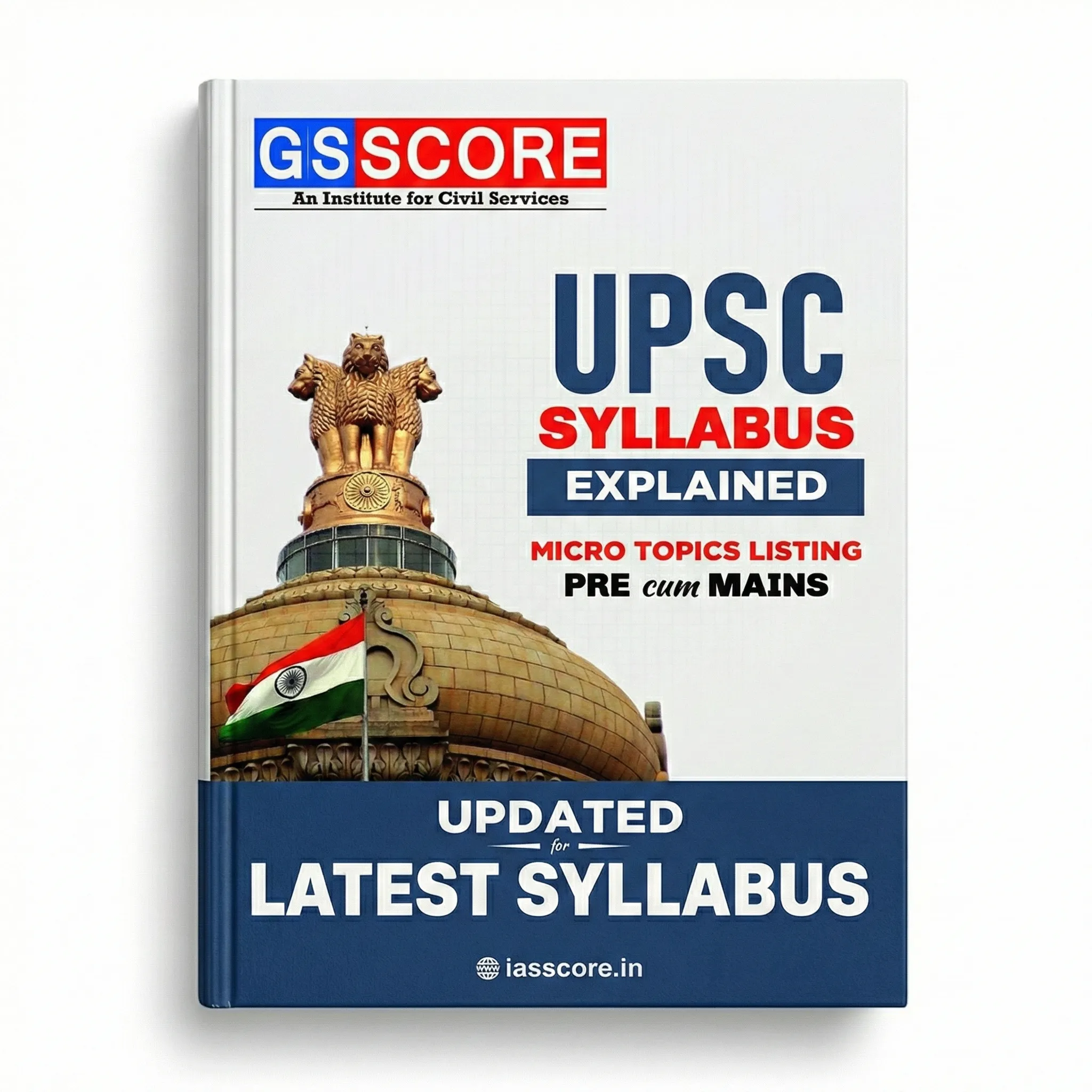
A smart approach is to read Class VIII first (highest conceptual level) and then use VI and VII to fill fundamentals. For a quick, structured revision of how syllabi are laid out, many aspirants also study a compact syllabus booklet to internalise the exact topic list before diving into books.
Topic-Wise Weightage Trend from Previous CTET Papers
Analysis of previous CTET Paper 2 papers shows fairly stable weightage. Use this to prioritise high-yield topics:
| Section | Consistently High-Weightage Topics | Approx. Questions |
|---|---|---|
| Child Development & Pedagogy | Piaget/Vygotsky/Kohlberg, inclusive education, assessment for learning, motivation | 18–22 of 30 |
| Language Pedagogy | Language acquisition, LSRW skills, remedial teaching, comprehension | 12–15 of 30 (each language) |
| Mathematics | Number system, geometry, data handling + pedagogy | 18–22 of 30 |
| Science | The world of the living, how things work, natural phenomena + pedagogy | 18–22 of 30 |
| Social Studies | History (modern India), geography (resources), civics (Constitution & government) | 28–32 of 60 |
The clear takeaway: pedagogy repeats heavily across every section. Candidates who master pedagogy (CDP + subject + language) can lock in nearly half the paper regardless of content difficulty.
Qualifying Marks and Certificate Validity
To be declared CTET-qualified, you must score at least 60% overall (90 out of 150). CBSE gives relaxation to reserved categories as per government norms:
| Category | Qualifying % | Marks (out of 150) |
|---|---|---|
| General | 60% | 90 |
| SC / ST / OBC / PwD | Relaxation as per rules (often ~55%) | ~82 (subject to notification) |
The CTET qualifying certificate is now valid for a lifetime (CBSE removed the earlier 7-year limit). There is no cap on the number of attempts, so you can re-appear to improve your score for competitive recruitment.
Best Books and Free Resources for CTET Paper 2
Your foundation is always the NCERT textbooks. Layer standard reference books on top for pedagogy and practice:
| Section | Recommended Resources |
|---|---|
| Child Development & Pedagogy | NCERT + standard CDP guides; NCF 2005 & RTE 2009 summaries |
| Maths & Science | NCERT VI–VIII + a CTET Maths/Science practice book with pedagogy |
| Social Studies | NCERT History/Geography/Civics VI–VIII + a CTET SST practice set |
| Language I & II | NCERT readers + comprehension & grammar practice + pedagogy notes |
| Practice | Previous 5 years’ CTET papers + full-length mock tests |
Since Paper 2 also rewards current awareness in Social Studies and general reading, aspirants who build a habit of reading a monthly current affairs magazine tend to answer geography, civics and environment questions with more confidence. Serious repeaters targeting multiple teaching and government exams often build a wider PYQ habit using resources like a topic-wise previous-year question toolkit to sharpen question-solving speed.
Section-Wise Preparation Strategy & Time Allocation
With 150 minutes for 150 questions you get roughly one minute per question — so accuracy and time management matter. Here is a practical time-allocation plan for the exam day and a study split for the weeks before:
| Section | Exam-Day Time | Study Priority |
|---|---|---|
| Child Development & Pedagogy | ~25 min | High — scoring, concept-based |
| Language I | ~20 min | Medium — comprehension is quick |
| Language II | ~20 min | Medium |
| Subject (Maths & Science / SST) | ~65 min | Highest — 60 marks |
| Review & buffer | ~20 min | Re-check flagged questions |
Strategy tips: attempt Child Development & Pedagogy first while you are fresh, keep the subject block for the middle when you are warmed up, and always answer every question because there is no negative marking. In the last two weeks, shift entirely to full-length mocks and previous-year papers to build stamina for 150 minutes of continuous focus.
Paper 1 vs Paper 2 Syllabus: Key Differences
If you are deciding which paper to attempt, this comparison makes the difference clear. The pattern (150 marks, 150 minutes, no negative marking) is identical; the syllabus level and the subject structure differ.
| Feature | Paper 1 (Classes I–V) | Paper 2 (Classes VI–VIII) |
|---|---|---|
| Target teaching level | Primary | Elementary / upper-primary |
| CDP | 30 marks | 30 marks |
| Language I & II | 30 + 30 marks | 30 + 30 marks |
| Mathematics | 30 marks (compulsory) | Part of the 60-mark Maths & Science block |
| Environmental Studies | 30 marks (compulsory) | Not a separate section |
| Subject choice | No choice — fixed sections | Choose Maths & Science OR Social Studies (60 marks) |
| Content difficulty | Class I–V level | Class VI–VIII level (higher) |
In short, Paper 2 is more subject-specialised. If your goal is to teach higher classes, choose Paper 2; if you love foundational primary teaching, choose Paper 1; and if you want maximum eligibility, sit for both. To map every topic before you start, a compact syllabus reference booklet helps you see the full structure at a glance.
How to Download the CTET Paper 2 Syllabus PDF
You can download a print-friendly, single-page CTET Paper 2 syllabus in two ways:
- Official source: visit the CBSE CTET portal (ctet.nic.in), open the latest information bulletin, and the full Paper 2 syllabus is included in the appendix — save or print the relevant pages.
- This page: the subject-wise tables above cover the complete, current syllabus. Use your browser’s Print → “Save as PDF” option on this article to create a clean, comprehensive single-file PDF that you can carry offline — it includes CDP, both languages, Maths & Science, Social Studies, weightage and NCERT mapping in one place.
Because the ctet paper 2 syllabus pdf download links on many sites are gated or incomplete, keeping the official bulletin plus this consolidated page is the most reliable combination.
Note on accuracy: the topics above are compiled from the official CBSE CTET information bulletin and the NCERT elementary-stage (Classes VI–VIII) textbooks. CBSE keeps the Paper 2 structure stable year on year, but you should always cross-check the latest CTET notification at ctet.nic.in before finalising your study plan, as marks and qualifying norms are confirmed there.
Mini Practice Set: Sample Questions by Section
Here is a quick taste of the question depth in each section so you know the standard to prepare for:
- CDP: According to Piaget, a child in Classes VI–VIII (11–14 years) typically enters which stage of cognitive development? (Answer: Formal operational stage.)
- Mathematics: The LCM of two co-prime numbers is equal to — (Answer: their product.)
- Science: Which everyday change is a chemical change rather than a physical change? (Answer: e.g., rusting of iron — a concept-testing MCQ that checks conceptual clarity.)
- Social Studies: The Revolt of 1857 began from which cantonment town? (Answer: Meerut.)
- Language Pedagogy: “Language is best acquired, not learnt” — this idea is associated with which approach? (Answer: the acquisition-learning / natural approach.)
Notice that questions blend content with pedagogy — pure factual recall is rare in CDP and language, so practise applied reasoning, not just memorisation.
Common Mistakes to Avoid
- Choosing the wrong 60-mark subject and mismatching it with the teaching post you want.
- Ignoring pedagogy — it silently accounts for nearly half the paper across all sections.
- Skipping NCERT and jumping straight to guidebooks; the content is drawn directly from NCERT.
- Under-practising unseen passages for Language I and II comprehension.
- Leaving questions blank — there is no negative marking, so always guess.
- Neglecting timed mocks and running out of time on the 60-mark subject block.
Frequently Asked Questions
What is the syllabus of CTET Paper 2?
The CTET Paper 2 syllabus has four sections: Child Development & Pedagogy (30 marks), Language I (30 marks), Language II (30 marks), and either Mathematics & Science or Social Studies/Social Science (60 marks). It totals 150 marks and covers content at the Classes VI–VIII (NCERT) level along with subject and language pedagogy.
How many subjects are there in CTET Paper 2?
There are effectively four sections. Child Development & Pedagogy and two languages are compulsory for everyone, and the fourth section is a choice between Mathematics & Science (worth 60 marks) or Social Studies/Social Science (worth 60 marks). You choose only one of these two based on your graduation background and the teaching post you want.
Should I choose Maths & Science or Social Studies in CTET Paper 2?
Choose Mathematics & Science if you are a Maths/Science graduate or want to teach those subjects, and choose Social Studies if you are an arts/humanities graduate. General candidates may pick either — go with your stronger subject. Match your choice to the teacher post you eventually want, since recruiters appoint you for the subject you qualified in.
What is the exam pattern and marking scheme for CTET Paper 2?
CTET Paper 2 has 150 objective MCQs worth 150 marks, to be attempted in 2 hours 30 minutes. Each question carries 1 mark with four options and one correct answer. The marks split is Child Development & Pedagogy 30, Language I 30, Language II 30, and Mathematics & Science or Social Studies 60. There is no negative marking, so every question should be attempted.
Is there negative marking in CTET Paper 2?
No. CTET Paper 2 has no negative marking. Every one of the 150 MCQs carries 1 mark and wrong answers do not cost you anything, so you should attempt all questions — even educated guesses can add to your score.
What are the qualifying marks for CTET Paper 2?
You must score at least 60% overall, which is 90 out of 150 marks, to qualify. SC/ST/OBC and PwD candidates get relaxation as per government norms (often around 55%). The qualifying certificate is valid for a lifetime and there is no limit on attempts.
Which NCERT books are best for CTET Paper 2 preparation?
Use NCERT Mathematics and Science for Classes VI–VIII; History (Our Pasts I–III), Geography (The Earth Our Habitat, Our Environment, Resources and Development) and Social and Political Life I–III for Social Studies; and NCERT language readers for comprehension. Add NCF 2005 and the RTE Act 2009 for pedagogy.
How can I download the CTET Paper 2 syllabus PDF?
Download the official CTET Paper 2 syllabus PDF from the CBSE CTET portal (ctet.nic.in) by opening the latest information bulletin, where the full syllabus appears in the appendix. Alternatively, use your browser’s Print → “Save as PDF” on this page to save a single file with the complete subject-wise syllabus, exam pattern, weightage and NCERT mapping for offline study.
Recommended Study Material



Competer
The Competer team: we pack the orders, so we know which editions aspirants keep coming back for.
Get it printed
SSC study material aspirants order most on Competer, delivered across India
 Parmar SSC GK Polity 4.0 Batch Notes 2026-27 | English Medium Edition₹545View on Competer →
 Parmar SSC GK Geography 4.0 Batch Notes 2026-27 | English Medium Edition₹745View on Competer →
 Parmar SSC GK History 4.0 Batch Notes 2026-27 | English Medium Edition₹745View on Competer →
 Parmar SSC GK Polity in Hindi - 4.0 Batch Notes 2026-27₹545View on Competer →
Continue reading
More in Buying Guides
Need help choosing?
Tell us your exam and stage on WhatsApp, we suggest the right set.