
Best Books for UPSC 2026: Subject & Stage-Wise List
The best books for UPSC 2026: a complete stage-wise and subject-wise booklist, from NCERTs to standard references for Prelims, Mains and optionals.
 Competer
The best books for UPSC are the NCERTs (Class 6–12) for foundation, followed by a tight set of standard references: Laxmikanth for Polity, Spectrum for Modern History, GC Leong for Geography, Ramesh Singh for Economy, Shankar IAS for Environment and Nitin Singhania for Art & Culture. For the 2026 cycle you do not need 60 books — a well-chosen core of about 15–18 titles, read 2–3 times each and backed by monthly current affairs, covers the entire GS syllabus for both Prelims and Mains.
This guide gives you an exhaustive, stage-wise and subject-wise UPSC book list for beginners: what to buy, in what reading order, which edition to pick in 2026, and honest comparisons where two popular books compete. We also flag the “minimum viable” shortlist so you are not overwhelmed on day one.
How This UPSC Booklist Was Built
Every recommendation below reflects two things: the static books that recur in topper interviews year after year, and — more importantly — what a decade of previous-year questions (PYQs) actually tests. Instead of listing every book in the market, we map each title to the questions it generates, flag where a cheaper or free source (NCERT, Economic Survey, 2nd ARC) does the same job, and tell you when a book is optional. The aim is a shortlist you can realistically finish and revise, not a shelf you will admire and abandon.

Why Choosing the Best Books for UPSC Matters
The UPSC Civil Services syllabus is vast but finite. Most toppers credit their success not to reading more books, but to reading fewer books more times. The wrong move for a beginner is buying twenty subject guides, reading each once, and retaining little. The right move is fixing a limited, authoritative booklist, revising it repeatedly, and layering current affairs on top.
NCERTs are the non-negotiable starting point. They build vocabulary, clarity of basic concepts and the conceptual scaffolding on which advanced books rest. An aspirant who skips NCERTs and jumps straight to Laxmikanth or Spectrum often struggles, because the standard references assume you already know the fundamentals. Treat NCERTs as the base layer and standard books as the advanced layer on top.
The Minimum Viable UPSC Booklist (If You Buy Only 10 Books)
Beginners are routinely overwhelmed by 40-item lists. If budget and bandwidth are tight, start with these ten core titles. They cover roughly 70–75% of the GS Prelims and Mains static syllabus. Add the rest only after you have revised these at least twice.
| # | Book | Subject | Stage | Approx. Price (₹) |
|---|---|---|---|---|
| 1 | Indian Polity — M. Laxmikanth | Polity | Prelims + Mains | 700–850 |
| 2 | A Brief History of Modern India — Spectrum | Modern History | Prelims + Mains | 450–550 |
| 3 | Indian Economy — Ramesh Singh | Economy | Prelims + Mains | 750–850 |
| 4 | Certificate Physical & Human Geography — GC Leong | Geography | Prelims + Mains | 350–450 |
| 5 | Environment — Shankar IAS | Environment | Prelims | 450–550 |
| 6 | Indian Art & Culture — Nitin Singhania | Art & Culture | Prelims + Mains | 450–550 |
| 7 | Oxford Student Atlas for India | Geography/Maps | Prelims + Mains | 350–450 |
| 8 | NCERT bundle (History, Geography, Polity, Economy, Science) | Foundation | Both | 1200–1800 |
| 9 | Lexicon / Ethics (for GS IV) | Ethics | Mains | 350–450 |
| 10 | A monthly current affairs magazine | Current Affairs | Both | 199–299/month |
Quick pick for absolute beginners: if even ten feels like a lot in week one, buy the NCERT bundle, Laxmikanth and one current-affairs magazine first. Read those, then add the rest in the order shown. This is your spine. Everything below expands it subject-by-subject and stage-by-stage.
NCERT Books for UPSC Preparation (Class 6–12)
Start here. Read NCERTs in a single focused pass before touching standard references. For most subjects the old NCERT editions are richer than the newer rationalised ones, so many aspirants use both — read the latest edition for facts and keep an old edition for depth. Below is the subject-wise NCERT map with grade levels.
| Subject | NCERT Books & Classes | Why It Matters |
|---|---|---|
| History | Class 6–8 (Our Pasts I–III), Class 11 (Themes in World History), Class 12 (Themes in Indian History I–III) | Builds chronology; Class 12 is core for Ancient & Medieval |
| Geography | Class 6–10, Class 11 (Fundamentals of Physical Geography, India Physical Environment), Class 12 (Fundamentals of Human Geography) | Foundation for GC Leong and map-based questions |
| Polity | Class 9–10 (Democratic Politics I–II), Class 11 (Indian Constitution at Work), Class 12 (Politics in India Since Independence) | Primer before Laxmikanth |
| Economy | Class 9–10, Class 11 (Indian Economic Development), Class 12 (Macroeconomics) | Terminology before Ramesh Singh |
| Science | Class 6–10 (Science) | Covers basic Science & Tech for Prelims |
| Art & Culture | Class 11 (An Introduction to Indian Art), Fine Arts | Pairs with Nitin Singhania |
| Sociology/Society | Class 11–12 (Sociology) | Useful for GS I society portion |
A realistic target: finish the full NCERT set in 45–60 days of serious reading, making short margin notes you can revise later. If you are weak in a subject, read its NCERTs twice before moving up — the hour you spend here saves many later.
Subject-Wise Standard Reference Books for UPSC
Once NCERTs are done, move to the subject wise books for UPSC — the standard references. The table below separates each subject into a basic (foundation) book and an advanced option, so you always know what to read next without over-buying.
| Subject | Basic / Core Book | Advanced / Supplement |
|---|---|---|
| Polity | Indian Polity — M. Laxmikanth | DD Basu — Introduction to the Constitution of India |
| Modern History | Spectrum — A Brief History of Modern India | Bipan Chandra — India’s Struggle for Independence |
| Ancient History | NCERT (old) + RS Sharma — India’s Ancient Past | Nitin Singhania (culture overlap) |
| Medieval History | NCERT + Satish Chandra — Medieval India | Satish Chandra (two-volume set) |
| Geography | GC Leong — Certificate Physical & Human Geography | Oxford School Atlas; NCERT Class 11–12 |
| Economy | Indian Economy — Ramesh Singh | Economic Survey + Sanjiv Verma (basics) |
| Environment | Shankar IAS — Environment | NCERT Biology; India Year Book extracts |
| Art & Culture | Nitin Singhania — Indian Art & Culture | CCRT material; NCERT Fine Arts |
| Science & Tech | NCERT Class 6–10 + current affairs | Monthly magazine S&T sections |
| International Relations | Current affairs + newspaper | Pavneet Singh — International Relations |
| Ethics (GS IV) | Lexicon for Ethics | Subba Rao & P.N. Roy Chowdhury |
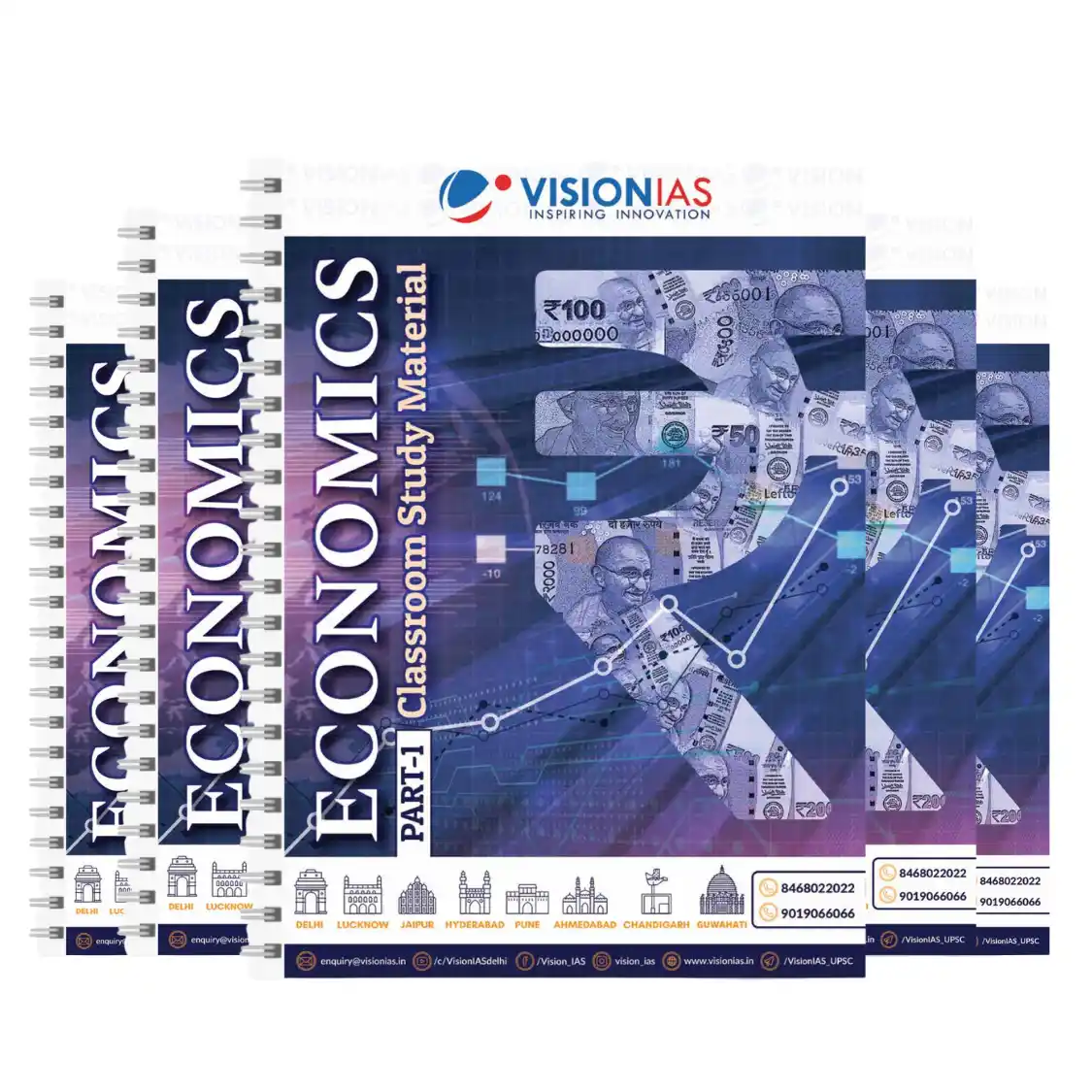
For economy specifically, printed concept notes alongside Ramesh Singh speed up revision; the Vision IAS Economics Notes are a compact companion that summarise the heavy chapters for quick recall before Prelims.
Best Books for UPSC Prelims (GS Paper I + CSAT)
The Prelims is an objective, elimination exam. Your best books for UPSC Prelims must be fact-dense and revision-friendly. This is also the stage where PYQs matter most — analysing a decade of previous-year questions tells you exactly how deep to read each book.
GS Paper I Books
| Subject | Best Books for UPSC Prelims |
|---|---|
| Polity | Laxmikanth + NCERTs |
| History (Modern) | Spectrum + NCERT Class 12 |
| Art & Culture | Nitin Singhania |
| Geography | GC Leong + Oxford Atlas + NCERTs |
| Economy | Ramesh Singh + current affairs |
| Environment & Ecology | Shankar IAS |
| Science & Tech | NCERTs + monthly magazine |
| Current Affairs | 12–18 months of monthly compilations |
CSAT (GS Paper II)
CSAT is qualifying (33%) but trips up many humanities students. Use a single comprehension-and-reasoning book plus timed practice. For aptitude, RS Aggarwal or a dedicated CSAT manual works; the real differentiator is solving papers under a clock. Treat CSAT seriously from the start — a surprising number of strong GS candidates fail Prelims purely on an under-prepared CSAT paper.
PYQ analysis is where most beginners under-invest. A topic-wise PYQ compilation such as the Forum IAS UPSC Prelims Toolkit (Topic-Wise PYQ 1992–2025) lets you map every standard book directly to the questions it actually generates, so you read with purpose instead of cover-to-cover blindly.
Best Books for UPSC Mains (GS I–IV)
Mains is descriptive and demands analysis, multi-dimensionality and the ability to write 150–250 word answers under time pressure. The best books for UPSC Mains overlap heavily with Prelims, but you now read them for arguments and examples rather than isolated facts. Answer-writing practice and good notes matter more than new books here.
| Paper | Core Coverage | Best Books for UPSC Mains |
|---|---|---|
| GS I | History, Art & Culture, Geography, Society | Spectrum, Bipan Chandra, Nitin Singhania, GC Leong, NCERT Sociology |
| GS II | Polity, Governance, IR | Laxmikanth, 2nd ARC reports, Pavneet Singh (IR) |
| GS III | Economy, Environment, S&T, Security | Ramesh Singh, Economic Survey, Shankar IAS, current affairs |
| GS IV | Ethics, Integrity, Aptitude | Lexicon, Subba Rao, case-study practice |
| Essay | Two essays in 3 hours | Curated notes + practice; Vajiram Essay Notes |
For Mains, government sources — the Economic Survey, Budget highlights, and 2nd ARC summaries — are as important as commercial books. Do not buy another market guide when a free primary source covers the same ground better.
Book Battles: Honest Comparisons
Beginners waste weeks deciding between two popular books. Here is a neutral verdict on the most common dilemmas.
| Dilemma | Verdict |
|---|---|
| Spectrum vs Bipan Chandra (Modern History) | Spectrum for Prelims (concise, fact-first); Bipan Chandra for Mains (analytical narrative). Beginners: start with Spectrum. |
| Shankar IAS vs McGraw Hill (Environment) | Shankar IAS is more aligned to Prelims trends and easier to revise. McGraw is deeper but heavier. Pick Shankar. |
| Laxmikanth vs DD Basu (Polity) | Laxmikanth is the default for both stages. Use DD Basu only as a reference lookup, not a primary read. |
| Ramesh Singh vs Sanjiv Verma (Economy) | Sanjiv Verma for absolute beginners; Ramesh Singh as the main book. Many read Verma first, then Ramesh Singh. |
| RS Sharma vs old NCERT (Ancient) | Old NCERT is enough for most; add RS Sharma only if Ancient is weak or you take History optional. |
Best Books for UPSC Optional Subjects
Your optional carries 500 marks and often decides your rank. Choose based on interest, overlap with GS, and availability of guidance — not on “scoring” reputation alone. Below are widely used standard references and notes for the best books for UPSC optional subjects.
| Optional | Commonly Recommended Material |
|---|---|
| PSIR (Political Science & IR) | Shubhra Ranjan / Rajesh Mishra notes; Shubhra Ranjan PSIR Notes |
| Sociology | Haralambos, IGNOU + SS Pandey / Vikash Ranjan notes |
| Geography | Savindra Singh, Majid Husain + Shabbir Sir handwritten notes |
| History | Satish Chandra, Bipan Chandra, RS Sharma + standard notes |
| Public Administration | Mohit Bhattacharya, Nicholas Henry + Vajiram Pub Ad notes |
| Anthropology | Ember & Ember, Nadeem Hasnain + Brain Tree notes |
| Economics | Standard texts + Vajiram Economics Optional booklets |
| Zoology / Chemistry / Commerce | Subject NCERT/graduation texts + coaching modules |
Optional guidance is often scattered across coaching ecosystems. Independent printed note sets — for example the Shubhra Ranjan PSIR notes for Political Science aspirants — let you follow a proven syllabus coverage without enrolling in a full course.
Current Affairs Sources to Pair With Static Books
No static booklist is complete without current affairs, which now drives 30–40% of Prelims questions and almost every Mains answer. Your current-affairs stack should be simple: one daily newspaper (The Hindu or Indian Express), one monthly magazine, and one annual compilation before Prelims. Do not follow five sources — consolidation beats collection.
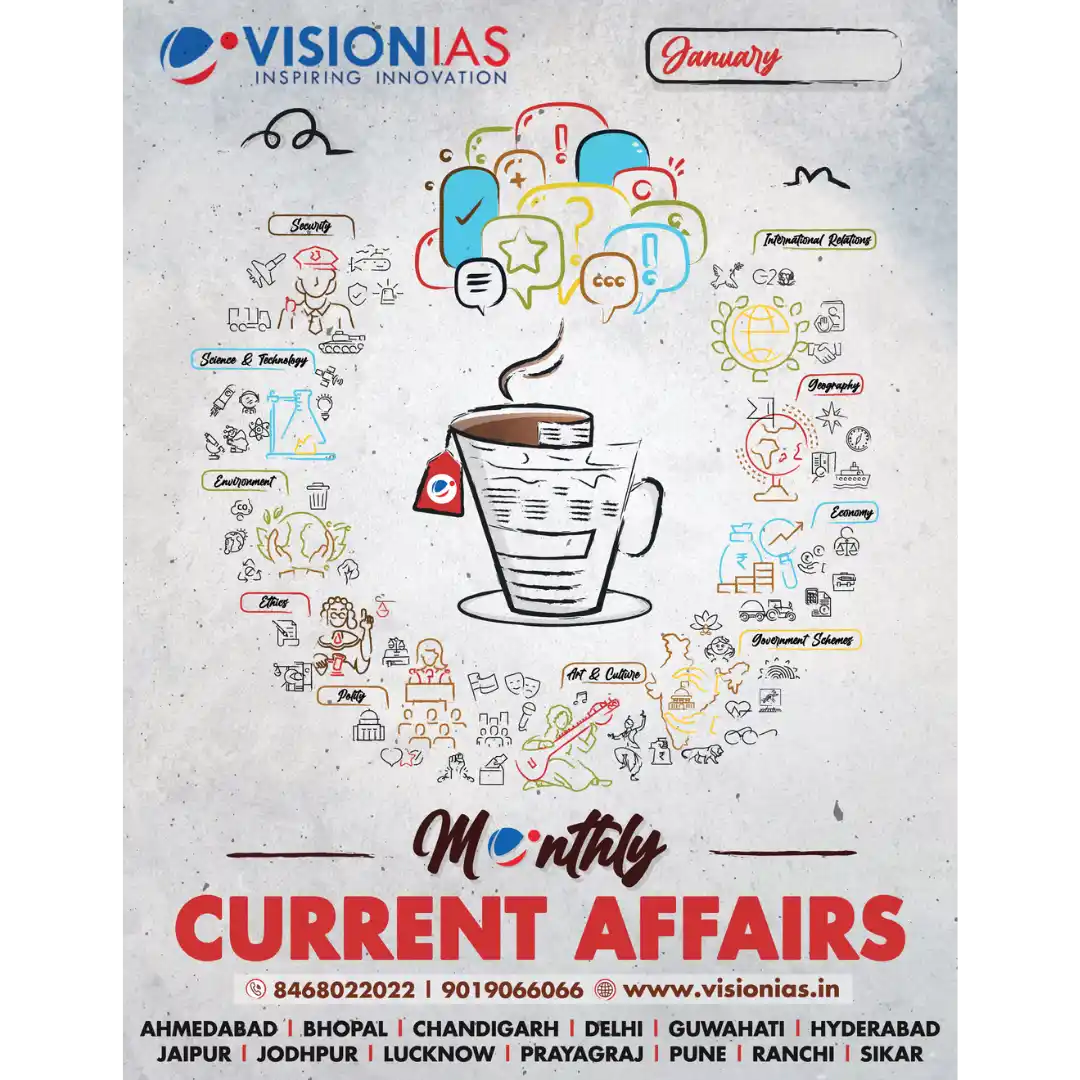
A single reliable monthly magazine such as the Vision IAS Current Affairs Magazine (January 2026) keeps you current without drowning you in daily clutter, and it directly links events back to the static subjects you are already studying.
Hindi-Medium Book Recommendations
Hindi-medium aspirants have strong options; the key is picking authentic Hindi editions rather than rushed translations. Most standard books have official Hindi versions, and several coaching houses publish full Hindi study material.
| Subject | Hindi-Medium Resource |
|---|---|
| Polity | Bharat Ki Rajvyavastha — Laxmikanth (Hindi) |
| Modern History | Spectrum (Hindi) / Drishti notes |
| Geography | Mahesh Kumar Barnwal; GC Leong (Hindi) |
| Economy | Bhartiya Arthvyavastha — Ramesh Singh (Hindi) |
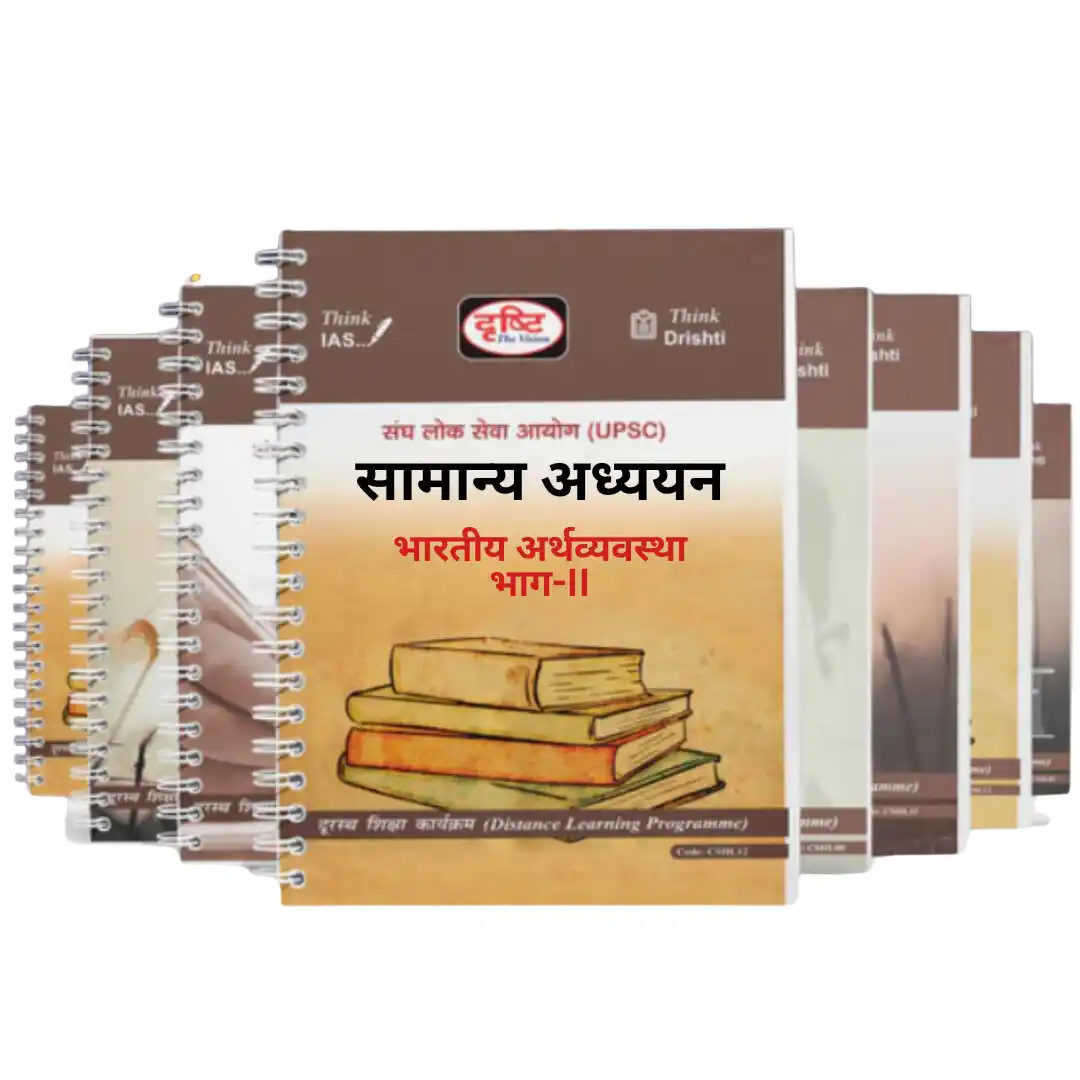
| Full GS package | Drishti IAS Hindi Study Material |
For a consolidated Hindi-medium route, a complete printed GS set like the Drishti IAS Hindi Study Material covers the full syllabus in one language-consistent package, which reduces the friction of stitching together separate Hindi books.
Reading Order and Month-Wise Roadmap
Owning the right books is useless without a sequence. Most beginners read randomly and lose momentum. Follow this reading order: NCERTs first, then standard references subject-by-subject, then PYQs, then current affairs and test series. The roadmap below assumes a 10–12 month first attempt.
| Phase | Months | Focus Books |
|---|---|---|
| Foundation | Month 1–2 | Complete NCERTs (all subjects), Oxford Atlas |
| Core Static | Month 3–5 | Laxmikanth, Spectrum, GC Leong, Ramesh Singh |
| Remaining Static | Month 6–7 | Shankar IAS, Nitin Singhania, Ethics book, IR |
| Integration | Month 8–9 | PYQs + revision + answer writing + current affairs |
| Test & Revise | Month 10–12 | Prelims & Mains test series + 2–3 revisions |
Practice is the force-multiplier. Pair your static reading with a structured test series from the integration phase onward — a Prelims test series converts passive reading into exam-ready recall and exposes gaps no booklist can reveal on its own.
Editions, Buying Tips and Common Mistakes
A few edition and value decisions that most lists ignore can save you real money and marks.
- Buy the latest edition for dynamic subjects. Economy (Ramesh Singh) and Environment change yearly — always get the newest edition. For Polity and History, a one- or two-year-old edition is usually fine.
- Old vs new NCERT: use the latest edition as primary, but keep an old edition for History and Geography where content was trimmed.
- Don’t over-buy. More titles do not equal more marks. Finish your core list twice before adding anything.
- Avoid outdated prints of fast-changing subjects — an economy book two editions behind can carry wrong data on schemes and figures.
- Bundle smartly. Printed note sets and PYQ toolkits often replace several loose guides and are cheaper than buying piecemeal.
- Pair books with PYQs and tests from the start — they tell you how deeply to read each book.
If you prefer a single consolidated GS package over assembling 15 separate books, full printed note sets can be an efficient backbone — just make sure you still read Laxmikanth, Spectrum and the NCERTs alongside them, because nothing fully replaces the standard references.
How Many Books Are Enough to Crack UPSC?
Realistically, 15–20 static books plus current affairs and PYQs are enough to clear both Prelims and Mains. Add one optional subject (3–6 books or note sets) and you have your complete library. The winners are not those with the largest bookshelf but those who revise a limited list until recall is automatic. Buy fewer books, read them more times, and practise relentlessly.
Frequently Asked Questions
Which books are best for UPSC Prelims?
For Prelims, the best books are Laxmikanth (Polity), Spectrum (Modern History), GC Leong with the Oxford Atlas (Geography), Ramesh Singh (Economy), Shankar IAS (Environment), Nitin Singhania (Art & Culture) and the NCERTs, backed by 12–18 months of current affairs and a topic-wise PYQ compilation.
Is NCERT enough for UPSC preparation?
NCERTs are essential but not sufficient on their own. They build the foundation and can clear some easy Prelims questions, but you must layer standard references like Laxmikanth and Spectrum plus current affairs on top to cover the full syllabus and the analytical demands of Mains.
Which book is best for Indian Polity for UPSC?
Indian Polity by M. Laxmikanth is the undisputed best book for Polity for both Prelims and Mains. Read the NCERT Class 9–12 civics books first for fundamentals, then study Laxmikanth two to three times, using DD Basu only as an occasional reference.
Which economy book is best for UPSC?
Indian Economy by Ramesh Singh is the most recommended economy book for UPSC. Absolute beginners can start with Sanjiv Verma’s basics, then move to Ramesh Singh’s latest edition, and supplement with the Economic Survey and monthly current affairs for scheme and data updates.
Which book is best for Art and Culture for UPSC?
Indian Art and Culture by Nitin Singhania is the standard and best book for Art & Culture, covering architecture, dance, music, painting and festivals. Pair it with NCERT’s “An Introduction to Indian Art” (Class 11) for a stronger foundation.
How many books are enough to crack UPSC?
About 15–20 static books, plus current affairs and PYQs, are enough for both Prelims and Mains, with another 3–6 titles for your optional. Reading a limited core list two to three times each beats buying a large number of books you can only read once.
Which books are best for Hindi-medium UPSC aspirants?
Hindi-medium aspirants should use the official Hindi editions of the standard books — Bharat Ki Rajvyavastha (Laxmikanth), Bhartiya Arthvyavastha (Ramesh Singh), Spectrum in Hindi and Mahesh Kumar Barnwal for Geography — or a consolidated Hindi GS package such as Drishti IAS material, choosing authentic editions over rushed translations.
Can I use old editions of recommended UPSC books?
You can use slightly older editions of static subjects like Polity, History and Geography, where content rarely changes. However, always buy the latest edition of dynamic subjects such as Economy and Environment, since schemes, data and policies are updated every cycle.
Recommended Study Material


Competer
The Competer team: we pack the orders, so we know which editions aspirants keep coming back for.
Get it printed
School study material aspirants order most on Competer, delivered across India
 FIITJEE Class 9th & 10th Complete Study Material₹6,499View on Competer →
 R. Paul Chemistry Notes (All Topics)₹2,200View on Competer →
 BANSAL CLASSES [2024 Edition] Study Material for Class 9₹2,499View on Competer →
 Aakash BYJU'S Biology Olympiad Study Package Set of 3 Books 2025 Edition₹1,799
Continue reading
More in Buying Guides



Need help choosing?
Tell us your exam and stage on WhatsApp, we suggest the right set.