

Best Books for NEET 2026: Physics, Chemistry & Biology Booklist
A complete, no-fluff guide to the best books for NEET 2026 — NCERT, references and coaching modules compared subject-wise, with weightage and a prep timeline.
 Competer

Choosing the best books for NEET is the single most important decision an aspirant makes after deciding to attempt the National Eligibility cum Entrance Test, because the right combination of NCERT, reference texts and practice material can be the difference between a 600+ score and a wasted attempt. With over 22 lakh students competing for roughly 1 lakh MBBS seats, your study material has to be sharp, syllabus-aligned and proven. This guide breaks down the best books for NEET 2026 across Physics, Chemistry and Biology, explains the exam pattern and weightage, compares coaching-institute modules, and lays out a realistic preparation timeline so you buy only what genuinely moves your rank.
Understanding the NEET 2026 Exam Pattern Before You Buy Any Book
Before investing in any study material, you must understand exactly what NEET tests. NEET-UG is a single, pen-and-paper (OMR-based) examination conducted by the National Testing Agency (NTA). It is the sole gateway for admission to MBBS, BDS, AYUSH, BVSc and other medical courses across India. The paper is built around three subjects, with Biology carrying double the weight of Physics or Chemistry, which directly shapes which books you should prioritise.
The current pattern follows the standard 720-mark structure with four-option single-correct questions and negative marking. Knowing this helps you pick books that match the question style — pure theory texts alone are not enough; you need MCQ-heavy material too.
| Parameter | Details |
|---|---|
| Mode | Offline (OMR-based, pen and paper) |
| Duration | 3 hours 20 minutes |
| Total Questions | 180 (to be attempted) |
| Total Marks | 720 |
| Subjects | Physics, Chemistry, Biology (Botany + Zoology) |
| Marking Scheme | +4 for correct, −1 for incorrect |
| Medium | 13 languages including English and Hindi |
| Subject | Questions | Marks | Share of Paper |
|---|---|---|---|
| Physics | 45 | 180 | 25% |
| Chemistry | 45 | 180 | 25% |
| Biology (Botany) | 45 | 180 | 25% |
| Biology (Zoology) | 45 | 180 | 25% |
| Total | 180 | 720 | 100% |
Because Biology contributes 360 of the 720 marks, the best books for NEET in Biology must be your top buying priority, followed by Chemistry and then Physics. A complete, syllabus-mapped set such as the Aakash NEET Complete Package covers all three subjects in this proportion, which saves beginners from assembling a patchy mix of titles.
Why NCERT Is the Foundation of the Best Books for NEET
No discussion of the best books for NEET is honest without putting NCERT first. The NTA frames a large share of questions — especially in Biology and Inorganic Chemistry — directly from NCERT lines, diagrams and tables. Every topper interview, every coaching faculty and the NTA syllabus itself confirms that Class 11 and Class 12 NCERT textbooks are non-negotiable.
The challenge is that plain NCERT reading does not convert into marks unless you can recall every line and apply it to MCQs. This is where NCERT-based reference material adds value: it highlights exam-relevant lines, adds previous-year questions next to each concept and turns passive reading into active recall.
| Subject | NCERT Dependence | What to Do |
|---|---|---|
| Biology | Very High (~80–85%) | Line-by-line mastery; memorise diagrams and examples |
| Inorganic Chemistry | Very High | Treat NCERT as the primary source |
| Organic Chemistry | High | NCERT for named reactions + reference for mechanisms |
| Physical Chemistry | Medium | NCERT for concepts + numericals from reference books |
| Physics | Medium | NCERT for theory + heavy numerical practice elsewhere |
To make NCERT exam-ready, a dedicated revision set like Aakash Know Your NCERT maps every NCERT line to potential questions, which is exactly the kind of high-yield support serious aspirants need alongside the original textbooks.
Best Books for NEET Biology (Botany + Zoology)
Biology decides ranks. With 360 marks at stake and a syllabus that rewards memory and precision, the best books for NEET Biology must combine thorough NCERT coverage with diagram-rich explanation and a large MCQ bank. Here is the proven stack.
Core Theory Books
NCERT Class 11 and 12 Biology remain the absolute base. On top of that, Trueman’s Elementary Biology (Volumes 1 and 2) is the long-standing favourite for deeper conceptual reading, especially for topics that NCERT treats briefly. Many aspirants also use Pradeep’s Biology or Dinesh Objective Biology for additional explanation.
MCQ and Revision Books
For practice, chapter-wise objective books and previous-year question compilations are essential. These train you for the speed and trick-question style NEET uses. NCERT-at-fingertips style books are excellent for rapid revision in the final months.
| Book / Resource | Best For | When to Use |
|---|---|---|
| NCERT Biology (11 & 12) | Core foundation | Throughout — first priority |
| Trueman’s Elementary Biology | Deep theory, weak topics | Phase 1–2 of preparation |
| NCERT-based objective books | Line-to-MCQ recall | Throughout + revision |
| Chapter-wise PYQ compilation | Exam pattern, trends | Phase 2–3 |
| Diagram & assertion-reason sets | High-yield question types | Final 3 months |
If you prefer a single, structured Biology module instead of stitching several titles together, coaching-institute sets such as the Motion NEET Modules deliver chapter-wise theory plus graded exercises that mirror the actual exam, which is ideal for self-study aspirants without a coaching seat.
Best Books for NEET Chemistry (Physical, Organic, Inorganic)
Chemistry is the most scoring subject for disciplined students because it splits cleanly into three branches, each needing a different approach. The best books for NEET Chemistry should therefore be chosen branch-by-branch rather than as one generic title.
Inorganic Chemistry
Inorganic is almost entirely NCERT-driven. NCERT Class 11 and 12 are sufficient for theory; supplement only with a concise reference like J.D. Lee (adapted for NEET) for periodic-table and coordination-compound clarity if needed.
Organic Chemistry
Organic rewards conceptual understanding of mechanisms. NCERT plus a reasoning-based reference (Himanshu Pandey for problems, or Morrison & Boyd for depth) builds the reaction intuition NEET tests. Avoid going too JEE-deep here; NEET organic is closer to NCERT.
Physical Chemistry
Physical chemistry is numerical-heavy. After NCERT, use a problem-focused book such as N. Awasthi or OP Tandon for solved and unsolved numericals across mole concept, thermodynamics, equilibrium and electrochemistry.
| Branch | Recommended Approach | Reference Beyond NCERT |
|---|---|---|
| Inorganic | NCERT mastery + memory | Concise NEET-oriented notes |
| Organic | Mechanism understanding | Himanshu Pandey / Morrison & Boyd |
| Physical | Numerical practice | N. Awasthi / OP Tandon |
For students who want all three branches sequenced and exercised in one place, the Careerwill NEET Modules present Chemistry as graded modules with worked examples, which removes the guesswork of mixing four separate authors.
Best Books for NEET Physics — The Rank-Deciding Subject
Physics is where most NEET aspirants lose marks, simply because it demands numerical fluency and concept application under time pressure. The best books for NEET Physics must therefore be numerical-rich and concept-clear, not theory-only.
Start with NCERT Class 11 and 12 to lock the concepts and formulae. Then move to a concept builder — Concepts of Physics by H.C. Verma (Volumes 1 and 2) is the gold standard for building reasoning. For NEET-specific practice and difficulty calibration, DC Pandey’s Objective Physics or the NEET-tuned exercise modules from coaching institutes work best, since pure JEE material can be too advanced and time-consuming.
| Book | Strength | Caution |
|---|---|---|
| NCERT Physics 11 & 12 | Formulae, basic theory | Insufficient alone for numericals |
| H.C. Verma (Vol 1 & 2) | Concept building, reasoning | Some chapters exceed NEET need |
| DC Pandey Objective Physics | NEET-level MCQs | Use selectively by chapter |
| NEET coaching modules | Pattern-matched practice | Best for guided self-study |
A practical tip: do not attempt every problem in every Physics book. Identify high-weightage chapters (Mechanics, Electrodynamics, Modern Physics) and drill those first. Coaching modules such as those in the Aakash NEET Complete Package already prioritise chapters by exam weightage, which is a big time-saver.
Subject-Wise Weightage: Where to Focus Your Books
Not all chapters are equal. Allocating your study time and book practice by weightage is what separates efficient toppers from students who finish the syllabus but still score average. Below is an indicative high-weightage map based on recent NEET trends. Treat it as a guide, not a guarantee — NTA can shift emphasis year to year.
| Subject | High-Weightage Chapters |
|---|---|
| Physics | Mechanics, Electrodynamics, Modern Physics, Optics, Thermodynamics |
| Chemistry | Organic (GOC, Hydrocarbons), Chemical Bonding, Coordination Compounds, Equilibrium, Thermodynamics |
| Botany | Plant Physiology, Genetics, Cell Biology, Morphology, Ecology |
| Zoology | Human Physiology, Biomolecules, Animal Kingdom, Reproduction, Evolution |
Notice how Human Physiology and Genetics dominate Biology — these two areas alone can fetch 40–50 marks. Your best books for NEET strategy should ensure these chapters get extra MCQ practice and revision passes.
Coaching-Institute Modules vs Market Books: Which to Choose
One of the most common questions aspirants ask is whether to buy standard market books (HC Verma, Trueman’s, etc.) or coaching-institute modules (Aakash, Allen, Motion, Careerwill, PW). The honest answer: both have a place, and the best choice depends on whether you are self-studying or attending coaching.
When Coaching Modules Win
Coaching modules are syllabus-mapped, pre-prioritised by weightage, and include graded exercises from easy to advanced with answer keys. For a self-study aspirant, this structure replaces the missing teacher — you don’t have to guess what to study or in what order. They also stay updated with the latest NTA pattern.
When Market Books Win
Market reference books often explain difficult single topics more deeply (HC Verma for Physics reasoning, Morrison & Boyd for organic depth). They are best used as supplements for weak areas rather than as your primary spine.
| Factor | Coaching Modules | Market Reference Books |
|---|---|---|
| Syllabus alignment | Excellent | Variable |
| Difficulty grading | Built-in (easy→hard) | Often uneven |
| Best for | Self-study spine | Topic-specific depth |
| MCQ practice | Extensive, pattern-matched | Depends on title |
| Updated to NTA pattern | Yes, edition-wise | Slower |
For most aspirants, the smartest setup is a complete coaching module set as the backbone — browse the full NEET study material range — plus one or two market books for your weakest subject. This gives you structure without overspending on duplicate content.
Comparing the Best Books for NEET Module Sets Available
Among coaching-institute packages, four sets are consistently popular with self-study NEET aspirants. Each has a slightly different strength, so match the set to your starting level and the subject you struggle with most.
| Module Set | Best Suited For | Key Strength |
|---|---|---|
| Aakash NEET Complete Package | Aspirants wanting one all-in-one set (35 booklets) | Full PCB coverage, weightage-prioritised |
| Motion NEET Modules | Class 11 + 12 integrated self-study | Chapter-wise theory + graded exercises |
| Careerwill NEET Modules | Concept-first learners | Clear explanations, worked examples |
| Aakash Know Your NCERT | NCERT-line revision and recall | Maps every NCERT line to questions |
A balanced shortlist for a typical dropper or serious Class 12 student is: one complete module package for structured PCB coverage, the Know Your NCERT set for high-yield Biology and Inorganic recall, plus HC Verma if Physics is a weak point. This covers the full spectrum of question types without redundancy.
A Realistic NEET Preparation Timeline Using These Books
Owning the best books for NEET means nothing without a phased plan. Below is a practical timeline you can adapt whether you have 12 months or are a dropper with a full year dedicated to the exam.
| Phase | Duration | Focus |
|---|---|---|
| Phase 1 — Foundation | Months 1–4 | NCERT + module theory, chapter-wise basics, formula sheets |
| Phase 2 — Application | Months 5–8 | Graded MCQs, PYQs, topic tests, weak-area reference books |
| Phase 3 — Mastery | Months 9–11 | Full-length mock tests, revision, NCERT line-by-line recall |
| Phase 4 — Final Sprint | Last 30 days | Quick-revision notes, error log, mocks under exam timing |
Throughout all phases, maintain an error notebook — every wrong MCQ goes in with the correct concept. In the final month, revise from this notebook and your NCERT-revision set rather than starting new books. New material in the last 30 days creates panic, not marks.
Common Mistakes Aspirants Make When Choosing Books
Even with access to the best books for NEET, students sabotage their preparation with avoidable buying and study errors. Avoid these and you are already ahead of most of the competition.
- Buying too many books: Five Physics books is worse than one mastered. Depth beats collection.
- Skipping NCERT: Jumping straight to reference books without NCERT mastery loses easy Biology and Inorganic marks.
- Using JEE-level material: Over-tough Physics and Chemistry books waste time on questions NEET will never ask.
- Ignoring PYQs: Previous-year questions reveal the exact pattern; skipping them is a major mistake.
- No revision plan: Reading once is not learning. Plan 3–4 revision passes per chapter.
- Neglecting mock tests: Books build knowledge; mocks build exam temperament and time management.
The fix for most of these is structural: pick a focused, syllabus-aligned spine from the NEET study material collection, add NCERT and PYQs, and commit to revision rather than constant new purchases.
How to Build Your Final Booklist Within Budget
You do not need to spend a fortune to assemble the best books for NEET. A disciplined, minimal stack outperforms an expensive, scattered pile. Here is a sensible budget-aware blueprint by aspirant type.
| Aspirant Type | Recommended Stack |
|---|---|
| Class 11 beginner | NCERT + one complete module set; build habits early |
| Class 12 student | NCERT + module set + Know Your NCERT for revision |
| Dropper / repeater | Full module package + PYQs + HC Verma for Physics + mocks |
| Strong but stuck at plateau | NCERT recall set + assertion-reason MCQs + intensive mocks |
The principle is the same across all types: one strong spine, NCERT mastery, targeted reference for weak subjects, and relentless practice. Resist the urge to keep buying — your rank improves through revision and mocks, not through a bigger bookshelf.
Frequently Asked Questions
Which is the best book for NEET Biology?
NCERT Class 11 and 12 Biology are the most important books, as roughly 80–85% of NEET Biology questions come from them. Supplement NCERT with Trueman’s Elementary Biology for deeper theory and a chapter-wise objective/PYQ book for MCQ practice. An NCERT-revision set helps convert reading into recall.
Is NCERT enough to crack NEET?
NCERT is sufficient for most of Biology and Inorganic Chemistry, but not enough on its own for Physics numericals, Physical Chemistry problems and Organic mechanisms. You need NCERT as the foundation plus reference or coaching-module material and extensive MCQ practice to reach a competitive score.
Are coaching modules better than market books for NEET?
For self-study aspirants, coaching modules are usually better as the primary spine because they are syllabus-mapped, weightage-prioritised and include graded exercises. Market reference books like HC Verma are best used as supplements for specific weak topics rather than as your main study source.
Which books are best for NEET Physics?
Start with NCERT for formulae and theory, then use H.C. Verma’s Concepts of Physics for concept building and DC Pandey or NEET-tuned coaching modules for pattern-matched MCQ practice. Avoid going too JEE-deep, and prioritise high-weightage chapters like Mechanics and Modern Physics.
How many books should I buy for NEET preparation?
Keep it minimal: NCERT for all subjects, one complete coaching-module set as your spine, a PYQ compilation, and one or two reference books only for your weakest subject. Mastering a small, focused stack with multiple revisions beats owning many books you never finish.
When should I start solving previous-year questions for NEET?
Begin PYQs once you have completed the basic theory of a chapter, ideally from Phase 2 of your preparation onwards. Solving previous-year questions early reveals the exam pattern and high-frequency topics, helping you focus your remaining study time on what NEET actually asks.

Competer
The Competer team: we pack the orders, so we know which editions aspirants keep coming back for.
Get it printed
NEET study material aspirants order most on Competer, delivered across India
 Careerwill NEET Study Module Set (English Medium) | Complete Syllabus | 23 Modules | 4200+ Pages | Mindmaps | Updated With Latest NTA Pattern | Designed By Kota Best NEET Faculties₹2,799
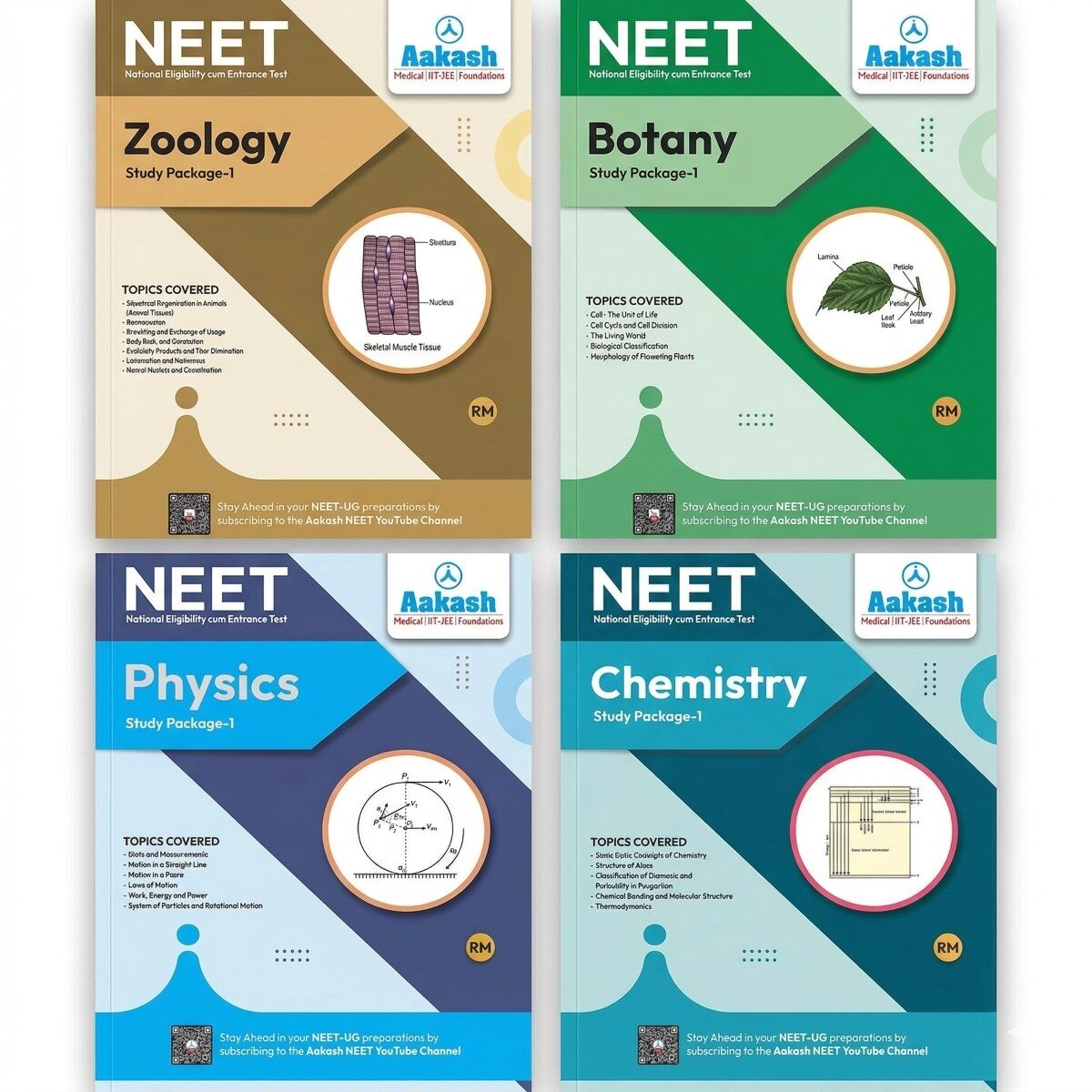 Aakash NEET 11th+12th Complete 17 Book Set | Edition 2026₹4,999
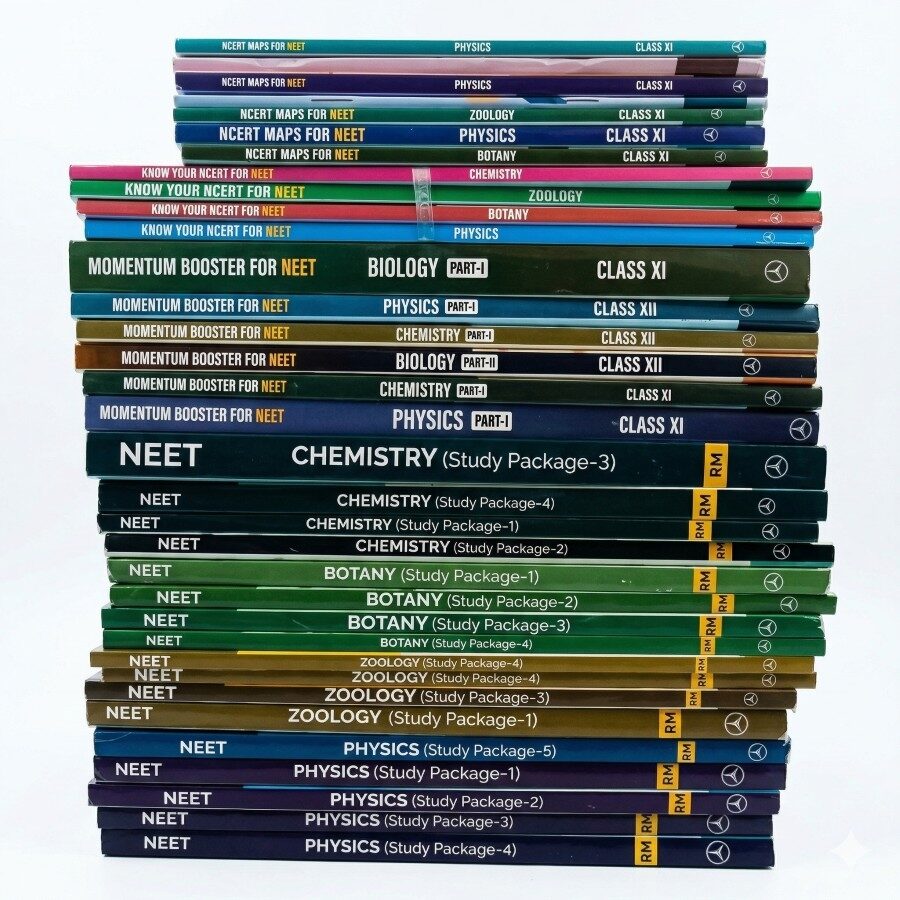 Aakash NEET Medical Complete Package Set of 35 Booklets | 2026 Edition₹9,999
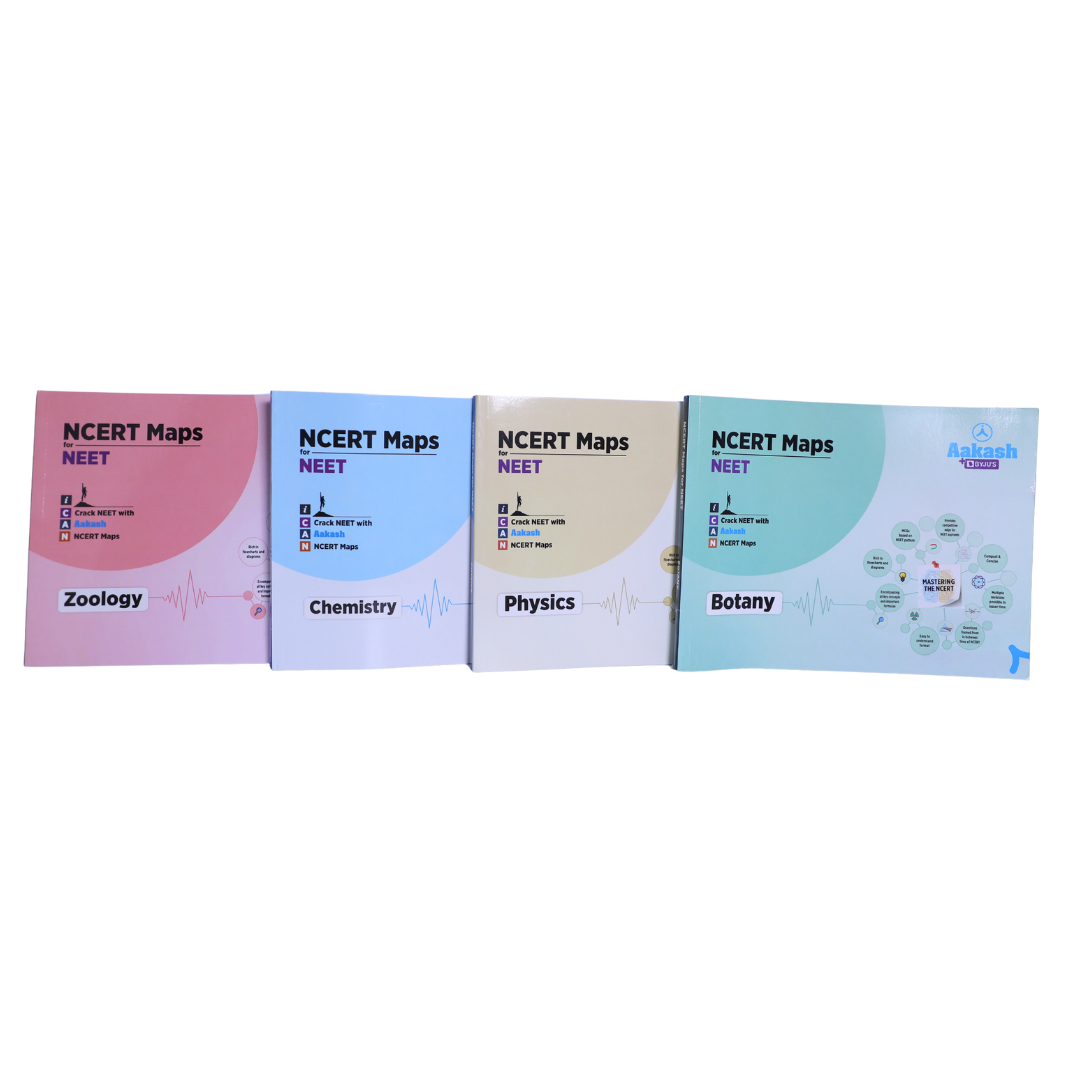 Aakash NCERT Maps for NEET Complete 4 Book Set Edition 2025 English₹1,600
Continue reading
More in NEET Preparation



Need help choosing?
Tell us your exam and stage on WhatsApp, we suggest the right set.