

Best Books for Banking Exams 2026: Subject-Wise List (IBPS & SBI PO/Clerk)
Best books for banking exams 2026 — subject-wise & exam-wise list for IBPS PO, SBI PO and Clerk with authors, publishers, prices, reading order and budget combos.
 Competer

The best books for banking exams in 2026 are a lean set of 4–6 titles: R.S. Aggarwal’s Quantitative Aptitude and A Modern Approach to Verbal & Non-Verbal Reasoning for fundamentals, Rajesh Verma’s Fast Track Objective Arithmetic or M. Tyra’s Magical Book on Quicker Maths for speed, S.P. Bakshi’s Objective General English (with Wren & Martin and Norman Lewis) for English, and Lucent’s General Knowledge plus an Arihant/Disha banking-awareness guide for GA. For IBPS PO, SBI PO and both Clerk cadres you need only this core set — not a shelf of overlapping guides — paired with a current test series for mocks.
This guide gives you an honest, subject-wise and exam-wise booklist with authors, publishers, latest editions, approximate 2026 prices, reading order, budget combos, and the few topics you should learn from mocks rather than books. It is written specifically for IBPS, SBI, RBI and RRB PO and clerk aspirants preparing at home in 2026.
Key takeaways at a glance:
- Best overall combo: R.S. Aggarwal (Quant + Reasoning) + S.P. Bakshi (English) + Lucent GK + Arihant/Disha Banking Awareness.
- Best quant book: R.S. Aggarwal for concepts; add Rajesh Verma or M. Tyra for speed and Arun Sharma for Mains DI.
- Best English book: S.P. Bakshi’s Objective General English.
- Best GA/banking awareness: Lucent GK + a banking-awareness guide + a monthly current-affairs source.
- Books vs mocks: aim for ~60% practice, 40% concept-building; DI and comprehension improve faster through mocks.
Why choosing the right books for bank exam preparation matters
Bank exams are speed-and-accuracy tests, not knowledge dumps. In IBPS PO Prelims you solve 100 questions in 60 minutes — roughly 36 seconds per question. The right book teaches shortcuts, builds a question bank for practice, and matches the current pattern; the wrong book wastes months on topics that are no longer asked or drowns you in theory you will never use under a timer.
The single biggest mistake aspirants make is buying too many books. One R.S. Aggarwal fully solved beats ten half-read guides. Choose a lean, trusted set for bank exam preparation, finish it, and spend the saved money and time on mock tests. That is the core philosophy behind every recommendation below.

Bank exam pattern 2026: Prelims vs Mains and subjects to cover
Almost every major bank exam — IBPS PO, IBPS Clerk, SBI PO, SBI Clerk, IBPS RRB — follows a two-tier Prelims + Mains structure (clerk cadres have no interview; PO cadres add an interview). Knowing which sections appear in which stage tells you exactly which book to buy for which purpose.
| Stage | Sections | Typical marks | Key skills tested |
|---|---|---|---|
| Prelims | Quantitative Aptitude, Reasoning Ability, English Language | 100 | Speed, accuracy, basic concepts |
| Mains | Reasoning + Computer Aptitude, Data Analysis & Interpretation, General/Economy/Banking Awareness, English | 200 | Depth, DI, current affairs, applied reasoning |
| Descriptive (PO Mains) | Letter & Essay writing | 25 | Written English, structure |
| Interview (PO only) | Personality, banking knowledge | 100 (weighted) | Awareness, communication |
The five subjects you must cover: Quantitative Aptitude, Reasoning Ability, English Language, General & Banking Awareness, and Computer Awareness. Prelims draws from the first three; Mains adds the last two plus Data Interpretation and descriptive writing. Build your booklist around this map, not around whatever is bestselling this week.
Best books for banking exams: the master subject-wise list
Here is the consolidated set of the best books for banking exams in 2026 with authors and publishers. Treat it as your shopping shortlist; detailed pros and cons follow in each subject section.
| Subject | Book | Author | Publisher | Best for |
|---|---|---|---|---|
| Quant (concepts) | Quantitative Aptitude | R.S. Aggarwal | S. Chand | Fundamentals + practice bank |
| Quant (speed) | Fast Track Objective Arithmetic | Rajesh Verma | Arihant | Shortcuts, arithmetic |
| Quant (tricks) | Magical Book on Quicker Maths | M. Tyra | BSC Publishing | Time-saving tricks |
| Reasoning | A Modern Approach to Verbal & Non-Verbal Reasoning | R.S. Aggarwal | S. Chand | All-round reasoning |
| Reasoning (puzzles) | Analytical Reasoning | M.K. Pandey | BSC Publishing | High-level puzzles/seating |
| English (grammar) | Objective General English | S.P. Bakshi | Arihant | Grammar + practice |
| English (rules) | High School English Grammar & Composition | Wren & Martin | S. Chand | Grammar reference |
| English (vocab) | Word Power Made Easy | Norman Lewis | Goyal/Penguin | Vocabulary building |
| General Awareness | General Knowledge | Lucent | Lucent Publications | Static GK |
| Banking Awareness | Banking Awareness | — | Arihant / Disha | Banking + economy |
| Computer | Objective Computer Awareness | — | Arihant / Kiran | Computer MCQs |
Best quantitative aptitude books for bank exams
Quant decides most results because it is where aspirants lose the most time. Your goal is concept + shortcut + heavy practice, especially on arithmetic (percentages, ratio, profit-loss, time-speed-distance, interest) and Data Interpretation. The best quantitative aptitude book for bank exams for building concepts remains R.S. Aggarwal, layered with a speed title.
| Book | Author / Publisher | Difficulty | Approx. price | Pros | Cons |
|---|---|---|---|---|---|
| Quantitative Aptitude | R.S. Aggarwal / S. Chand | Beginner–Moderate | ₹400–700 | Huge practice set, clear basics | Few modern DI/caselet sets |
| Fast Track Objective Arithmetic | Rajesh Verma / Arihant | Moderate | ₹350–550 | Best for arithmetic shortcuts | Lighter on advanced DI |
| Magical Book on Quicker Maths | M. Tyra / BSC | Moderate | ₹300–450 | Time-saving calculation tricks | Not a primary practice book |
| Data Interpretation | Arun Sharma / McGraw Hill | Advanced | ₹500–700 | Strong DI for Mains | Overkill for Prelims only |
Is R.S. Aggarwal enough for bank exam quantitative aptitude?
R.S. Aggarwal is enough to build concepts and clear Prelims-level arithmetic, but it is not enough on its own for Mains. It is light on modern Data Interpretation (caselet, missing-table, arithmetic DI) and on the latest exam-style quant. Use R.S. Aggarwal as your base, add Rajesh Verma or M. Tyra for speed, and get DI practice from a dedicated DI book or — better — from a current test series that mirrors the real pattern. Think of R.S. Aggarwal as the foundation, not the finish line.
Best reasoning ability books for bank exams
Reasoning is the most scoring section once you master the puzzle and seating-arrangement patterns that now dominate both Prelims and Mains. Concepts are limited; practice volume is everything.
| Book | Author / Publisher | Best for | Approx. price |
|---|---|---|---|
| A Modern Approach to Verbal & Non-Verbal Reasoning | R.S. Aggarwal / S. Chand | Complete coverage of all reasoning types | ₹450–650 |
| Analytical Reasoning | M.K. Pandey / BSC | High-level puzzles, syllogism, blood relations | ₹300–450 |
| A New Approach to Reasoning | B.S. Sijwali / Arihant | Verbal + non-verbal + analytical in one | ₹400–550 |
Reading order for reasoning: start with R.S. Aggarwal for breadth, then move to M.K. Pandey for the heavy puzzle and seating-arrangement sets that decide the section in IBPS PO and SBI PO Mains. Non-verbal reasoning (figures/series) matters more for SBI Clerk-style papers; skim it lightly for PO.
Best English book for banking exams
English has shifted from pure grammar MCQs to reading-comprehension-heavy, error-spotting, para-jumble and cloze-test formats. You need one grammar book, one vocabulary book, and daily reading of a national newspaper — nothing more.
| Book | Author / Publisher | Use it for | Approx. price |
|---|---|---|---|
| Objective General English | S.P. Bakshi / Arihant | Primary grammar + practice for all sections | ₹350–550 |
| High School English Grammar & Composition | Wren & Martin / S. Chand | Grammar rules reference | ₹300–450 |
| Word Power Made Easy | Norman Lewis | Vocabulary & roots for cloze/vocab | ₹150–250 |
| Descriptive English | S.P. Bakshi / S.C. Gupta (Arihant) | PO Mains letter & essay writing | ₹300–450 |
Which is the best book for English for banking exams?
S.P. Bakshi’s Objective General English (Arihant) is the single best all-round English book for bank exams — it covers grammar, vocabulary and verbal ability with ample practice. Pair it with Wren & Martin when you need a rule clarified and Norman Lewis for vocabulary. For PO Mains, add a dedicated Descriptive English book because essay and letter writing cannot be learned from objective guides. Honest note: reading comprehension and para-jumbles improve faster through daily newspaper reading and mock tests than through any single book.
Best banking awareness and current affairs books
General Awareness (GA) is the highest return-on-effort section in Mains: it is fast to answer and heavily weighted. It splits into static GK, banking/financial awareness, and current affairs (roughly the last 6 months, with banking and economy events prioritised).
| Resource | Covers | Why it matters | Approx. price |
|---|---|---|---|
| Lucent General Knowledge | Static GK (history, geography, polity, science) | Compact one-stop static reference | ₹250–350 |
| Banking Awareness (Arihant/Disha) | Banking terms, RBI, financial system | Core banking-specific marks | ₹300–450 |
| Monthly current affairs magazine/PDF | Last 6 months of events | Recency — cannot come from old books | ₹150–300/month |
| Static Banking & Economy capsule | Budget, schemes, appointments | Quick Mains revision | Often free/bundled |
Because current affairs must be recent, a printed static book can never be your current-affairs source. Aspirants who also sit UPSC/state PCS often reuse a monthly current-affairs magazine for the banking GA overlap — the Vision IAS Current Affairs Magazine January 2026 and the December 2025 edition are useful for the national, economy and scheme coverage that banking GA also tests. For bank-specific banking awareness, still rely on an Arihant/Disha banking guide plus a daily banking news capsule.
Which book is best for banking awareness and general awareness?
Lucent’s General Knowledge is the best static GK book for bank exams, and an Arihant or Disha Banking Awareness guide is best for banking/financial awareness. For the current-affairs portion, use a monthly magazine or daily PDFs covering the last six months — never an outdated edition. Together these three cover the entire GA section of IBPS and SBI Mains.
Best book for computer awareness for bank exams
Computer Awareness appears mainly in Mains (often merged with Reasoning as “Reasoning & Computer Aptitude”) and in SBI/IBPS Clerk Mains. It is high-scoring and fact-based, so one objective guide plus revision is enough.
| Book | Publisher | Best for | Approx. price |
|---|---|---|---|
| Objective Computer Awareness | Arihant | Complete MCQ coverage | ₹200–350 |
| Computer Awareness | Kiran Publications | PYQ-based practice | ₹200–300 |
| Lucent Computer Book | Lucent | Concise theory | ₹150–250 |
What to study: computer fundamentals, hardware/software, MS Office, networking and internet basics, DBMS basics, abbreviations, and security terms. Do not over-invest — 7–10 days of focused study on one book comfortably covers this section.
Exam-wise best books: IBPS PO, SBI PO, Clerk, RBI and RRB
This is the gap most booklists ignore: the same subject needs different depth across exams. The best books for IBPS PO and clerk differ in intensity from the best books for SBI PO and clerk — SBI PO and RBI Grade B are harder and more analytical; clerk exams reward speed over depth; IBPS RRB adds Hindi-language relevance for rural-belt aspirants.
| Exam | Difficulty | Focus books to add | What to emphasise |
|---|---|---|---|
| IBPS PO | Moderate–High | R.S. Aggarwal + Rajesh Verma + S.P. Bakshi + Banking Awareness | Puzzles, DI, descriptive |
| SBI PO | High | Add Arun Sharma DI + M.K. Pandey + Descriptive English | High-level DI & reasoning, essay |
| IBPS Clerk | Moderate | R.S. Aggarwal + S.P. Bakshi + Lucent GK | Speed, accuracy, no interview |
| SBI Clerk | Moderate | Same as IBPS Clerk + Computer Awareness | Speed + computer section |
| RBI Grade B | Very High | Add Economic & Social Issues + Finance & Management guides | ESI, F&M, current economy |
| IBPS RRB PO/Clerk | Moderate | Core set + Hindi-language guide | Quant & reasoning heavy, regional language |
Which is the best book for IBPS PO / SBI PO?
For IBPS PO, the best combination is R.S. Aggarwal (Quant), Rajesh Verma Fast Track (shortcuts), R.S. Aggarwal Reasoning, S.P. Bakshi (English) and an Arihant Banking Awareness guide. For the tougher SBI PO, add Arun Sharma’s Data Interpretation, M.K. Pandey’s Analytical Reasoning for high-level puzzles, and a dedicated Descriptive English book for the essay-letter paper. Both exams are ultimately won on mock-test practice, so budget for a test series alongside these books.
Prelims-only vs Mains-only book guidance
Buy by stage, not in bulk. Many aspirants waste money on advanced DI or descriptive books while still struggling with Prelims basics.
| Stage | Priority books | Skip for now |
|---|---|---|
| Prelims | R.S. Aggarwal Quant, R.S. Aggarwal Reasoning, S.P. Bakshi English | Advanced DI, Descriptive, Computer, deep GA |
| Mains | Arun Sharma DI, M.K. Pandey puzzles, Banking Awareness, Computer, Descriptive English | Basic-level arithmetic drills |
For Mains Data Interpretation specifically, a current test series beats any book because DI sets change every cycle. For the Descriptive paper, practise 2–3 essays and letters weekly and get them evaluated — a book gives you formats, not feedback.
Budget starter kit: minimum books under ₹1,500
You do not need to spend ₹5,000 on books. A disciplined aspirant can start with a 4-book kit and add Mains titles only after clearing Prelims mocks.
| Kit | Books | Approx. cost | Best for |
|---|---|---|---|
| Starter (4 books) | R.S. Aggarwal Quant, R.S. Aggarwal Reasoning, S.P. Bakshi English, Lucent GK | ₹1,300–1,800 | Prelims foundation |
| Speed add-on | + Rajesh Verma or M. Tyra | +₹350–500 | Calculation speed |
| Mains add-on | + Banking Awareness, Computer, Descriptive, DI | +₹1,200–1,800 | After clearing Prelims |
| Current affairs | Monthly magazine/PDF | ₹150–300/month | GA recency (all stages) |
Rule of thumb: one book per subject for Prelims, add Mains-specific titles later, and never buy two books for the same subject hoping one will be “better” — finish the first.
Are books enough to crack bank exams, or do you need a test series?
Honestly: books are necessary but not sufficient. Books build concepts and give you a question bank; they cannot teach exam temperament, time management across sections, or sectional cut-off strategy under a timer. Those are learned only through full-length mocks. The winning formula is roughly 60% practice (mocks + previous year papers) and 40% concept-building from books, especially in the final two months.
Two subjects are better learned through mocks than books: Data Interpretation (patterns change every cycle) and reading comprehension / para-jumbles (speed comes from volume, not theory). If you also appear for UPSC prelims, a disciplined mock habit from a product like the Vision IAS Prelims Test Series builds the same timed-exam temperament that bank prelims demand. For bank-specific mocks, choose a banking test series that mirrors the exact IBPS/SBI pattern.
Hindi-medium book options for Hindi-belt aspirants
Hindi-medium aspirants (especially for IBPS RRB and regional recruitment) have strong equivalents, so language should never be a barrier.
| Subject | Hindi-medium option |
|---|---|
| Quantitative Aptitude | R.S. Aggarwal (Hindi edition), Rakesh Yadav |
| Reasoning | R.S. Aggarwal Reasoning (Hindi), Kiran Reasoning (Hindi) |
| English | Objective English with Hindi explanations (Arihant/Kiran) |
| General Awareness | Lucent Samanya Gyan (Hindi) |
| Computer | Lucent Computer (Hindi) |
Lucent’s Hindi Samanya Gyan is a staple for the Hindi belt, and R.S. Aggarwal’s quant and reasoning are both available in Hindi, so Hindi-medium aspirants can use the same proven set.
Reading order, how to use each book, and common mistakes
Owning the right books is half the job; using them in the right order is the other half.
- Weeks 1–4: Build quant and reasoning basics from R.S. Aggarwal; read one English grammar chapter and 20 Norman Lewis words daily.
- Weeks 5–8: Layer in speed — Rajesh Verma / M. Tyra shortcuts; start one sectional test a day.
- Weeks 9–12: Begin GA (Lucent + banking awareness + monthly current affairs) and shift to full-length mocks; after Prelims, add DI, Computer and Descriptive books.
Common mistakes to avoid: buying 8–10 overlapping books; collecting books but skipping mocks; ignoring previous year papers; starting current affairs too late (it must be rolling, last 6 months); and reading quant theory without timed practice. Fewer books, more practice, consistent revision.
Free and official sources to use alongside paid books
Do not pay for what is free. Combine your books with these official and free resources:
- IBPS and SBI official notifications — the only authoritative source for pattern, syllabus and dates.
- Previous year question papers — the best predictor of difficulty; solve the last 3–5 years for every target exam.
- RBI website — for banking/economy terms, policy rates and financial awareness (invaluable for RBI Grade B and banking GA).
- Daily newspaper (business pages) — free, recent current affairs and reading-comprehension practice in one.
These free sources, paired with a lean paid booklist and a mock-test habit, are a complete preparation ecosystem — no coaching required.
How can you prepare for bank exams at home without coaching?
Yes, you can crack bank exams at home. Follow a 3–4 month plan: finish a 4-book starter kit for concepts, do daily sectional tests, take 3–4 full-length mocks a week in the last month, analyse every mock to fix weak areas, read a newspaper daily for English and current affairs, and solve previous year papers for every target exam. Consistency and mock analysis — not expensive coaching — decide results.
Conclusion
The best books for banking exams in 2026 are a small, proven set: R.S. Aggarwal for quant and reasoning foundations, Rajesh Verma or M. Tyra for speed, S.P. Bakshi (with Wren & Martin and Norman Lewis) for English, Lucent plus an Arihant/Disha banking guide for GA, and one objective computer book for Mains. Match depth to your exam, buy by stage, keep current affairs rolling, and spend at least as much energy on mocks as on books. Four to six well-finished books plus a disciplined test-series habit will take you further than any overloaded bookshelf.
Frequently Asked Questions
Which book is best for bank exam preparation?
There is no single book for all sections. The best overall set is R.S. Aggarwal for Quantitative Aptitude and Reasoning, S.P. Bakshi’s Objective General English for English, and Lucent GK with an Arihant/Disha Banking Awareness guide for General Awareness. Add a monthly current-affairs source and a test series to complete your preparation.
Which is the best book for IBPS PO / SBI PO?
For IBPS PO, use R.S. Aggarwal (Quant and Reasoning), Rajesh Verma Fast Track for shortcuts, S.P. Bakshi for English and an Arihant Banking Awareness guide. For the tougher SBI PO, add Arun Sharma’s Data Interpretation, M.K. Pandey’s Analytical Reasoning and a Descriptive English book for the essay-letter paper. Both are won on mock practice, so pair the books with a pattern-matched test series.
Is R.S. Aggarwal enough for bank exam quantitative aptitude?
R.S. Aggarwal is enough for concepts and Prelims-level arithmetic but not for Mains. It is light on modern Data Interpretation and the latest exam-style questions, so pair it with Rajesh Verma or M. Tyra for speed and a dedicated DI book or test series for Mains-level DI.
Which is the best book for English for banking exams?
S.P. Bakshi’s Objective General English (Arihant) is the best all-round English book, covering grammar, vocabulary and verbal ability with practice. Use Wren & Martin for grammar rules and Norman Lewis’s Word Power Made Easy for vocabulary, and read a newspaper daily for comprehension and para-jumbles.
Which book is best for banking awareness and general awareness?
Lucent’s General Knowledge is the best static GK book, and an Arihant or Disha Banking Awareness guide is best for banking and financial awareness. For current affairs, use a monthly magazine or daily PDFs covering the last six months rather than an outdated edition; together these cover the full GA section of IBPS and SBI Mains.
What is the best book for computer awareness for bank exams?
Arihant’s Objective Computer Awareness is the most complete MCQ book for the computer section, with Kiran Publications a strong PYQ-based alternative. Since computer awareness is fact-based and appears mainly in Mains, one book with focused revision over 7–10 days is sufficient.
Are books enough to crack bank exams or do I need a test series?
Books alone are not enough. They build concepts and provide practice questions, but exam temperament, time management and sectional-cutoff strategy come only from full-length mocks. Aim for roughly 60% practice and 40% book study, with heavier mock focus in the final two months.
How can I prepare for bank exams at home without coaching?
Start with a 4-book starter kit, study concepts for 4–6 weeks, then shift to daily sectional tests and 3–4 full-length mocks a week. Analyse every mock, read a newspaper daily, keep current affairs rolling over the last six months, and solve previous year papers. Consistency and mock analysis replace the need for coaching.
Recommended Study Material



Competer
The Competer team: we pack the orders, so we know which editions aspirants keep coming back for.
Get it printed
Banking study material aspirants order most on Competer, delivered across India
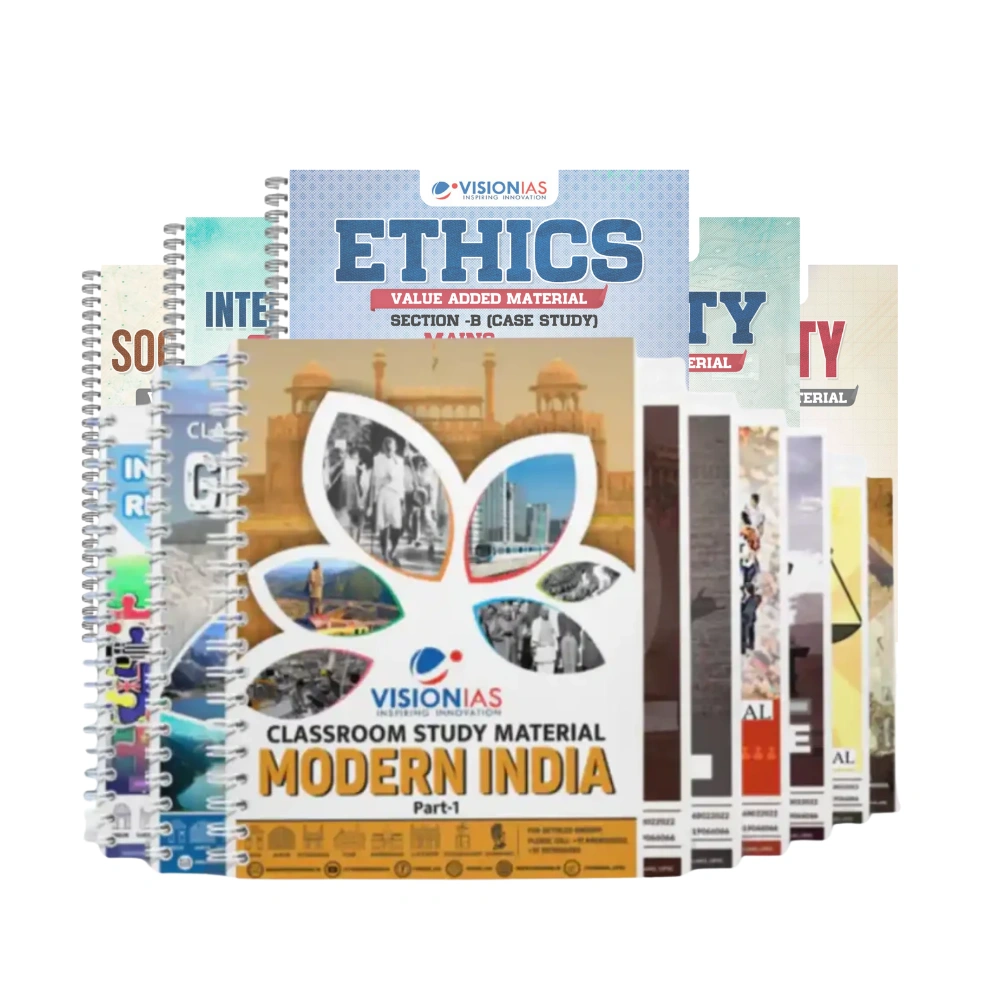 Vision IAS GS 2026-27 Booklets with Value Added Materials - 56 Booklets₹6,599View on Competer →Vision IAS Current Affairs Magazine December 2025 | English Medium Edition₹199 Vision IAS Prelims Test Series 2026 | UPSC Prelims GS Tests in English Medium₹1,249View on Competer →
 Vajiram Economics Notes 2025-2026 UPSC Economics Optional Booklets Set of 5₹1,285View on Competer →
Continue reading
More in Buying Guides



Need help choosing?
Tell us your exam and stage on WhatsApp, we suggest the right set.