

Agniveer Syllabus 2026: Army, Air Force & Navy
Complete Agniveer syllabus 2026 for Army GD, Technical, Clerk & Tradesman plus Air Force & Navy. Exam pattern, total marks, negative marking, PFT standards, qualifying marks.
 Competer
13 min read
The Agniveer syllabus covers four core subjects — Mathematics, General Science, General Knowledge/Awareness and Reasoning (plus English/Computer for Clerk and Air Force) — set at a Class 8th to 12th difficulty level across the Army, Air Force and Navy. The Indian Army Agniveer Common Entrance Exam (CEE) is an online computer-based test with post-wise patterns: GD (50 questions/100 marks), Technical (50/200), Clerk/SKT (50/200 in two parts) and Tradesman, each with its own negative marking. This single guide unifies the Army, Indian Air Force (Agniveervayu) and Indian Navy (SSR/MR) Agniveer syllabus for 2026, with exam patterns, marking schemes, qualifying marks, PFT standards, a 90-day study plan and a downloadable PDF.
Agniveer Syllabus 2026 at a Glance
If you only have a minute, here is the entire Agniveer syllabus 2026 compressed into one reference table. Use it to confirm which subjects apply to your post before diving into the detailed breakdowns below.
| Branch / Post | Subjects in Syllabus | Questions / Marks | Time | Negative Marking |
|---|---|---|---|---|
| Army GD | GK, General Science, Maths, Reasoning | 50 / 100 | 60 min | -0.5 |
| Army Technical | Physics, Chemistry, Maths, General Science | 50 / 200 | 90 min | -1 |
| Army Clerk/SKT | GK, Science, Maths, Computer + General English | 50 / 200 | 90 min | -1 |
| Army Tradesman | GK, General Science, Maths, Reasoning | 50 / 100 | 60 min | -0.5 |
| Air Force (Agniveervayu) | English, Physics, Maths, RAGA (stream-based) | Stream-dependent | 45–85 min | -0.25 |
| Navy SSR / MR | English, Science, Maths, GK | Entry-dependent | As notified | As notified |
Agniveer Recruitment 2026: Overview & Key Dates
The Agnipath Scheme recruits soldiers (Agniveers) into the Indian Army, Air Force and Navy on a four-year engagement, with 25% retained for permanent cadre. Recruitment runs branch-wise through the year, so an aspirant must track the correct notification. Below is a consolidated snapshot of the 2026 cycle; always confirm exact dates on the official portals (joinindianarmy.nic.in, agnipathvayu.cdac.in, joinindiannavy.gov.in).
| Branch | Entry/Posts | Mode of Exam | Age Limit | Tentative Notification (2026) |
|---|---|---|---|---|
| Indian Army | GD, Technical, Clerk/SKT, Tradesman, Survey, Nursing Assistant | Online CEE | 17.5–21 years | Registration early 2026; CEE after Phase-1 online |
| Indian Air Force | Agniveervayu (Science / Other-than-Science) | Online (STAR) | 17.5–21 years | Intake 01/2026 notification Nov–Dec cycle |
| Indian Navy | Agniveer SSR, Agniveer MR | Online (INET-style CBT) | 17.5–21 years | Rolling batches through 2026 |
Vacancies typically run into tens of thousands across branches each cycle. The Army CEE now comes after online registration and admit-card generation, while the physical and medical stages follow a qualifying score in the written exam. Because the age window is narrow (17.5–21 years for all branches), many aspirants get only one or two attempts — which makes syllabus accuracy and early PFT training decisive.
Indian Army Agniveer Syllabus 2026: Post-Wise Exam Pattern
The Indian Army Agniveer syllabus 2026 is delivered through the online CEE, and the exact subjects and weightage change with the post you apply for. Here are the four main patterns.
Agniveer GD Syllabus & Exam Pattern
Agniveer General Duty (GD) is the most applied-for post. The paper has 50 questions for 100 marks in 60 minutes, drawn from four subjects. The full agniveer gd syllabus is weighted heavily toward GK, Science and Maths, with Reasoning as the smallest block.
| Subject | Questions | Marks |
|---|---|---|
| General Knowledge | 15 | 30 |
| General Science | 15 | 30 |
| Mathematics | 15 | 30 |
| General Reasoning | 5 | 10 |
| Total | 50 | 100 |
Each question carries 2 marks and there is a negative marking of 0.5 marks per wrong answer. Candidates must score minimum qualifying marks (generally 35 out of 100) to clear GD, though the final merit cut-off in high-competition states usually runs well above the bare pass mark.
Agniveer Technical Syllabus and Exam Pattern
The agniveer technical syllabus and exam pattern target candidates with a 10+2 Science (Physics, Chemistry, Maths) background. The paper has 50 questions for 200 marks, so every question carries 4 marks with a steeper penalty for wrong answers.
| Subject | Questions | Marks |
|---|---|---|
| General Science | 10 | 40 |
| Mathematics | 15 | 60 |
| Physics | 15 | 60 |
| Chemistry | 10 | 40 |
| Total | 50 | 200 |
Negative marking for Technical is 1 mark per incorrect answer, so accuracy matters more here than in GD. The minimum qualifying mark is typically 80 out of 200. The Physics, Chemistry and Maths content tracks the NCERT/CBSE Class 11–12 syllabus, so board-level preparation maps almost directly onto this paper.
Agniveer Clerk/SKT Syllabus & Exam Pattern
The agniveer clerk syllabus (Clerk/Store Keeper Technical) is split into two parts within a single 50-question/200-mark paper. You must clear both parts separately, not just the aggregate.
| Part | Subjects | Questions | Marks |
|---|---|---|---|
| Part 1 | General Knowledge, General Science, Mathematics, Computer Science | 25 | 100 |
| Part 2 | General English | 25 | 100 |
| Total | — | 50 | 200 |
Each question is 4 marks with 1 mark negative marking. Clerk/SKT usually demands the highest cut-off of all Army posts — candidates must secure minimum 32 marks in each part and 80 overall. Because English is a full 100-mark part on its own, grammar and comprehension practice is non-negotiable for this post, unlike GD where English does not feature.
Agniveer Tradesman Syllabus & Pattern (10th & 8th Pass)
Tradesman is often thinly covered elsewhere, so here is the full picture. The syllabus follows the GD model (GK, General Science, Maths, Reasoning) but with two difficulty tiers based on education.
| Post | Eligibility | Questions | Marks | Qualifying |
|---|---|---|---|---|
| Tradesman (10th pass) | Class 10 / Matric | 50 | 100 | ~35 overall |
| Tradesman (8th pass) | Class 8 | 50 | 100 | ~35 overall |
Survey Automated Cartographer, Nursing Assistant and SKT variants broadly follow the Technical/Clerk templates with post-specific weightage on science and English, so a Technical-level preparation comfortably covers them.
Subject-Wise Agniveer Syllabus: Full Topic List
Across all Army posts, the question bank is built from these subject topics. Treat this as your master checklist for the indian army agniveer syllabus 2026.
| Subject | Key Topics |
|---|---|
| Mathematics | Number system, HCF/LCM, decimals & fractions, ratio & proportion, percentage, average, profit & loss, simple & compound interest, time & work, time-speed-distance, mensuration (area, perimeter, volume), algebra, trigonometry, geometry |
| General Science | Physics (motion, force, light, electricity, sound), Chemistry (elements, acids-bases, metals-non-metals), Biology (human body, nutrition, diseases, cell), everyday science applications |
| General Knowledge | Current affairs (national & international), sports, awards, important dates, Indian history & freedom struggle, geography, Indian polity & constitution, defence & armed forces, abbreviations |
| Reasoning | Analogy, coding-decoding, series, blood relations, direction sense, classification, mirror images, number & figure patterns |
| General English (Clerk) | Comprehension, synonyms-antonyms, error spotting, fill in the blanks, one-word substitution, sentence correction, parts of speech, tenses, idioms |
| Computer Science (Clerk) | Basics of computer, input/output devices, MS Office, internet & email, computer terminology |
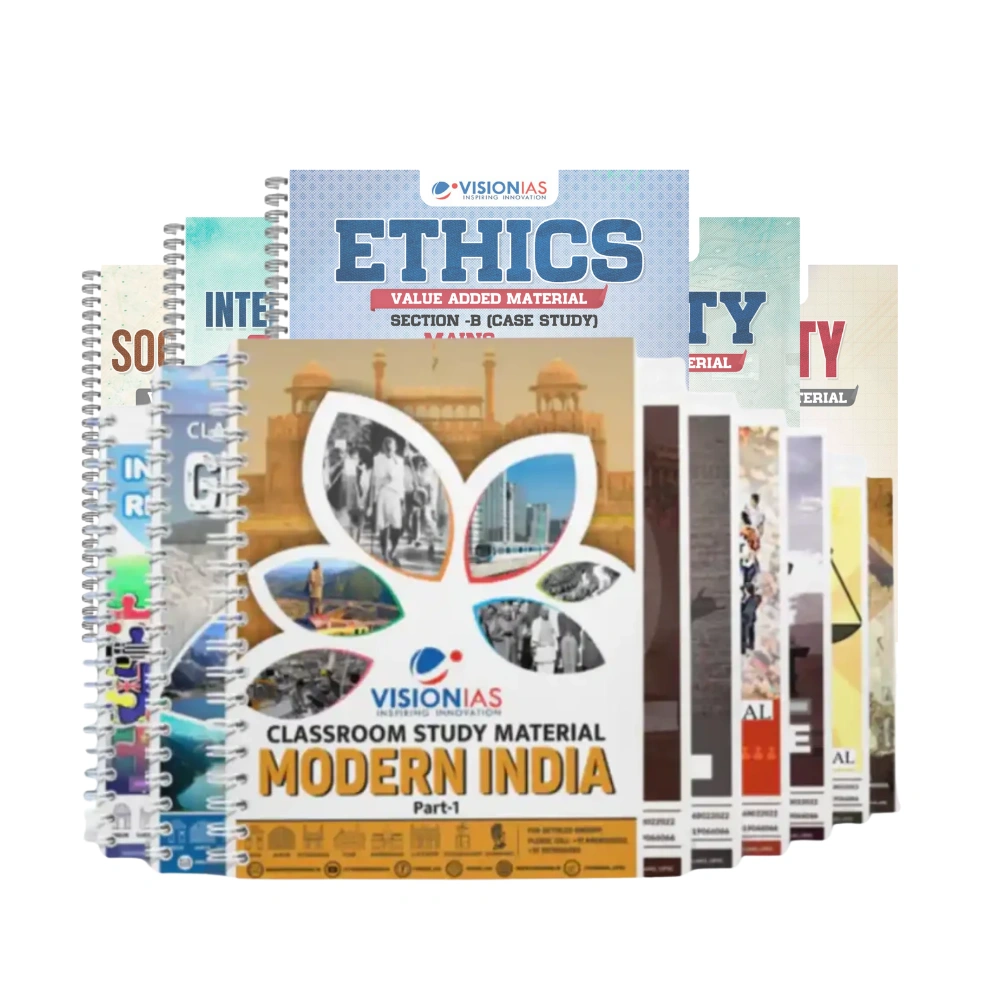
Current affairs and General Science carry disproportionate weight in GK scoring, so a disciplined daily reading habit pays off. A monthly magazine such as the Vision IAS Current Affairs Magazine (January 2026) keeps your national, international, defence and sports updates in one place — ideal for the GK and General Awareness sections.
Indian Air Force Agniveer Syllabus 2026 (Agniveervayu)
The air force agniveer syllabus 2026 is notably different from the Army. The Indian Air Force conducts an online test under the Agniveervayu scheme with two streams depending on your 10+2 background.
| Stream | Subjects | Duration | Eligibility |
|---|---|---|---|
| Science Subjects | English + Physics + Mathematics | 60 minutes | 10+2 with PCM |
| Other than Science (RAGA) | English + Reasoning & General Awareness (RAGA) | 45 minutes | 10+2 any stream / 3-yr diploma |
| Science + Other than Science | English + Physics + Maths + RAGA | 85 minutes | Candidates opting both |
The Physics and Mathematics syllabus follows the CBSE Class 11–12 curriculum, English is at Class 10+2 level, and RAGA covers reasoning puzzles plus general awareness. Negative marking in the Air Force test is 0.25 mark per wrong answer — lighter than Army Technical, which changes the attempt strategy toward educated guessing.
Because the science stream leans on 11–12 Physics, Chemistry and Maths, aspirants from a PCM background can reuse board-level modules. Structured sets like the eSaral IIT JEE Modules (for Physics & Maths) and the Careerwill NEET Study Module Set (for Physics, Chemistry & Biology concepts) are strong concept builders for the Technical and Air Force Science streams.
Indian Navy Agniveer Syllabus (SSR & MR)
The Navy recruits Agniveers through two entries, and most Agniveer hubs skip this entirely. Here is a clean breakdown.
| Entry | Sections | Eligibility | Focus |
|---|---|---|---|
| Agniveer SSR | English, Science, Mathematics, General Knowledge | 10+2 with PCM | Science & technical aptitude |
| Agniveer MR | Section I: Science & Mathematics; Section II: General Awareness | Class 10 / Matric | Basic science & GK |
SSR questions follow the 10+2 level, while MR stays at matriculation standard. Candidates must clear each section’s cut-off. The Science and Maths overlap with the Army Technical and Air Force Science syllabus means a single strong PCM foundation serves all three branches — a major advantage if you plan to apply to more than one force in the same cycle.
Agniveer Negative Marking & Marking Scheme Compared
Is there negative marking in the Agniveer exam? Yes — in every branch, but the penalty differs, and this should directly shape how many questions you dare to guess.
| Exam / Post | Marks per Question | Negative Marking | Total Marks |
|---|---|---|---|
| Army Agniveer GD | 2 | -0.5 | 100 |
| Army Agniveer Technical | 4 | -1 | 200 |
| Army Agniveer Clerk/SKT | 4 | -1 | 200 |
| Army Tradesman | 2 | -0.5 | 100 |
| Air Force Agniveervayu | 1 | -0.25 | Stream-dependent |
Strategy takeaway: In Technical/Clerk, where a wrong answer costs a full mark, only attempt questions you are reasonably sure about. In the Air Force test, the -0.25 penalty is gentle enough that calculated guesses on 50:50 questions are statistically worthwhile.
Agniveer Qualifying & Passing Marks by Post
Aspirants frequently confuse the qualifying (pass) mark with the merit cut-off. The qualifying mark is the minimum you must cross to be considered; the actual selection cut-off is usually higher and varies by state, category and vacancies. Here are the indicative qualifying standards.
| Post | Total Marks | Indicative Qualifying Marks |
|---|---|---|
| Army GD | 100 | ~35 overall |
| Army Tradesman | 100 | ~35 overall |
| Army Technical | 200 | ~80 overall |
| Army Clerk/SKT | 200 | ~32 per part & ~80 overall |
Treat these as a floor, not a target. In popular posts and states, real cut-offs can sit 20–40 marks above the qualifying line, so plan to maximise your score rather than merely pass.
Agniveer Selection Process: CEE to Enrolment
The written syllabus is only stage one. The full Agniveer selection pipeline is:
- Stage 1 — Online CEE / Written Test: Branch-specific computer-based test described above.
- Stage 2 — Physical Fitness Test (PFT): Running, pull-ups/push-ups and other physical events, scored or qualifying.
- Stage 3 — Physical Measurement Test (PMT): Height, chest and weight standards.
- Stage 4 — Medical Examination: Detailed medical as per armed-forces standards.
- Stage 5 — Document Verification & Merit List: Final merit based on CEE score, PFT and eligibility.
For the Army GD route, the physical events are heavily weighted, whereas for Air Force and Navy the written score is the primary filter followed by a qualifying PFT.
Agniveer Physical Fitness Test (PFT) Standards
PFT standards are usually scattered across separate pages — here they are integrated with your syllabus plan so you train in parallel with study.
| Branch | 1.6 km Run | Pull-ups / Push-ups | Other Events |
|---|---|---|---|
| Army (GD) | Group I: under 5 min 30 sec; Group II: 5:31–5:45 | Beam/pull-ups: 10 = max marks (scaled) | 9-feet ditch, zig-zag balance |
| Air Force | Within 6 min 30 sec | 10 push-ups, 10 sit-ups | 20 squats |
| Navy (SSR/MR) | Within 6 min 30 sec | Push-ups & squats as prescribed | Bent-knee sit-ups |
Start running and bodyweight training from day one of preparation; many well-scoring candidates fail at the PFT purely because they left fitness for the last month.
Topic Weightage & High-Scoring Areas
Not all topics reward effort equally. Prioritise these for a fast cut-off clearance, based on recurring previous-year trends.
| Subject | High-Scoring Topics | Why Prioritise |
|---|---|---|
| Mathematics | Percentage, ratio, average, profit-loss, mensuration, time-work | Formula-driven, repeat heavily, fast to solve |
| General Science | Human body & diseases, everyday chemistry, basic physics laws | Short, factual, low time cost |
| General Knowledge | Current affairs (last 6 months), defence & sports, static GK | Large chunk of GK marks, no calculation |
| Reasoning | Series, coding-decoding, analogy | Pattern-based, near-guaranteed marks |
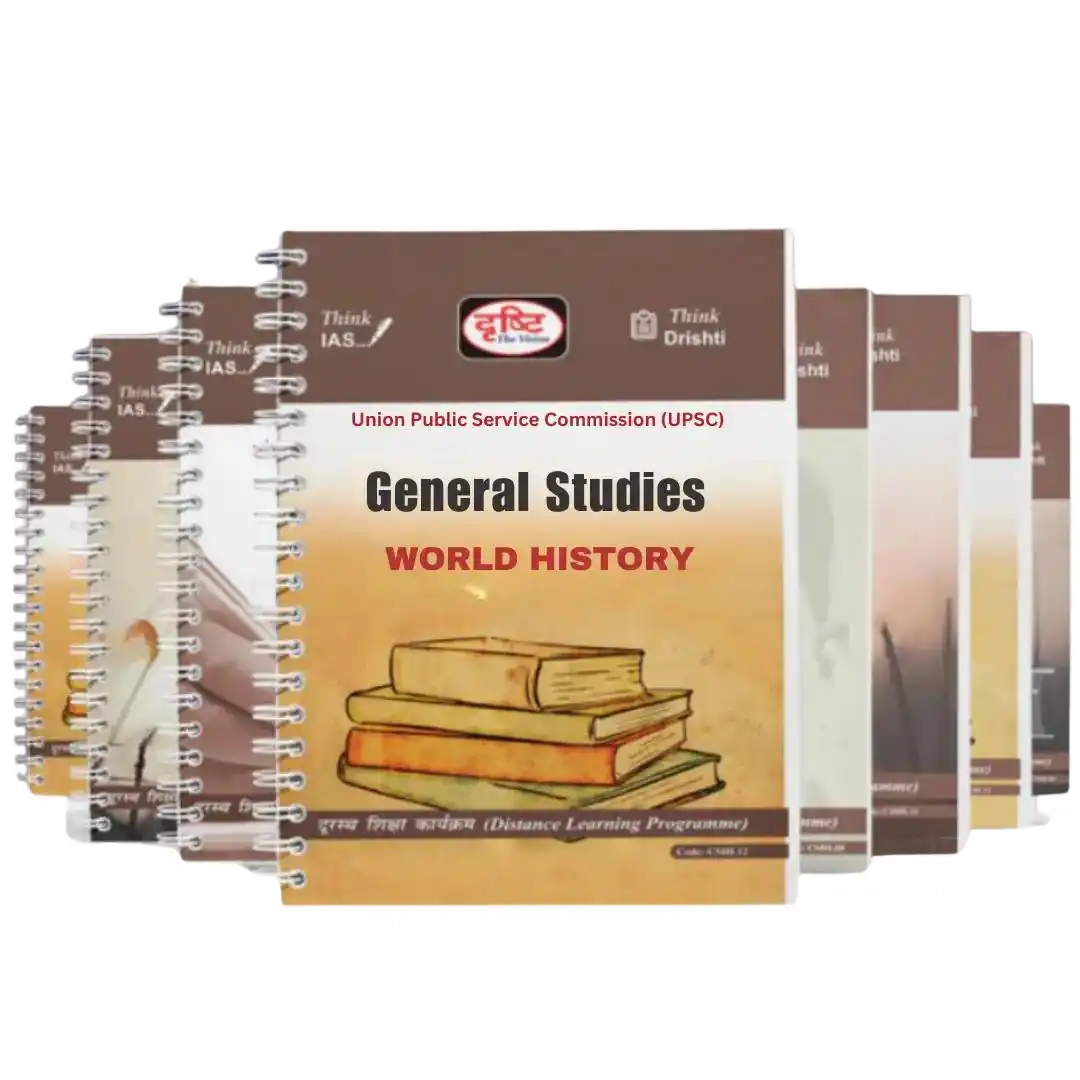
For the General Knowledge and static-GK load, a consolidated GS resource like the Drishti IAS English Study Material covers history, polity, geography and economy in one place — useful for building the awareness base that Agniveer GK rewards.
90-Day Agniveer Study Plan
Here is a stage-wise plan to move from syllabus to exam-ready in three months, balancing study with PFT training.
| Phase | Days | Focus |
|---|---|---|
| Phase 1 — Foundation | 1–30 | Complete Maths & Science NCERT basics (Class 8–10), start daily current affairs, begin 20-min run routine |
| Phase 2 — Build-up | 31–60 | Advanced Maths (Class 11–12 for Technical/Air Force), reasoning practice, static GK, increase run to 1.6 km timed |
| Phase 3 — Revision & Mocks | 61–90 | Full-length mock tests, previous-year papers, weak-area revision, peak PFT training |
Attempt at least 15–20 full mocks in the final phase — mock discipline is the single biggest differentiator between candidates who clear the cut-off and those who miss by a few marks.
Recommended Books & Study Material by Subject
Map your resources to the syllabus rather than buying random guides:
- Mathematics: NCERT Class 8–10, plus a topic-wise practice book; concept modules from eSaral IIT JEE Modules for Technical/Air Force advanced maths.
- General Science (PCB): NCERT Class 9–12 supported by the Careerwill NEET Study Module Set for physics, chemistry and biology concepts.
- General Knowledge & Current Affairs: A static GK book plus a monthly magazine like the Vision IAS Current Affairs Magazine.
- Reasoning & English: Any standard reasoning and objective English practice book, solved with timers.
How to Download the Agniveer Syllabus PDF
You can get the agniveer syllabus pdf download in two ways. First, the official detailed notification — published on joinindianarmy.nic.in (Army), agnipathvayu.cdac.in (Air Force) and joinindiannavy.gov.in (Navy) — contains the authoritative post-wise syllabus and exam pattern in its appendices. Second, for quick revision, compile the subject-wise topic tables above into a single document: open this page, use your browser’s Print (Ctrl+P) and save as PDF to carry the full Army + Air Force + Navy syllabus offline. Always cross-check the latest official notification, since weightage and marking can be revised each cycle.
Common Mistakes Agniveer Aspirants Make
- Ignoring the PFT until the end: fitness takes months to build — start on day one.
- Attempting every question: with -1 negative marking in Technical/Clerk, blind guessing can wipe out hard-earned marks.
- Studying the wrong post’s syllabus: GD, Technical and Clerk differ sharply — confirm your post first.
- Skipping current affairs: a large GK chunk comes from the last six months of events.
- No timed mocks: speed and accuracy under the clock decide the cut-off.
- Chasing the pass mark, not the cut-off: qualifying marks only make you eligible; the real selection line is usually much higher.
Frequently Asked Questions
What is the syllabus of Agniveer 2026?
The Agniveer syllabus 2026 covers Mathematics, General Science, General Knowledge/Awareness and Reasoning for Army GD and Tradesman; adds Physics and Chemistry for Technical; adds General English and Computer Science for Clerk/SKT; and uses English, Physics, Maths and RAGA for the Air Force. The difficulty ranges from Class 8th to 12th.
What is the exam pattern and total marks for Agniveer GD, Technical and Clerk?
Army Agniveer GD has 50 questions for 100 marks, Technical has 50 questions for 200 marks, and Clerk/SKT has 50 questions for 200 marks split into two parts (General subjects and General English) that must be cleared separately.
Is there negative marking in the Agniveer exam?
Yes. Army GD and Tradesman deduct 0.5 marks per wrong answer, Army Technical and Clerk deduct 1 mark, and the Air Force Agniveervayu test deducts 0.25 mark per wrong answer. Attempt accordingly based on the penalty.
What is the difference between Army Agniveer and Air Force Agniveer syllabus?
Army Agniveer tests GK, General Science, Maths and Reasoning (with Physics/Chemistry for Technical), while the Air Force Agniveervayu test is stream-based: English + Physics + Maths for the Science stream, and English + Reasoning & General Awareness (RAGA) for the Other-than-Science stream, with lighter negative marking.
How many questions are asked in the Agniveer CEE and what is the time duration?
The Army Agniveer CEE has 50 questions. GD and Tradesman run for 60 minutes, while Technical and Clerk/SKT run for 90 minutes. The Air Force test runs 45–85 minutes depending on the chosen stream.
What are the passing or qualifying marks for Agniveer GD?
Agniveer GD generally requires around 35 out of 100 to qualify. However, the final selection cut-off is usually higher than this pass mark and varies by state, category and the number of vacancies, so aim to maximise your score rather than just clear the minimum.
Which subjects should I prepare for Agniveer Technical?
For Agniveer Technical, prepare Physics, Chemistry, Mathematics and General Science at the 10+2 (Class 11–12) level. Maths and Physics carry 60 marks each, while Chemistry and General Science carry 40 marks each, for a 200-mark paper with -1 negative marking.
Is the Agniveer syllabus the same every year?
The core subjects and exam pattern stay broadly consistent year to year, but weightage, qualifying marks and marking schemes can be revised in each cycle. Always verify the latest official notification on joinindianarmy.nic.in, agnipathvayu.cdac.in or joinindiannavy.gov.in before finalising your preparation.
How can I download the Agniveer syllabus PDF?
Download the official detailed syllabus PDF from joinindianarmy.nic.in, agnipathvayu.cdac.in or joinindiannavy.gov.in notifications, or use your browser’s Print-to-PDF on this page to save the complete subject-wise Army, Air Force and Navy syllabus for offline revision.
Recommended Study Material




Competer
The Competer team: we pack the orders, so we know which editions aspirants keep coming back for.
Get it printed
Study material aspirants order most on Competer, delivered across India
 Vision IAS GS 2026-27 Booklets with Value Added Materials - 56 Booklets₹6,599View on Competer →
 Vision IAS Current Affairs Magazine December 2025 | English Medium Edition₹199
 Vision IAS Prelims Test Series 2026 | UPSC Prelims GS Tests in English Medium₹1,249View on Competer →
 Vajiram Economics Notes 2025-2026 UPSC Economics Optional Booklets Set of 5₹1,285View on Competer →
Continue reading
More in Buying Guides



Need help choosing?
Tell us your exam and stage on WhatsApp, we suggest the right set.